










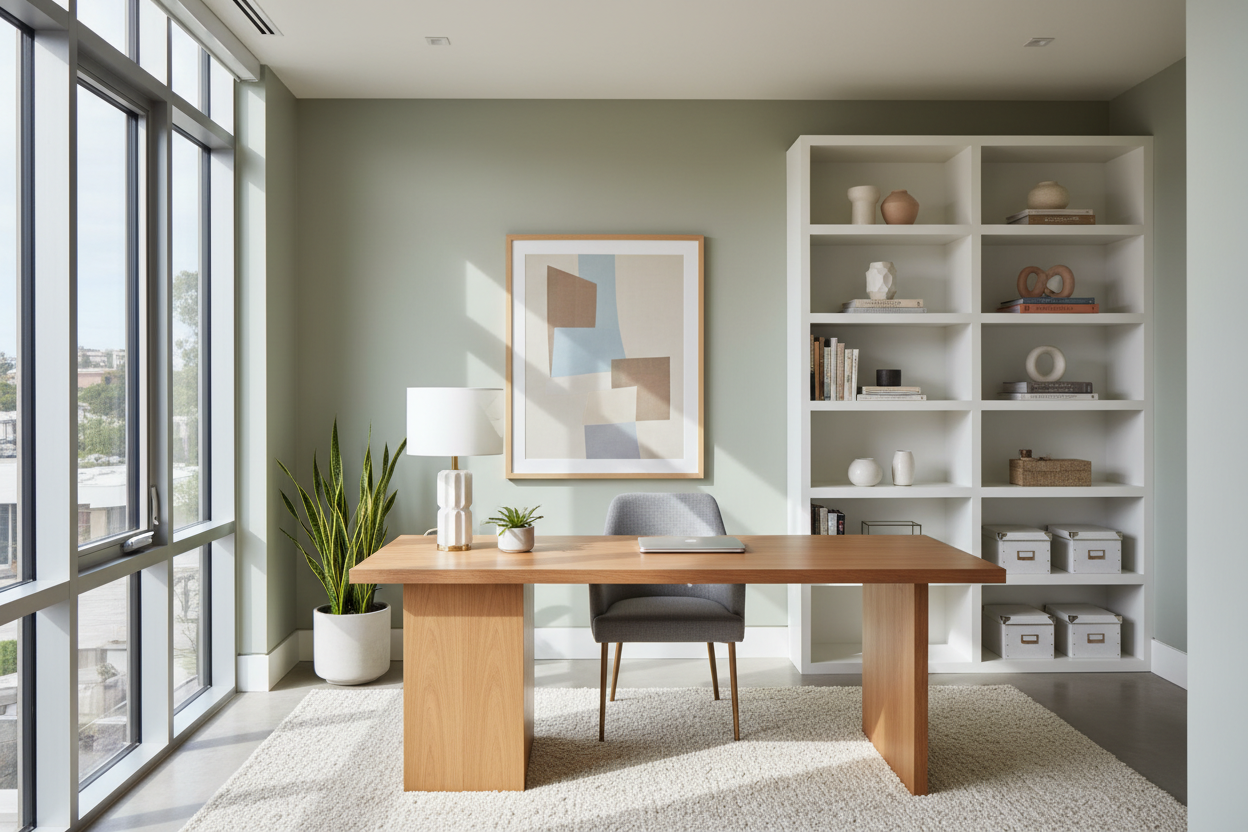
Staring at a blank wall or working under harsh fluorescent lights is the quickest way to kill creativity. The environment you inhabit dictates your output, yet so many professionals treat their workspace as an afterthought. Designing a productive enclave requires a delicate balance between rigorous functionality and curated aesthetics. If you are wondering how to decorate an office space that commands respect while inviting deep work, the answer lies in layering textures, mastering light, and prioritizing ergonomic flow.
Key Features to Prioritize
- Ergonomics First: Prioritize chairs with adjustable lumbar support and seat depth over purely sculptural pieces.
- Lighting Layers: Combine ambient overhead lighting with focused task lighting (aim for 3000K-4000K color temperature).
- Acoustic Control: Use plush rugs, heavy drapes, or acoustic panels to dampen echo and improve focus.
- Biophilic Elements: Incorporate natural wood grains and greenery to reduce visual fatigue.
- Storage Solutions: Select closed cabinetry to hide clutter and open shelving for curated display items.
Mastering the Layout and Flow
Before buying a single piece of furniture, assess the architecture of the room. The biggest error I see is pushing the desk against a wall. Instead, position your desk in the "command position"—facing the door but not directly in line with it. This creates a sense of security and authority.
Ensure there is ample circulation space. You need at least 30 to 36 inches of clearance behind your chair to slide back comfortably without hitting a bookshelf or wall. If you are figuring out how to decorate a office with limited square footage, consider a floating desk to keep the floor visible, which tricks the eye into perceiving more space.
Choosing Materials: Durability Meets Design
The Desk Surface
The desk is your anchor. While glass tops look sleek and modern, they are high-maintenance regarding fingerprints and can feel cold to the touch. For a warmer, more tactile experience, opt for solid wood or high-quality wood veneer. Walnut and white oak are timeless choices that hide minor dust and add visual warmth.
Seating Textiles
Your chair needs to breathe. While full-grain leather is the gold standard for executive luxury, it can retain heat. A high-end performance fabric or a mesh hybrid offers better thermal regulation for long hours. Look for fabrics with a high double-rub count to ensure the upholstery doesn't pill or fade after a year of use.
Lighting: The Invisible Decor
Lighting defines the mood. Relying solely on a ceiling can creates unflattering shadows and eye strain. Layer your lighting by adding a floor lamp for ambient glow and a dedicated architectural task lamp for your workspace. Avoid cool, blue-tinted LEDs which can feel clinical; stick to warm white bulbs that mimic natural daylight to maintain your circadian rhythm.
Visual Balance and Personalization
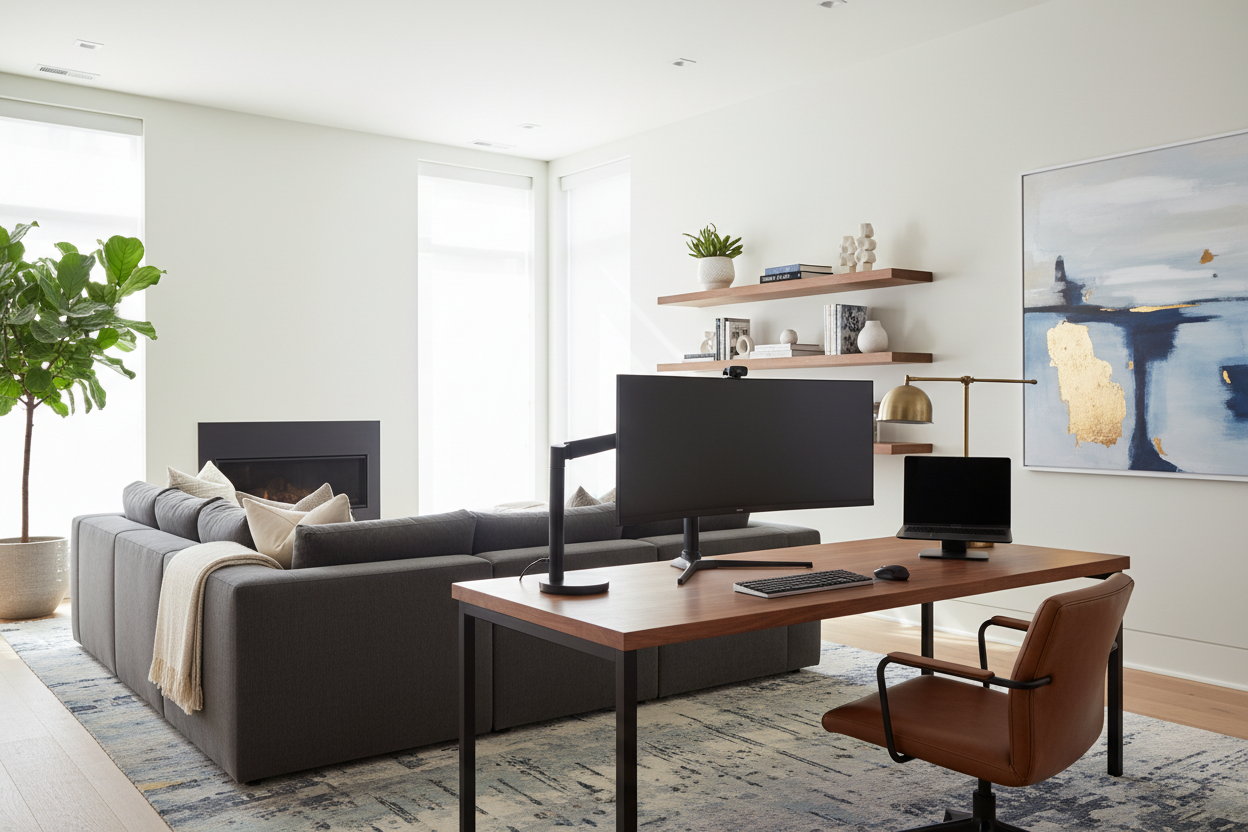
An office shouldn't feel like a showroom; it needs a pulse. Use the "rule of three" when styling bookshelves: group items in odd numbers, mixing vertical books, horizontal stacks, and sculptural objects. Introduce a large-scale area rug to ground the furniture. The rug should be large enough that your chair remains on it even when pushed back. This not only anchors the room visually but also provides crucial sound absorption.
My Personal Take on how to decorate an office space
In my fifteen years of design, I have learned that cable management is the unglamorous hero of a beautiful office. I once designed a stunning mid-century modern office for a client, featuring a vintage teak desk that floated in the center of the room. It looked incredible until we plugged in the computer.
Suddenly, we had a spaghetti junction of black wires trailing across the floor, ruining the entire aesthetic. I had to retrofit a solution, crawling under the desk to mount a hidden tray. The lesson? When you are shopping for a desk, feel underneath the top surface. If there isn't a dedicated channel or lip to hide wires, you are going to struggle. Also, check the finish on the underside—I've ruined more than one cashmere sweater on rough, unfinished plywood undersides of "luxury" desks. True quality is finished on all sides.
Conclusion
Curating your workspace is an investment in your career and your mental well-being. By selecting materials that age gracefully and arranging them in a way that promotes flow, you build a space that works as hard as you do. Start with the chair, fix the lighting, and let the design evolve from there.
Frequently Asked Questions
How do I decorate a small home office without making it feel cluttered?
Utilize vertical space with wall-mounted shelving and choose furniture with exposed legs (like a Parsons desk). Seeing the floor underneath furniture makes the room feel larger. Stick to a monochromatic color palette to reduce visual noise.
What is the best color for an office space?
Greens and blues are excellent for focus and calmness, making them ideal for high-stress jobs. Soft terracottas or warm whites can stimulate creativity without being as aggressive as bright red or orange.
Should I use a rug in my office?
Absolutely. A rug anchors the furniture and improves acoustics by absorbing sound. Ensure it is low-pile so your office chair casters can roll smoothly over it without getting stuck.


Dejar un comentario
Este sitio está protegido por hCaptcha y se aplican la Política de privacidad de hCaptcha y los Términos del servicio.