










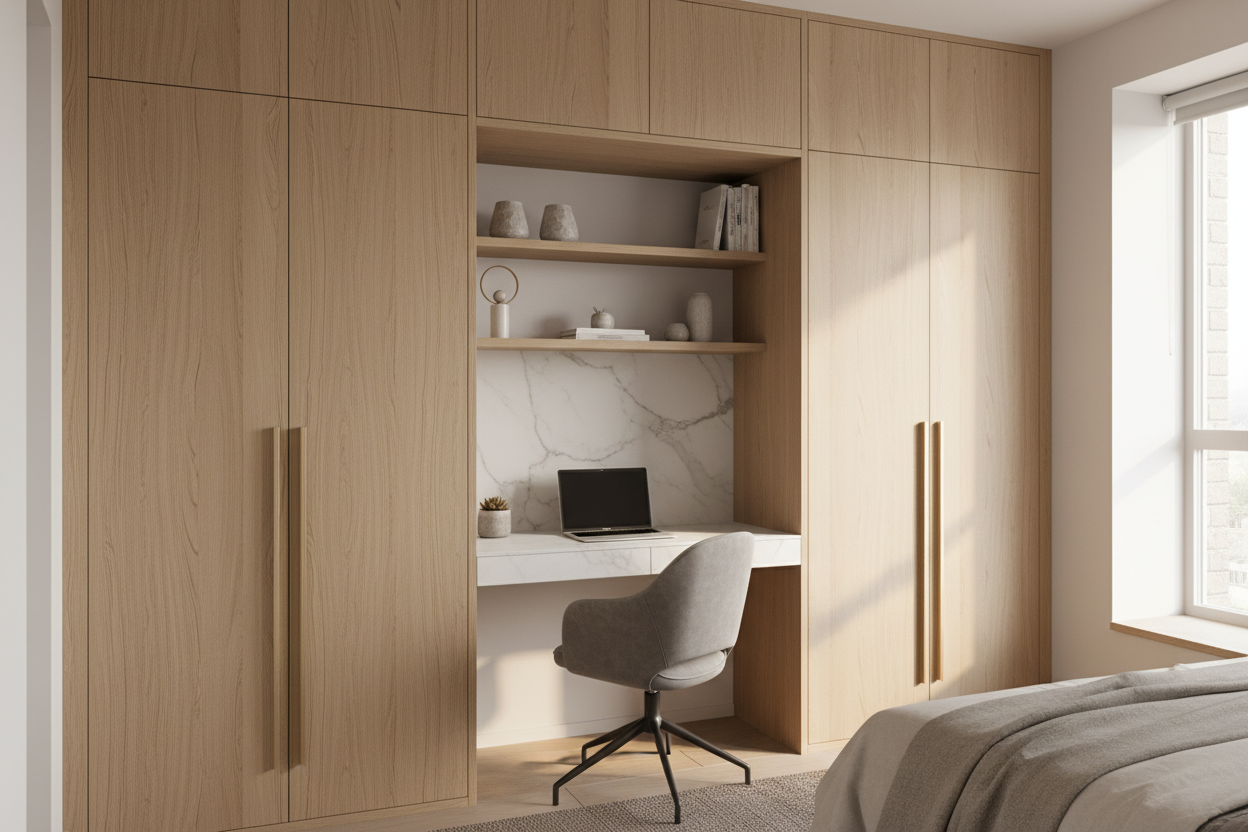
There is a distinct tension in modern interior design: the need for a productive workspace versus the desire for a serene, clutter-free bedroom. Nothing disrupts the visual calm of a sleeping sanctuary quite like a monitor staring back at you. The solution I frequently propose to clients facing this spatial squeeze is the desk in wardrobe concept. It is an elegant architectural sleight of hand that allows you to close the doors on your workday, quite literally.
Key Features to Look For
- Minimum Depth: Ensure the internal depth is at least 600mm to accommodate a monitor and keyboard without crushing cables.
- Hardware Quality: heavy-duty pocket door systems (flipper doors) are essential to prevent obstruction while working.
- Cable Management: Pre-planned grommets and integrated power strips are non-negotiable for a clean look.
- Lighting: Built-in motion-sensor LED strips or recessed task lighting to compensate for the enclosure.
- Chair Storage: A clear plan for where the office chair resides when the wardrobe is closed.
Structuring the Layout: The Built-In Advantage
When designing a desk in built in wardrobe, the primary constraint is almost always depth. Standard wardrobes sit around 580mm-600mm deep. However, a functional workspace often requires closer to 700mm if you intend to leave a laptop or monitor plugged in behind closed doors.
If you are commissioning bespoke joinery, I always recommend extending the depth slightly or opting for a pull-out desktop tray. This cantilevered approach allows you to reclaim floor space when the unit is not in use, while still providing ample ergonomic support for your wrists during working hours.
Materiality and Hardware: Beyond Aesthetics
A wardrobe and desk in one requires a structural integrity that standard clothing storage does not. A shelf holding sweaters bears significantly less load than a desktop supporting equipment and the downward pressure of your arms.
Avoid thin particle board for the main work surface. Instead, opt for high-density MDF with a robust veneer or solid timber. Furthermore, the hinge system is critical. Standard swing doors block light and movement. The gold standard for this application is the pocket door system, where the doors slide open and tuck away into the sidewalls. This transforms the unit from a cupboard into a fully accessible wardrobe workstation.
Lighting and Atmosphere
A wardrobe with desk inside creates a cavernous effect if not lit correctly. Relying on the room’s ambient ceiling light will cast a shadow directly over your work, leading to eye strain.
Treat the interior like a mini-stage. Install dimmable LED strip lighting routed into the underside of the overhead shelves. For a more sophisticated touch, line the back panel with a textured wallpaper or acoustic felt. This not only dampens sound—vital for video calls—but also creates a visual distinction between your "office" and the rest of the bedroom cabinetry.
Lessons from My Own Projects: The "Chair Dilemma"
Early in my career, I designed a stunning desk inside wardrobe for a client in a compact city apartment. The joinery was exquisite, the walnut finish was rich, and the pocket doors glided like silk. We high-fived, took photos, and I left.
Two days later, the client called. "It looks great," she said, "but where do I put the chair?"
I had designed the desk at a standard height but hadn't accounted for the armrests of her ergonomic chair fitting under the desk drawer when she tried to close the wardrobe doors. She had to wheel the chair into the corner of the room every night, which ruined the "hidden" effect entirely. Since then, I always measure the client's specific chair clearance or design a section of the wardrobe specifically to house a folding or low-profile stool. It’s the unglamorous logistics that make or break this design.
Conclusion
Integrating a workspace into your cabinetry is more than a space-saving hack; it is a lifestyle choice that prioritizes mental separation between rest and labor. With the right hardware and careful dimensional planning, you can maintain the luxury of your bedroom without sacrificing professional functionality.
Frequently Asked Questions
What is the ideal height for a desk inside a wardrobe?
Standard desk height is between 730mm and 750mm. However, since the desktop is fixed within joinery, ensure this height aligns with your specific chair to prevent leg cramping, as you cannot adjust the desk height later.
How do I handle ventilation for computers in an enclosed space?
Computers generate heat. If you plan to house a tower PC or high-performance laptop inside, install ventilation grilles in the back panel or plinth of the joinery to allow airflow, preventing hardware overheating.
Can I retrofit a desk into an existing wardrobe?
Yes, provided the carcass is stable. You will likely need to reinforce the back panel to support the desktop brackets and may need to remove existing doors to install 170-degree hinges or a track system for better access.

Dejar un comentario
Este sitio está protegido por hCaptcha y se aplican la Política de privacidad de hCaptcha y los Términos del servicio.