










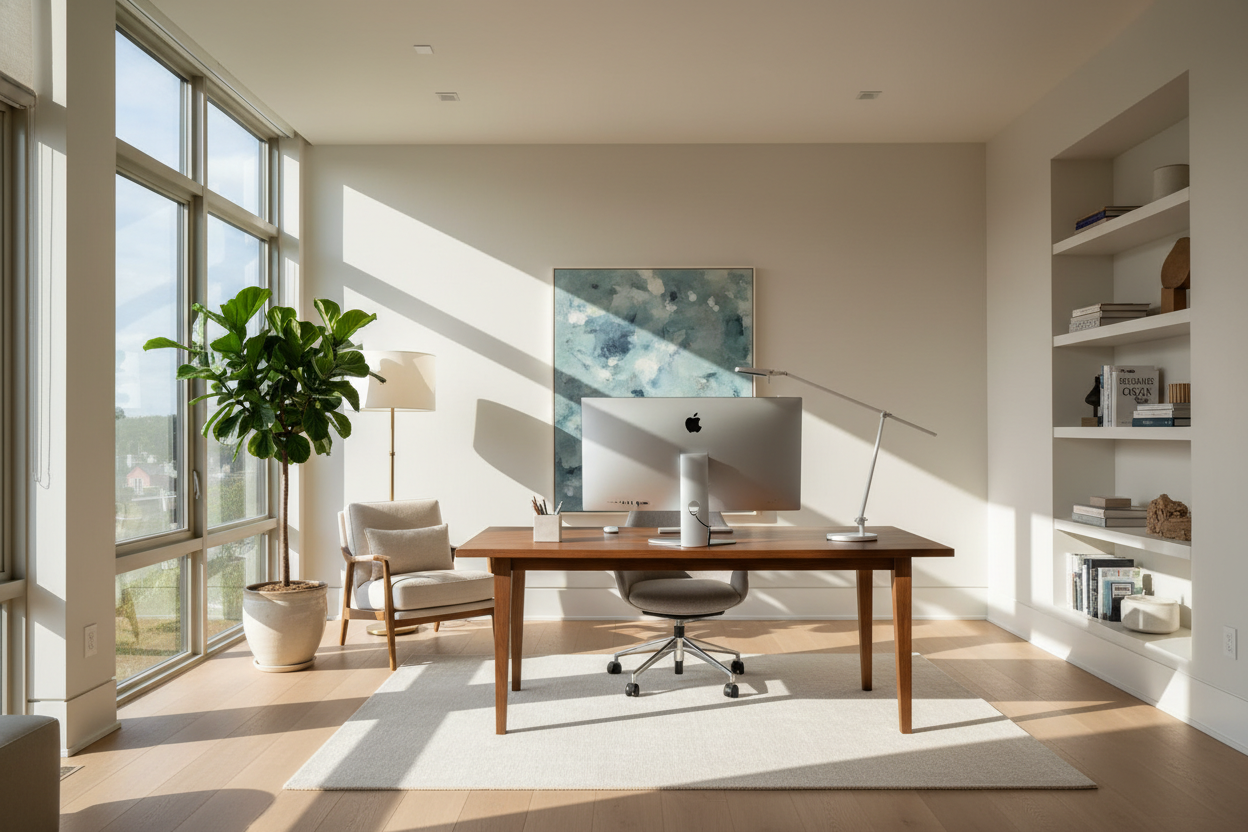
We have all experienced the fatigue that comes from working in a poorly lit room—the midday squint against screen glare or the evening gloom that turns a workspace into a cave. Lighting is rarely just about visibility; in interior design, it is the invisible architecture that dictates your energy levels and the room's mood. Learning how to light a home office correctly requires balancing technical ergonomics with aesthetic warmth, ensuring the space feels curated rather than clinical.
Key Features to Look For: A Quick Decision Guide
- Color Temperature: Aim for 3000K to 4000K. This range mimics natural daylight, boosting alertness without the harsh, blue-tinted sterility of commercial office lighting.
- Layering Strategy: Never rely on a single overhead source. Combine ambient (overhead), task (desk lamp), and accent (decorative) lighting.
- CRI (Color Rendering Index): specific fixture specs should boast a CRI of 90+. This ensures wood grains and fabric textures look rich and authentic, not washed out.
- Adjustability: Look for articulating arms on task lamps and dimmable switches for overheads to control glare throughout the day.
The Art of Layering Light
When clients ask me how to light an office effectively, I always start with the concept of layering. A single overhead fixture casts unflattering shadows and flattens the room's visual depth. To create a luxury feel that functions properly, we need three distinct layers.
1. Ambient Lighting: The Foundation
This is your general illumination. In a home office, avoid aggressive fluorescent troffers. Instead, opt for a semi-flush mount or a chandelier that diffuses light upwards and outwards. This softens the contrast between your bright computer screen and the surrounding room, significantly reducing eye strain.
2. Task Lighting: The Workhorse
This is where form meets function. A high-quality task lamp is non-negotiable. Place it on the opposite side of your writing hand to prevent casting shadows across your documents. Materiality matters here; a heavy brass or matte black fixture adds a tactile, grounded element to the desk. Ensure the shade is opaque (like metal) rather than translucent (like linen) to direct the beam exactly where you need it—on the work surface, not in your eyes.
3. Accent Lighting: The Atmosphere
This is often the missing link in home offices. Accent lighting highlights architectural details or bookshelves. Consider LED tape light installed inside joinery or a small picture light over artwork. This layer adds depth and makes the office feel like an integral part of the home, rather than a cubicle.
Managing Glare and Screen Reflection
The biggest enemy of focus is glare. It usually comes from two sources: unshaded windows and poorly placed overhead lights. If you are positioning a desk, try to place it perpendicular to the window. If the window is behind you, it causes glare on the monitor; if it's in front of you, the contrast creates a silhouette effect during video calls.
For artificial light, ensure your bulbs are shielded. Exposed bulbs might look industrial and trendy, but they create "hot spots" in your vision that lead to fatigue. Always opt for frosted diffusers or shaded fixtures.
My Personal Take on how to light a home office
I learned a hard lesson about finish selection and lighting during a project in my own study a few years ago. I fell in love with a high-gloss lacquer desk in a deep navy blue. It was stunning in the showroom. However, once I installed my go-to architectural task lamp, the desk turned into a mirror.
Every time I turned the lamp on, the bulb's reflection bounced off the glossy surface and hit me right in the eyes. It was unusable. I actually had to swap the bulb for a lower-lumen, warmer vintage style just to tolerate the reflection until I eventually replaced the desk with a matte walnut finish. It’s a detail I now check religiously: if you want high-gloss furniture, your light source must be diffused and positioned higher up. If you need intense task lighting, stick to matte or satin finishes on your desktop.
Conclusion
Lighting your workspace is an investment in your productivity and your peace of mind. By layering your light sources and paying attention to color temperature, you can create an environment that supports deep work while remaining visually inviting. Don't settle for the shadows; illuminate your work with intention.
Frequently Asked Questions
What is the best light bulb color for a home office?
A color temperature between 3500K and 4000K is ideal. It is cool enough to keep you alert and focused but warm enough to feel comfortable in a residential setting.
How do I light a small office with no windows?
In windowless spaces, use "wall washing" techniques. Place floor lamps or recessed lights close to the walls to bounce light off vertical surfaces. This pushes the walls out visually, making the room feel larger and airier.
Do I need a ring light for video calls?
Not necessarily. If you position two table lamps on either side of your monitor (slightly behind it), you will achieve soft, flattering illumination that fills in shadows on your face without the harsh, circular reflection of a ring light in your glasses or eyes.

Dejar un comentario
Este sitio está protegido por hCaptcha y se aplican la Política de privacidad de hCaptcha y los Términos del servicio.