










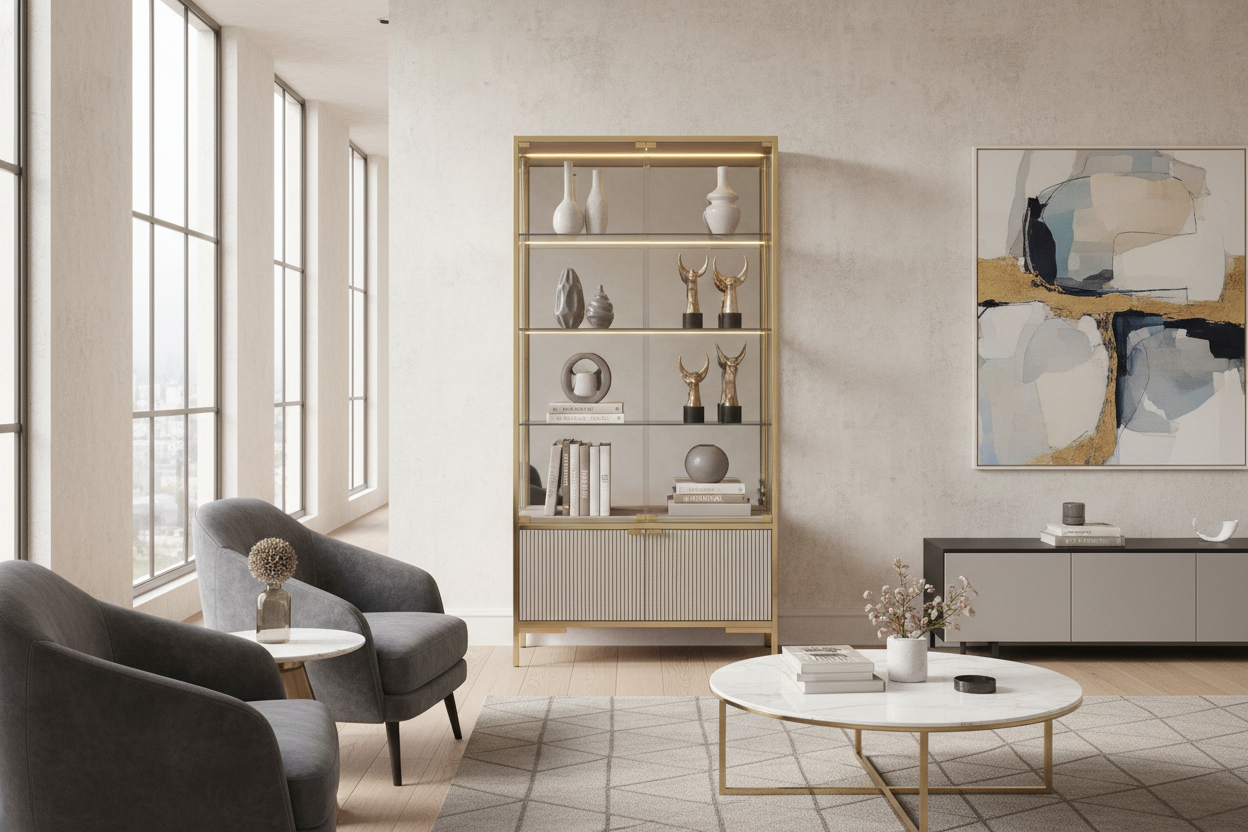
We have all been there. You have a beautiful collection of vintage pottery, travel souvenirs, or beloved books, but they are currently gathering dust on a cramped bookshelf. You price out custom built-ins, and the quote makes your stomach drop. Suddenly, searching for a display cabinet cheap becomes your weekend mission.
But here is the hard truth: budget furniture often looks exactly like budget furniture. Flimsy doors, visible cam locks, and wobbly bases can instantly cheapen your living room's aesthetic. The good news? You do not have to spend thousands to get a high-end look. In this guide, you will learn exactly how to evaluate affordable cabinets, avoid the structural red flags, and style them so nobody guesses the price tag.
Quick Decision Guide
- Check the glass: Always insist on tempered glass. Standard glass in budget furniture is a major safety hazard if shattered.
- Inspect the hardware: Flimsy plastic hinges will sag within months. Look for adjustable metal hinges to keep doors aligned.
- Prioritize visual weight: Opt for tall, narrow silhouettes or metal frames. Chunky laminate wood often gives away a lower price point.
- Plan for lighting: A budget cabinet instantly looks premium when you add affordable, battery-operated LED puck lights to the interior.
Material and Build Quality: What to Avoid
Engineered Wood vs. Metal Frames
When shopping in the lower price tiers, materials dictate longevity. Most affordable wood-look cabinets are made from MDF or particleboard wrapped in paper veneer. While these can look decent from afar, they are highly susceptible to moisture and peeling. If you live in a humid climate or plan to put the cabinet near a high-traffic zone, paper veneer will show wear rapidly.
Instead, I often steer clients toward powder-coated metal cabinets when budgets are tight. A simple black or brass metal frame with glass panels leans into a modern or industrial aesthetic. Because metal is structurally stronger than cheap particleboard, the profiles can be thinner, creating a more elegant, minimalist silhouette that punches above its weight class.
The Hardware Secret
The biggest giveaway of inexpensive furniture is the hardware. Manufacturers cut costs by using lightweight, generic pulls and non-adjustable hinges. If the doors do not sit perfectly flush, the whole piece looks sloppy. Look for cabinets that use European-style adjustable hinges so you can tweak the alignment. Even better, plan to swap out the factory knobs for solid brass or matte black pulls from a hardware store. It is a twenty-dollar upgrade that completely changes the perceived value.
Style and Coordination: Faking the High-End Look
Lighting is Everything
High-end designer cabinets almost always feature integrated lighting to highlight the objects inside. You can mimic this seamlessly. Grab a set of rechargeable, motion-sensor LED puck lights or light bars and mount them under each shelf. By illuminating your display, you draw the eye to the curated items rather than the construction of the cabinet itself.
Curating the Negative Space
The fastest way to make an affordable cabinet look like a dorm room fixture is to stuff it full of random items. High-end styling relies on negative space. Group items in odd numbers (threes and fives) and vary the heights. Place a tall vase next to a low stack of horizontal books. Leave at least thirty percent of each shelf empty. This breathing room makes the arrangement feel intentional and gallery-like.
Designer's Honest Take
A few years ago, I was furnishing a client's first apartment on a razor-thin budget. We found an incredibly stylish arched cabinet online for a steal. On camera, the matte black finish looked stunning. I ordered it, assembled it, and felt like a genius.
Then I tried to level it. The cabinet came with rigid plastic feet on an uneven century-old apartment floor. Every time a heavy truck drove by, the glass doors rattled loudly enough to wake the dog. I learned the hard way that budget cabinets lack the structural rigidity to absorb vibration. I ended up having to buy heavy-duty adjustable leveling feet, drill them into the base myself, and add felt pads to the door frames to stop the rattling. It was a stark reminder: when you save on the purchase price, you often pay with your own time and troubleshooting.
Frequently Asked Questions
How do I secure a lightweight cabinet to the wall?
Affordable cabinets are notoriously top-heavy, especially once you add glass doors. Always use the included anti-tip kit. If the included kit uses cheap plastic zip-ties, throw it away and buy a heavy-duty metal L-bracket from the hardware store. Anchor it directly into a wall stud.
Can I paint a laminate display cabinet?
Yes, but preparation is non-negotiable. Laminate has a slick surface that repels standard latex paint. You must scuff-sand the entire surface with 120-grit sandpaper, apply a high-adhesion bonding primer (like shellac-based primer), and finish with a durable urethane enamel for a smooth, factory-like finish.
What size cabinet do I need for my room?
Proportion is key. If you have standard eight-foot ceilings, look for a cabinet between 72 and 78 inches tall. Anything shorter will look stout and out of place. Ensure you leave at least 36 inches of clearance in front of the cabinet so the doors can open fully without hitting other furniture.


Dejar un comentario
Este sitio está protegido por hCaptcha y se aplican la Política de privacidad de hCaptcha y los Términos del servicio.