










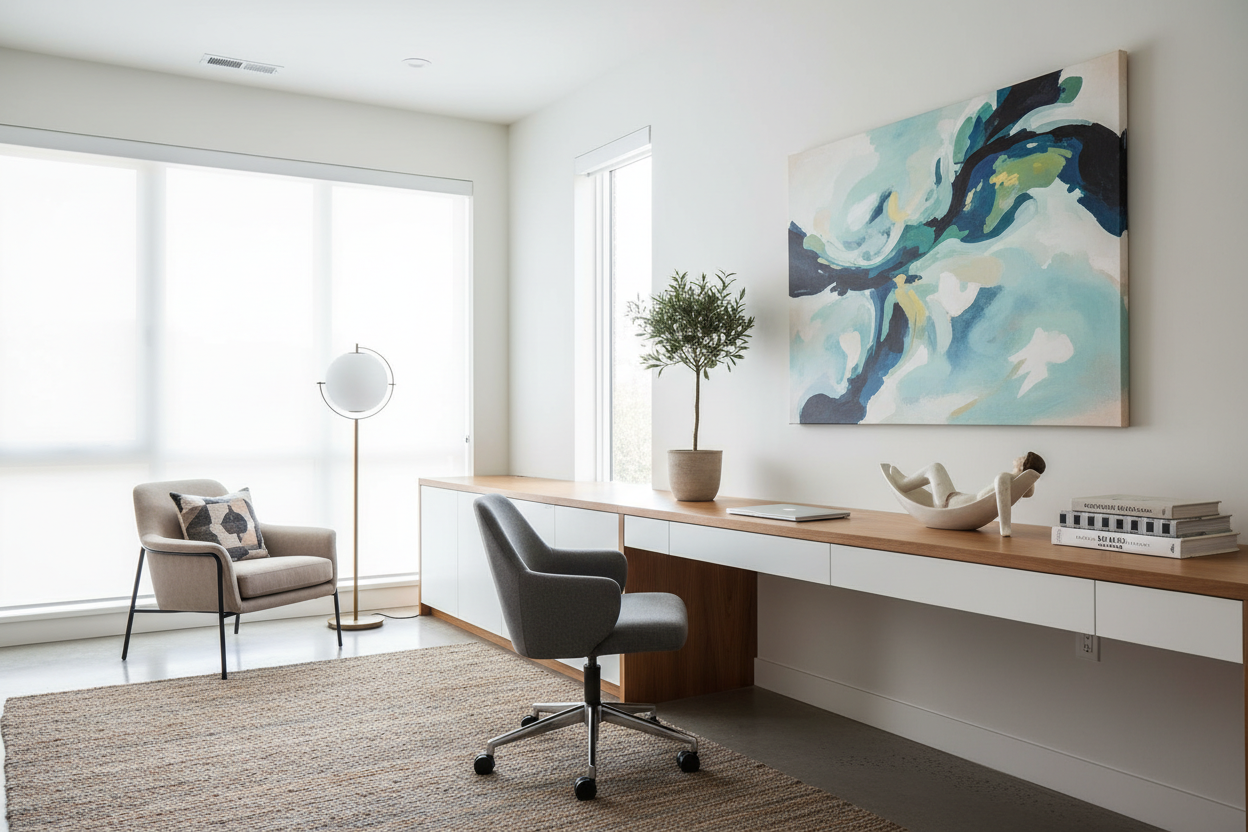
The hardest part of a modern home office isn't the morning commute; it is figuring out how to successfully exit at the end of the day. When your living room doubles as your boardroom, the lines between personal time and professional obligations blur terribly. I constantly hear from clients who feel trapped in their own homes, unable to mentally disconnect because their workspace is always visible. If you are struggling with how to say out of office when working from home, the solution is twofold: you need a physical space that allows you to literally 'leave,' paired with clear digital boundaries. Today, we will cover how to structure your physical workspace for better separation and how to communicate your boundaries effectively.
Quick Decision Guide
- Create visual closure: Invest in secretary desks or armoires that physically close away your monitors at 5 PM.
- Zone with rugs: Use a distinct area rug to separate your workspace from your relaxation zones in open-concept rooms.
- Automate your boundaries: Set a recurring remote out of office message to manage client expectations after hours.
- Prioritize ergonomics: A dedicated, supportive task chair signals to your brain that it is time to work, while the sofa remains for rest.
Space Planning & Layout: Creating the Physical Boundary
You cannot effectively communicate that you are out of office when working from home if your laptop is staring at you from the kitchen island. In North American homes, especially open-concept suburban builds or compact urban apartments, visual separation is crucial. You need to create a distinct zone.
The Power of Visual Weight and Zoning
If you lack a dedicated room with a door, use furniture placement to dictate flow. Float your desk perpendicular to a wall rather than shoving it into a corner; this creates a physical barrier that you must step behind to 'go to work.' Anchor the workspace with an 8x10 rug that differs in texture from the rest of the room. When you step off that rug, you are officially off the clock. This physical architecture makes your out of office message work from home feel authentic rather than just a polite email autoresponder.
Comfort & Ergonomics: Anchoring the Workspace
The physical details of your furniture separate a space that looks good on Instagram from one that is actually healthy to live with. A dining chair is designed for a 45-minute meal, not an 8-hour sprint. When you mix your relaxation furniture with your work furniture, your body forgets how to rest.
Seat Depth and Cushion Density
Invest in an ergonomic chair with adjustable seat depth and lumbar support. Look for high-density foam or breathable mesh that will not compress after six months of daily use. By keeping your ergonomic work chair strictly for business, sitting on your plush, deep-seated sectional at the end of the day feels like a distinct transition. It reinforces the boundary that your out of office message when working from home communicates digitally.
The Digital Boundary: Crafting Your Message
Once your physical space is structured to allow you to walk away, you need to set the digital boundary. Many professionals still use habits formed by their out of-office message during quarantine, which often blurred the lines with phrases like 'I am stepping away but checking emails periodically.' Stop doing this. Be clear and definitive.
Structuring the Autoresponder
A strong remote out of office message should be direct. Try something simple: 'Thank you for your email. My working hours are 8 AM to 5 PM EST. I am currently away from my desk and will respond to your message on the next business day.' By combining this firm digital boundary with a physical desk setup that you can walk away from, you reclaim your home as a sanctuary.
Designer's Honest Take
I learned the hard way that a beautiful workspace is useless if it consumes your home life. Early in my career, I worked from a stunning matte walnut dining table. It looked incredible, but I never logged off. My laptop was always open, and eventually, every water ring from a forgotten coffee cup became a permanent feature on the wood veneer. I was constantly stressed. It wasn't until I bought a vintage secretary desk—one where I could physically close the drop-down door at 6 PM—that I finally reclaimed my evenings. That simple piece of furniture did more for my work-life balance than any productivity app ever could. The downside? Secretary desks rarely accommodate dual-monitor setups, so I had to downsize my tech to save my sanity.
Frequently Asked Questions
How do I write an out of office message when working from home?
Keep it professional and definitive. State your regular working hours, note that you are currently offline, and provide a clear timeline for when the sender can expect a reply. Do not apologize for being unavailable.
What is the best desk style for small spaces?
Secretary desks or wall-mounted floating desks are excellent for small spaces. They offer a dedicated work surface that can be folded away or closed up, helping you hide visual clutter and mentally disconnect at the end of the day.
How do I separate my home office from my living room?
Use physical barriers like open bookshelves, room dividers, or strategic rug placement. Positioning the back of your sofa toward the desk area also creates a strong visual boundary that separates the two zones.


Dejar un comentario
Este sitio está protegido por hCaptcha y se aplican la Política de privacidad de hCaptcha y los Términos del servicio.