










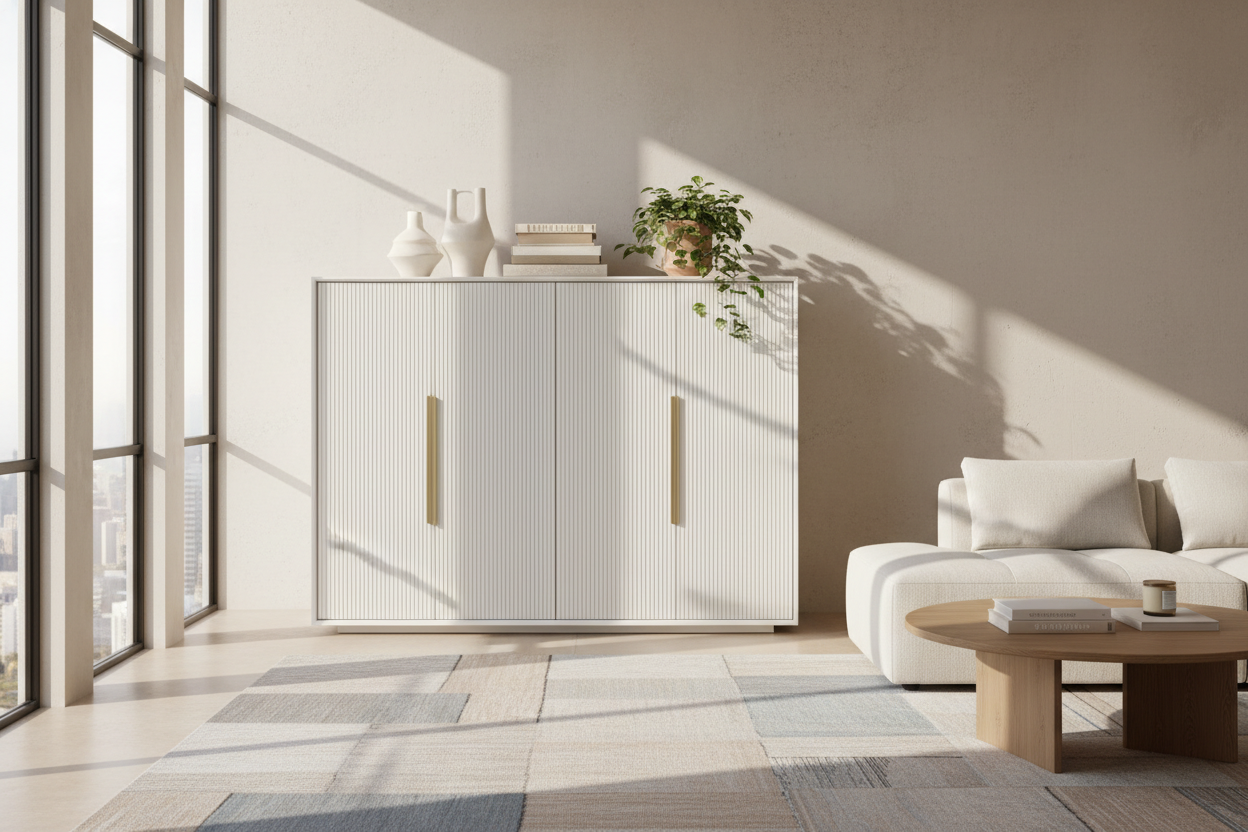
We have all been there. You desperately need more storage, but bringing a massive box of wood into your living room feels like inviting an elephant to dinner. Finding the right balance between hiding your household clutter and keeping the room feeling airy is a delicate design dance. When clients ask me for maximum vertical storage, my mind immediately goes to a 6ft tall cabinet. But buying one is only half the battle; knowing where to place it and what silhouette to choose dictates whether your room feels like a curated home or a cramped warehouse.
By the end of this guide, you will know exactly how to scale, position, and select the right tall storage for your specific floor plan without sacrificing aesthetic appeal.
Quick Decision Guide
- Anchor it visually: Place tall pieces against load-bearing or solid walls, avoiding high-traffic bottlenecks.
- Mind the ceiling: Ensure at least 24 inches of negative space between the top of the cabinet and the ceiling to maintain visual height.
- Mix storage types: Opt for a freestanding storage cabinet with drawers at the base and shelving up top to maximize everyday usability.
- Anchor for safety: Always use anti-tip hardware, especially on carpeted floors or in homes with children.
Space Planning: Getting the Proportions Right
Vertical vs. Horizontal Footprints
When floor space is at a premium, going vertical is a necessity. A standard 6-foot vertical piece draws the eye upward, making standard 8-foot ceilings feel slightly taller if styled correctly. However, if you have a massive blank wall, a narrow vertical piece might look orphaned. In those cases, I often pivot clients toward a 6 foot wide storage cabinet or even a 6 foot long storage cabinet to ground the room horizontally and fill the visual void appropriately.
Mid-Height Alternatives
Sometimes, six feet is just too imposing for a specific zone. If you are working with sloped ceilings, large windows, or prominent chair rails, you might need to drop the height. A 54 inch tall storage cabinet provides excellent volume while leaving the upper third of the wall open for artwork or sconces. Alternatively, a 34 inch storage cabinet works beautifully tucked under a standard window sill or positioned directly behind a floating sofa.
Functionality Meets Silhouette
Concealed vs. Open Storage
Visual weight matters heavily in residential spaces. A solid wood freestanding tall storage cabinet with slab doors will feel significantly heavier and more dominant than one with glass fronts, louvers, or cane webbing. If you need to hide unsightly items like board games, internet routers, or winter gear, look for a piece that offers mixed utility. A lower section with drawers gives you drop-zone practicality, while keeping the upper section reserved for display or lighter items.
Designer's Honest Take
I love the architectural presence of a massive cabinet, but I learned a hard lesson about floor leveling in a pre-war Boston apartment a few years ago. I specified a stunning, solid oak tall free standing storage cabinet for a client's dining room. It looked incredible on the mood board.
What I did not account for was the slight dip in the 100-year-old pine floors. Because the cabinet was so tall, a mere quarter-inch slope at the base translated to an alarming two-inch lean at the top. We had to shim the front legs so aggressively that it ruined the aesthetic of the baseboard profile, and the doors never swung quite right. Now, I always check the floor level with a laser before ordering anything over five feet tall. Also, a fair warning: solid black or dark espresso finishes on these large pieces will show every single speck of dust right at eye level.
Frequently Asked Questions
Is a 6ft cabinet too tall for an 8-foot ceiling?
Not at all. A 72-inch piece leaves exactly two feet of negative space in an 8-foot room. This is enough breathing room to prevent the furniture from feeling cramped, provided you do not clutter the top of the cabinet with faux plants or heavy baskets.
How do I keep a tall freestanding piece from tipping?
Every tall cabinet must be secured to a wall stud using an anti-tip bracket or heavy-duty furniture strap. Baseboards often create a gap at the back of the furniture, shifting the center of gravity forward, making wall anchoring absolutely non-negotiable.
Can I use a tall cabinet in a hallway?
Yes, but you must strictly monitor the depth. Hallways need a minimum of 36 inches of clear walking space. If your hallway is narrow, look for a piece that is 15 inches deep or less to avoid creating a claustrophobic bottleneck.


Dejar un comentario
Este sitio está protegido por hCaptcha y se aplican la Política de privacidad de hCaptcha y los Términos del servicio.