











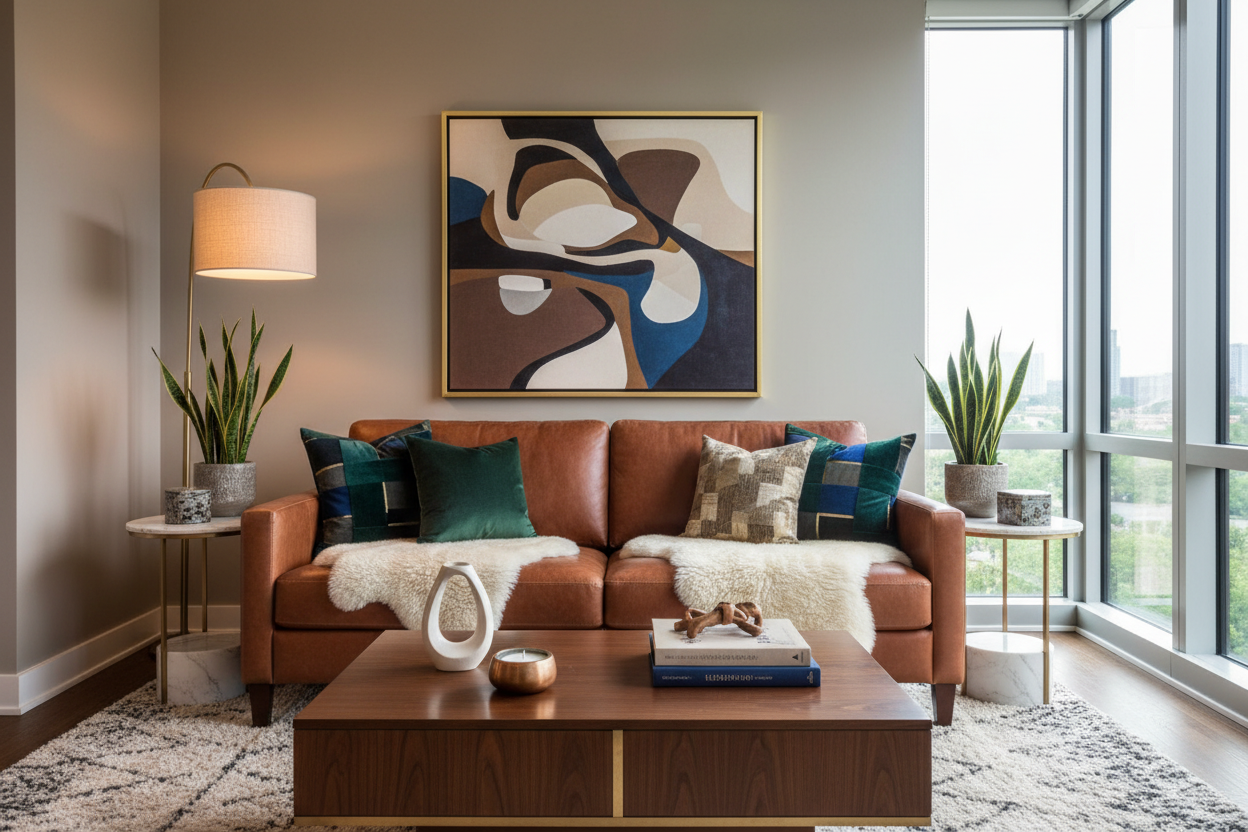
Small living spaces often suffer from "furniture fatigue"—where pieces are either too bulky for the footprint or too delicate to offer real comfort. The solution usually lies in finding an anchor piece that balances visual weight with a compact silhouette. A brown leather 2 seater couch is that rare unicorn in interior design: it offers the gravitas of a full-sized sofa but fits neatly into studios, dens, and apartments.
Quick Decision Guide: Key Features to Look For
If you are browsing showrooms or scrolling online right now, keep this checklist handy to ensure you are buying an investment piece, not just temporary seating.
- Leather Grade: Opt for Full-Grain or Top-Grain leather. Avoid "Bonded" leather, which will peel within a few years.
- Frame Construction: Look for kiln-dried hardwood frames rather than particle board to prevent warping.
- Suspension System: Eight-way hand-tied springs or heavy-gauge sinuous springs offer the best longevity.
- Cushion Fill: High-resiliency foam wrapped in down provides the ideal balance of structure and "sink-in" comfort.
- Dimensions: Standard width is usually between 50" and 68". Measure your wall and your entryways.
Choosing the Right Leather Grade and Finish
As a specialist, I cannot stress this enough: the quality of the hide dictates the longevity of your furniture. When selecting a brown leather 2 seater sofa, you are generally choosing between protection and patina.
Aniline Leather is the most natural, showing the hide's unique scars and pores. It is incredibly soft but susceptible to staining. It develops a rich vintage look over time. Pigmented or Semi-Aniline Leather has a protective top coat. It looks more uniform and resists spills, making it the pragmatic choice for households with pets or children. For a deep, moody aesthetic, a cocoa or espresso hue works best; for a lighter, Mid-Century Modern vibe, look for cognac or camel tones.
Space Planning & Layout
The beauty of a brown leather sofa two seater lies in its versatility. In a large living room, it serves as excellent secondary seating perpendicular to a main sofa. In a smaller apartment, it becomes the focal point.
When placing the piece, ensure you have at least 18 inches of clearance between the sofa edge and your coffee table. Because leather is a visually "heavy" material, balance it with lighter elements. If your floors are dark wood, float the couch on a light, textured rug—think jute or a cream wool blend—to create necessary contrast.
Ergonomics and Silhouette
Not all compact sofas are created equal regarding comfort. A brown leather couch 2 seater with a low back and deep seat (typical of lounging styles) requires more floor space than a high-back, upright Chesterfield design.
Pay attention to the arm width. Wide, rolled arms can eat up 10 to 12 inches of horizontal space without adding seating area. For tight urban spaces, a track arm (square and narrow) maximizes the sitting area relative to the overall footprint.
Color Coordination and Texture
Brown leather is essentially a neutral, but it carries warm undertones. To prevent the room from feeling muddy, avoid matching the brown leather sofa 2 seater too closely with wood furniture of the same stain. Instead, mix your woods. A walnut couch leg pairs beautifully with an oak coffee table.
Introduce cool tones to cut through the warmth. Navy blue throw pillows, sage green walls, or slate grey ceramics create a sophisticated palette that allows the rich leather tones to pop.
Lessons from My Own Projects
I want to share a specific experience from a renovation I did for a client's home office in Chicago. We installed a stunning, full-grain cognac leather loveseat. It looked immaculate on day one.
Two weeks later, the client called me, concerned because the leather felt "slippery" and cold when they first sat down in the mornings, and they had noticed a distinct scratch where their golden retriever had jumped up.
Here is the reality I told them, and that I will tell you: Leather is organic. The "cold shock" is real, but it warms to body temperature within seconds—something fabric doesn't do. As for the scratch? On high-quality pull-up leather, you can often rub light scratches out with the heat of your thumb. We buffed it out right there. But more importantly, I taught them that a pristine leather couch lacks soul. The best-looking leather furniture I've ever seen is usually ten years old, showing the friction of life. Don't fear the first scratch; it's the beginning of the sofa's story.
Conclusion
Investing in a brown leather 2 seater couch is a commitment to enduring style. It bridges the gap between masculine structure and organic warmth, capable of elevating a studio apartment or completing a grand drawing room. Choose your grain wisely, measure your clearance, and let the leather age naturally.
Frequently Asked Questions
How do I maintain a brown leather 2 seater sofa?
Dust it weekly with a microfiber cloth to prevent abrasion. Every 6 to 12 months, apply a specialized leather conditioner to keep the hide supple and prevent cracking. Avoid placing the sofa in direct sunlight, as UV rays will fade the brown dye and dry out the leather.
What is the difference between a 2 seater and a loveseat?
Technically, they are often the same, but industry jargon varies. A "loveseat" is traditionally designed for two people to sit close together (typically 50-60 inches wide). A "2 seater sofa" might be slightly wider (up to 70 inches), offering two distinct cushions and a bit more personal space.
Does brown leather work in a small, dark room?
It can, provided you manage the lighting. If the room has limited natural light, opt for a lighter "saddle" or "tan" brown rather than dark chocolate. Use ambient floor lamps and light-colored throws to prevent the sofa from disappearing into the shadows.


Dejar un comentario
Este sitio está protegido por hCaptcha y se aplican la Política de privacidad de hCaptcha y los Términos del servicio.