










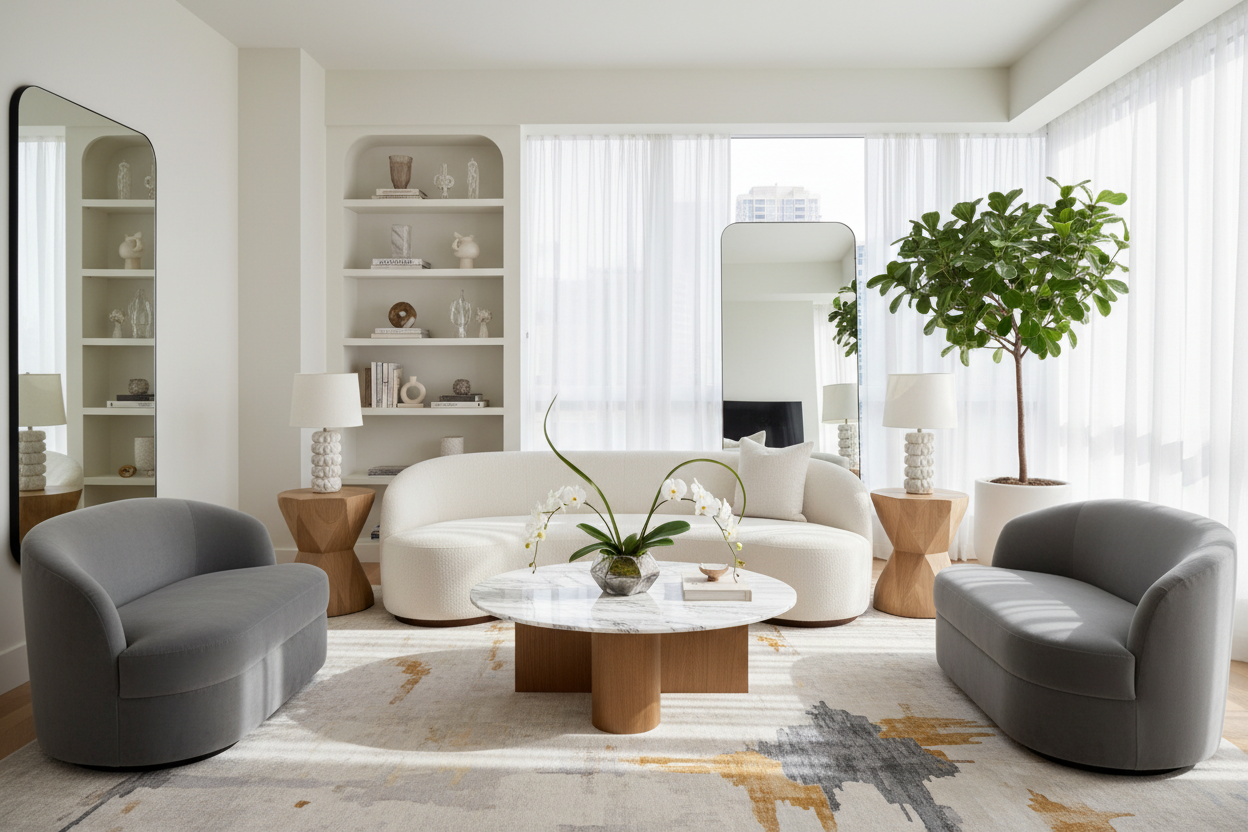
Rectangular rooms filled with rectangular furniture often suffer from the "shoe-box effect." The energy feels stagnant, and the traffic flow becomes rigid. As a designer, my favorite antidote to this geometric monotony is the curved loveseat. Unlike standard linear seating, a rounded silhouette introduces organic movement, softening the harsh architectural lines of a room while encouraging conversation. Whether you are looking to create an intimate vignette in a grand living room or maximize flow in a tight apartment, the curved form is a sophisticated problem solver.
Key Features to Look For
Before committing to a purchase, review these critical specifications to ensure the piece fits your lifestyle and space requirements:
- Suspension Quality: Curved frames put different tension on springs than straight ones. Look for 8-way hand-tied springs or high-density sinuous springs to prevent the "center sag" common in lower-end rounded loveseats.
- Upholstery Tension: Check the fabric on the inside curve. It should be taut. If you see bunching or loose fabric on a brand new curved back loveseat, it will only get worse with use.
- Seat Depth vs. Curve Radius: A tight radius (a deeper curve) often reduces usable seat depth at the corners. Ensure the center seat depth is at least 22 inches for comfort.
- Base Construction: For a modern curved loveseat, a recessed plinth base creates a floating effect, while exposed legs can make a small curved loveseat feel lighter and less bulky.
Choosing the Right Material for Curves
The upholstery you choose for a curved loveseat sofa matters more than it does for linear furniture. Because the fabric must stretch around a radius, patterns (like stripes or plaids) are notoriously difficult to align and often look distorted. I almost exclusively recommend solids or non-directional textures.
For a high-traffic area, a curved leather loveseat is timeless, but be aware that leather requires seams to navigate the curve. High-end manufacturers use these seams as a design element, creating vertical channeling or a curved tufted loveseat look. If you prefer softness, textured fabrics like bouclé or velvet are excellent at hiding the minor surface variations that occur on a rounded back loveseat.
Space Planning and Layout
Breaking the Grid
The most common mistake homeowners make is pushing a curved sofa and loveseat flush against a flat wall. Curves are meant to float. Even pulling the piece three inches off the wall allows the silhouette to breathe. In open-concept homes, a large round loveseat acts as a sculptural divider, separating the lounge area from the dining space without blocking the visual line.
Small Space Solutions
Contrary to popular belief, curved loveseats for small spaces are brilliant space-savers. A small round loveseat or circle loveseat lacks sharp corners, which allows for better traffic flow in tight quarters. You can angle a curved settee loveseat in a corner where a rectangular sofa would feel wedged in. For studio apartments, a curved loveseat sleeper is a rare find but offers dual functionality, though the mechanism often requires a slightly bulkier base.
Defining the Style
The silhouette dictates the era. A mid century curved loveseat typically features tapered wooden legs and a kidney-bean shape. Conversely, a contemporary curved loveseat often sits lower to the ground, perhaps in a white curved loveseat bouclé finish for that trending "cloud" aesthetic.
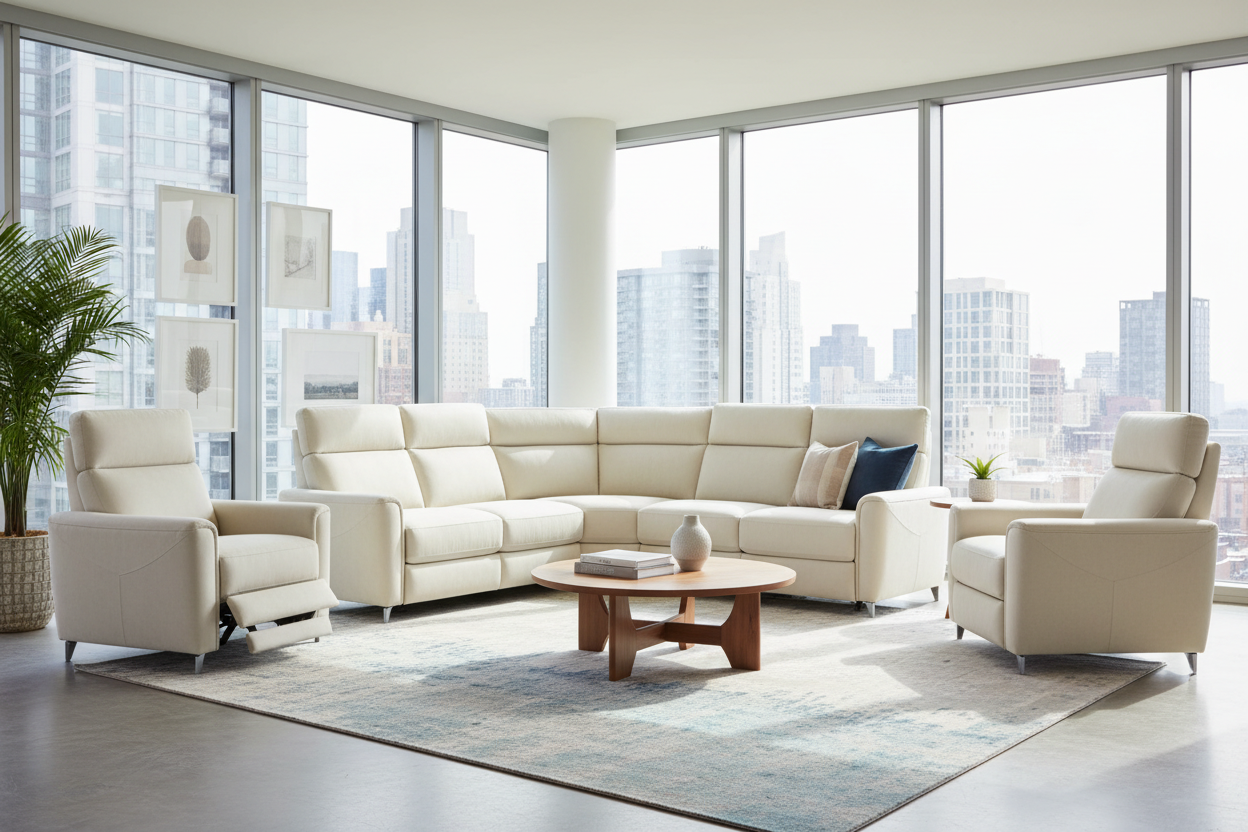
For bedrooms or reading nooks, a round swivel loveseat is incredibly functional, allowing the user to pivot toward a window view or back toward the room. If you are looking for pure relaxation, a curved reclining loveseat exists, though the motion mechanisms tend to disrupt the clean lines that make curved furniture desirable.
Lessons from My Own Projects
I recently specified a stunning, velvet oval loveseat sofa for a client's high-rise apartment. It looked architectural and beautiful in the renderings. However, once it arrived, I learned a practical lesson about "throw pillow slippage."
Because of the curved back loveseat design, standard square throw pillows refused to stay upright—they constantly slid into the corners or fell flat because there was no 90-degree angle to support them. I had to switch to heavy, weighted sphere pillows and lumbar cushions to maintain the look.
Another detail rarely mentioned in product descriptions is the "knee knock" effect. On a tighter circle loveseat couch, two people sitting properly will have their knees angled toward each other. It creates intimacy, sure, but for a formal sitting room, a slightly wider curved arm loveseat with a gentler radius is often less awkward for guests who aren't a couple. Also, if you are eyeing an oversized round loveseat, measure your doorways diagonally. We once had to hoist a round love chair over a balcony because the fixed curved back wouldn't clear a narrow hallway turn.
Conclusion
Integrating a curved loveseat into your home is a declaration that you value flow over rigidity. Whether you opt for a vintage wicker loveseat for a sunroom or a plush curved loveseat modern design for your main living area, the result is a space that feels softer, more welcoming, and intentionally designed. Trust the curve to lead the eye and soften the edges of your daily life.
Frequently Asked Questions
1. Can I pair a curved loveseat with a rectangular coffee table?
You can, but it creates visual tension. Ideally, you should pair a round loveseat sofa with a round or organic-shaped coffee table. If you must use a rectangle, ensure it has rounded corners or glass elements to minimize the clash. A round loveseat with ottoman is often the safest and most cohesive pairing.
2. Are curved loveseats comfortable for lounging?
Yes, particularly if you enjoy curling up. The curvy loveseat shape naturally cradles the body in the corner spots. However, for lying flat, a small curved loveseat sofa might be restrictive due to the bend. If napping is a priority, look for an oval loveseat with a flatter central section.
3. How do I style a curved corner loveseat?
A curved corner loveseat is perfect for utilizing "dead space." Place a tall floor lamp behind the curve to cast a glow that highlights the silhouette. Don't push it fully into the corner; leave a gap for the light to create depth, making the round back loveseat pop against the shadows.

Dejar un comentario
Este sitio está protegido por hCaptcha y se aplican la Política de privacidad de hCaptcha y los Términos del servicio.