










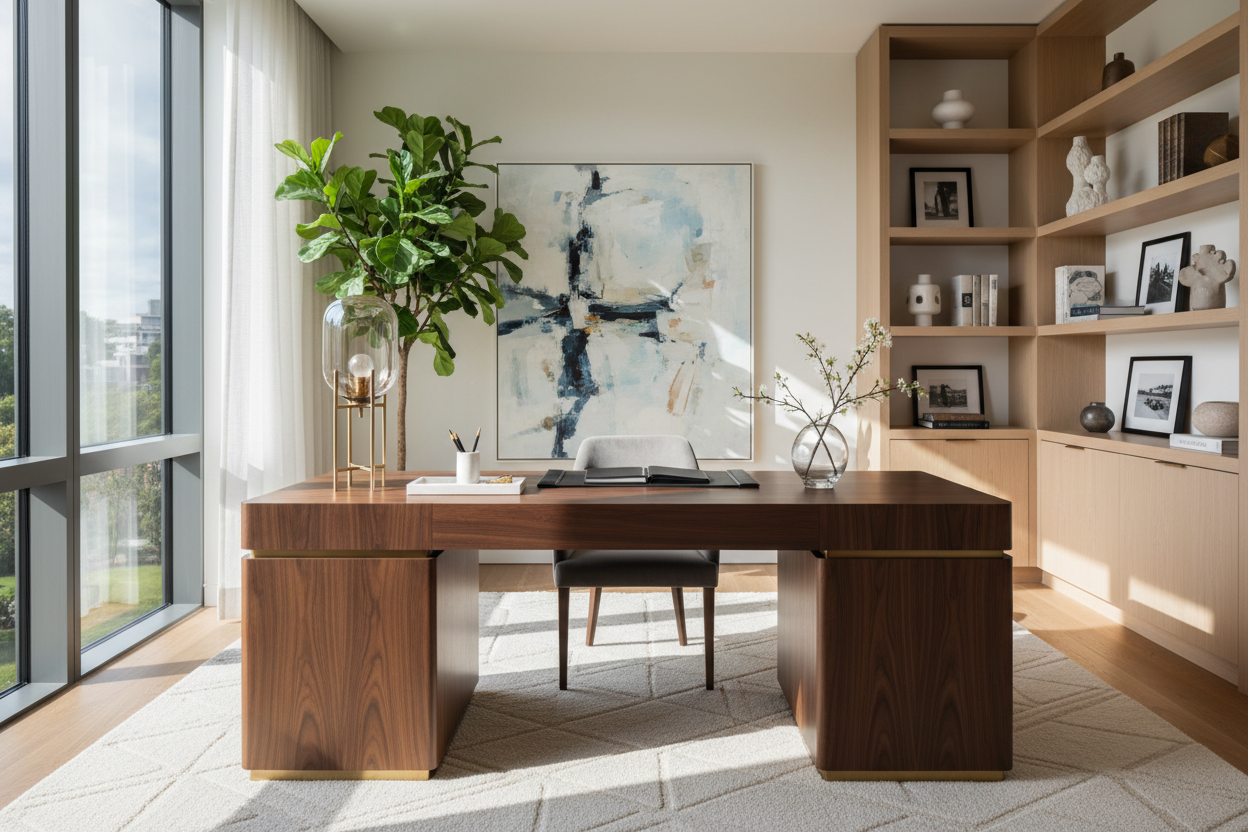
There is a distinct difference between a workspace that merely functions and one that inspires. As an interior designer, I often walk into homes where the desk is treated as an afterthought—a utilitarian slab pushed against a wall. However, the right setup does more than hold your laptop; it sets the tone for your entire professional mindset. When selecting and styling a home office decor desk, the goal is to bridge the gap between ergonomic necessity and sculptural beauty.
Quick Decision Guide: Key Features to Look For
If you are currently shopping for a desk or looking to upgrade your existing setup, prioritize these four elements to ensure longevity and style:
- Visual Weight: Does the desk ground the room (solid wood/pedestal) or keep it airy (glass/acrylic)? Choose based on room size.
- Material Integrity: Look for kiln-dried hardwoods or high-grade veneers over particle board for durability.
- Cable Management: A truly decorative desk hides the chaos. Look for integrated grommets or hidden channels.
- Surface Tactility: Ensure the texture allows for smooth writing; heavily reclaimed wood looks great but requires a blotter.
Choosing the Right Material: Beyond Aesthetics
The material of your desk dictates the room's atmosphere. In my practice, I often steer clients toward materials that age gracefully. A decorative home office desk made of solid walnut or oak develops a patina over time, telling the story of your work. Conversely, high-gloss lacquer offers a modern, chic silhouette but demands constant maintenance to remain pristine.
The Glass Dilemma
Glass desks are fantastic for small spaces because they disappear visually, reducing clutter. However, be mindful of the "cold factor." Glass creates a stark, chilly surface that can be uncomfortable on the forearms during long work sessions. If you choose glass, pair it with a warm, upholstered chair or a leather desk pad to soften the experience.
The Art of Layering: Styling Your Surface
Once the furniture is in place, the challenge shifts to home desk decor. The mistake most homeowners make is overcrowding. A luxury look relies on negative space—areas of the desk left intentionally empty to allow the eye (and the mind) to rest.
The Rule of Three
When accessorizing, group items in odd numbers. For a balanced vignette, try combining a vertical element (a sculptural lamp), a horizontal element (a stack of two or three art books), and an organic element (a small succulent or fresh florals). This triad creates a dynamic visual flow without cluttering your primary work zone.
Lighting as a Design Element
Never rely solely on overhead lighting. A task lamp is the jewelry of the desk. For a sophisticated look, move away from purely industrial, spring-loaded architect lamps. Instead, opt for fixtures with marble bases, brass accents, or linen shades. This integrates the desk into the broader residential design, making it feel like part of the home rather than a corporate cubicle transplant.
Lessons from My Own Projects
I want to share a specific realization I had while designing a study for a client in Chicago. We selected a stunning, high-gloss black lacquer desk—it looked incredible in the showroom. However, within a week, the client called me. The issue wasn't the look; it was the reflection.
The glossy surface acted like a mirror, reflecting the movement of the ceiling fan above, which created a subtle, strobe-like distraction in her peripheral vision. It was a migraine trigger we hadn't anticipated. We solved it by adding a large, matte leather blotter, but it taught me a valuable lesson: always consider how your desk surface interacts with your lighting sources. Now, I always test surface glare with a flashlight during site visits before ordering high-gloss finishes.
Conclusion
Curating the perfect workspace is about balancing the visual weight of the furniture with the functionality required for your daily tasks. By choosing materials that age well and styling with intentionality, your desk becomes more than a workstation—it becomes a centerpiece of design.
Frequently Asked Questions
How do I style a small desk without losing workspace?
Utilize vertical space. Instead of placing decor on the desk surface, install floating shelves directly above the desk for books and plants. Keep the desktop reserved for a lamp and your computer.
What is the ideal height for a home office desk?
Standard desk height is between 29 and 30 inches. However, comfort depends on your chair height. Ensure there is at least 10 to 12 inches of clearance between the seat of your chair and the underside of the desk for leg comfort.
Can I mix wood tones between the desk and other furniture?
Absolutely. Mixing wood tones adds depth and prevents the "catalog matchy-matchy" look. The trick is to keep the undertones consistent (e.g., mixing warm walnut with warm cherry, rather than a cool ash).

Dejar un comentario
Este sitio está protegido por hCaptcha y se aplican la Política de privacidad de hCaptcha y los Términos del servicio.