










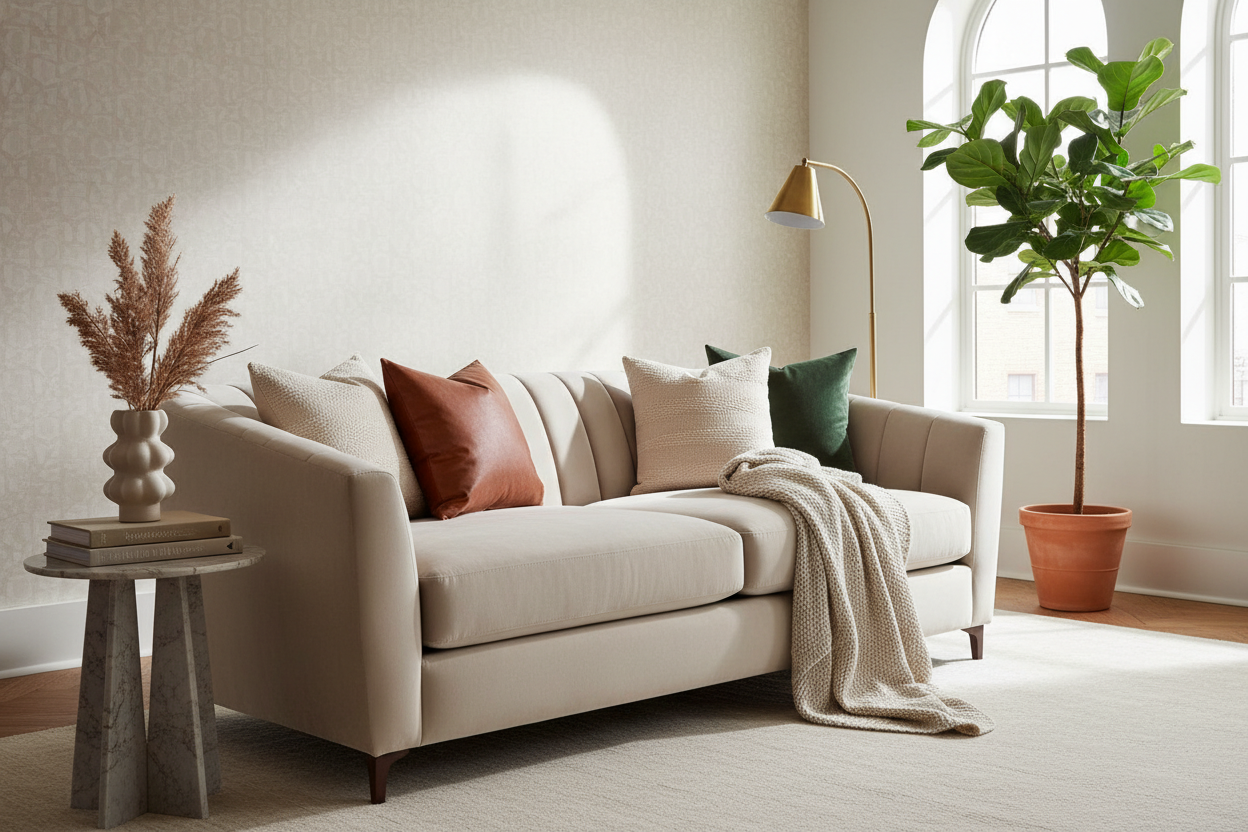
There is often a tension in interior design between structured elegance and genuine livability. We want our homes to look curated, but we also want to sink into them at the end of a long day. This is where the plush loveseat bridges the gap. It offers the intimacy of a dedicated seating zone while providing the tactile luxury that rigid, mid-century modern pieces often lack. Whether you are furnishing a compact city apartment or creating a reading nook in a master suite, selecting the right overstuffed two-seater requires more than just testing the softness; it requires an understanding of scale, fabric performance, and internal construction.
Key Features to Look For
- Suspension System: Look for eight-way hand-tied springs or sinuous springs for long-term bounce and support.
- Cushion Fill: A high-density foam core wrapped in down or a down-alternative provides the best balance of structure and "sink-in" comfort.
- Upholstery Durability: Check the "double rub" count. For plush textures, aim for 30,000+ rubs to prevent bald spots on velvet or chenille.
- Seat Depth: For true lounging, a depth of at least 24 inches is ideal, though it requires more floor space.
Selecting the Right Upholstery
When dealing with plush furniture, the fabric is not just a finish; it is the defining characteristic of the piece. Because the surface area is smaller than a sofa, you can afford to be bolder with texture without overwhelming the room.
Performance Velvet vs. Bouclé
Velvet is the traditional choice for a lavish feel. However, cotton velvet is prone to crushing and staining. For high-traffic living rooms, I always recommend a performance velvet (often polyester-based) which mimics the sheen and softness of natural fibers but resists liquid spills. Bouclé, with its looped yarn, offers a nubby, matte texture that hides pet hair exceptionally well, though it can snag if you have cats with claws.
Analyzing Comfort and Ergonomics
The term "plush" suggests softness, but softness without structure leads to back pain. The most common mistake homeowners make is buying a piece that is 100% down-filled. While it feels like a cloud initially, it requires constant fluffing and offers zero lumbar support.
Ideally, you want a "sandwich" construction. This involves a solid core of high-resiliency foam to maintain the silhouette, wrapped in a thick layer of feathers or Dacron fiber. This ensures that when you stand up, the loveseat recovers its shape rather than looking deflated and messy.
Visual Balance and Scale
Because these loveseats are voluminous by nature, they carry a lot of visual weight. If you place a chunky, floor-hugging loveseat in a small room, it can look heavy and block energy flow. To counter this, consider a design with exposed legs. Seeing the floor beneath the furniture tricks the eye into perceiving the room as larger. Conversely, in a large, open-plan space, a skirted or block-base loveseat helps ground the area and creates a solid focal point.
Lessons from My Own Projects
I once specified a gorgeous, deep-seated, down-filled loveseat for a client's reading corner in a high-rise renovation. It was visually stunning—pure white linen, incredibly soft. However, I learned a hard lesson about "functional friction." The fabric was so smooth and the fill so soft that the client, who preferred reading in a semi-upright position, kept sliding down. She called me three weeks later saying she needed extra throw pillows just to maintain posture.
Since then, I check the "pitch" (the angle of the seat to the back). If a client wants a truly plush experience, I ensure the fabric has a bit of grip (like a textured weave) and that the back cushions are firm enough to push against. Luxury is useless if you have to fight your furniture to get comfortable.
Conclusion
Investing in a plush loveseat is a commitment to comfort. By prioritizing a supportive core, selecting high-performance textured fabrics, and balancing the visual weight of the piece with your room's dimensions, you can create a sanctuary that looks expensive but feels like home.
Frequently Asked Questions
How do I maintain the shape of a plush loveseat?
Rotate and flip the cushions weekly. If the cushions are removable, vacuum the fabric underneath to prevent grit from wearing down the material. For down-filled pieces, vigorous "fluffing" is required to redistribute the feathers.
Can two adults comfortably fit on a loveseat?
Standard loveseats range from 52 to 71 inches. For two adults to sit without touching shoulders, look for a width of at least 60 inches inside the arms (excluding the armrest width).
Is velvet a bad idea for homes with pets?
Surprisingly, performance velvet is excellent for pets. It has a tight weave that claws cannot easily penetrate, and pet hair usually wipes off with a damp hand or lint roller, unlike woven linens where hairs get trapped in the fibers.

Dejar un comentario
Este sitio está protegido por hCaptcha y se aplican la Política de privacidad de hCaptcha y los Términos del servicio.