










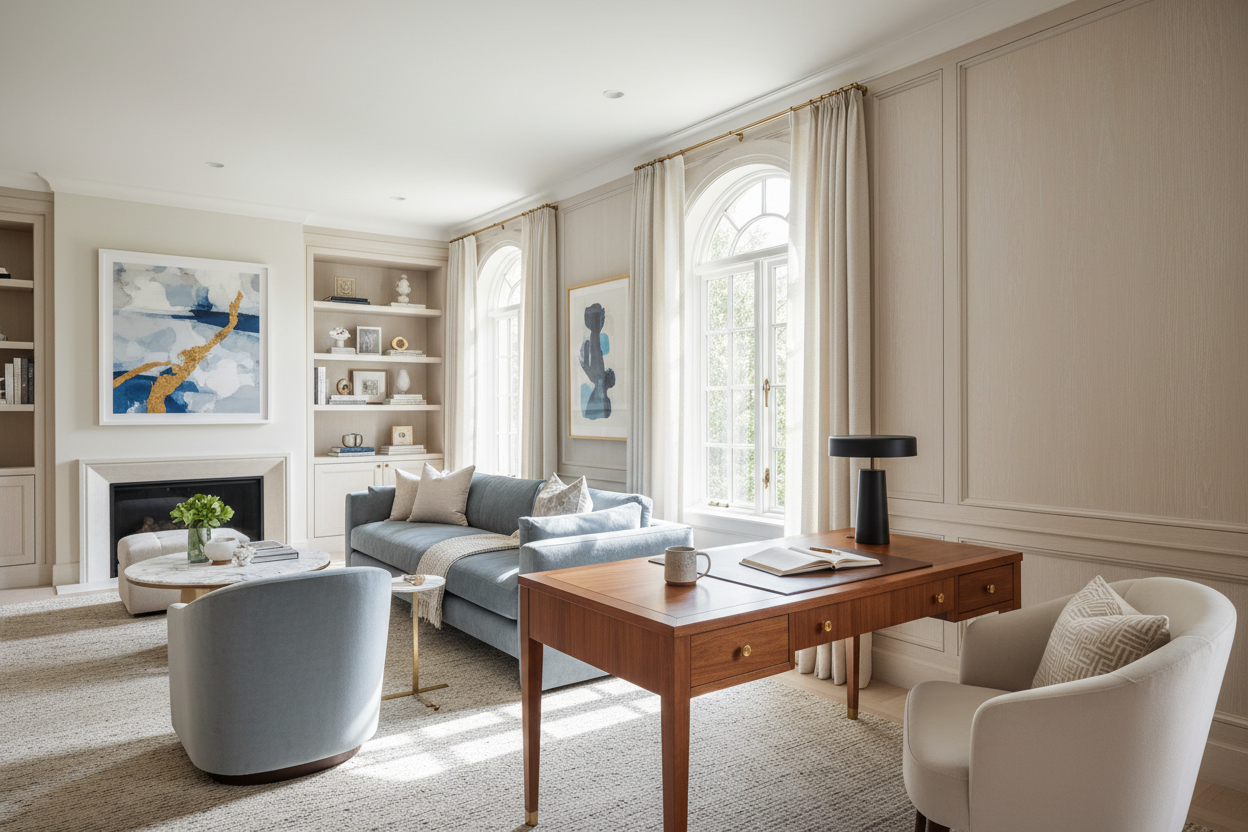
One of the most frequent dilemmas I encounter in residential design is the battle between functionality and leisure. You need a dedicated workspace, but you are terrified that introducing a computer and task chair will disrupt the serene, curated atmosphere of your lounge. It is a valid concern; nobody wants their relaxation zone to feel like a corporate cubicle. However, with intentional planning and sophisticated **sitting room with desk ideas**, we can integrate a workspace that enhances, rather than detracts from, your interior architecture.
Key Features for a Seamless Office Integration
- Visual Weight: Opt for desks with slender legs or open frames to maintain spatial flow, rather than heavy, blocky pedestal desks.
- Material Continuity: Ensure the desk finish (e.g., walnut, marble, brass) matches or complements your existing coffee and side tables.
- Concealed Tech: Look for furniture with integrated cable management or hidden compartments to keep cords out of sight.
- Lighting Layers: Replace harsh fluorescent task lamps with architectural table lamps that provide warm, directional light.
Mastering the Layout: Beyond the Wall Push
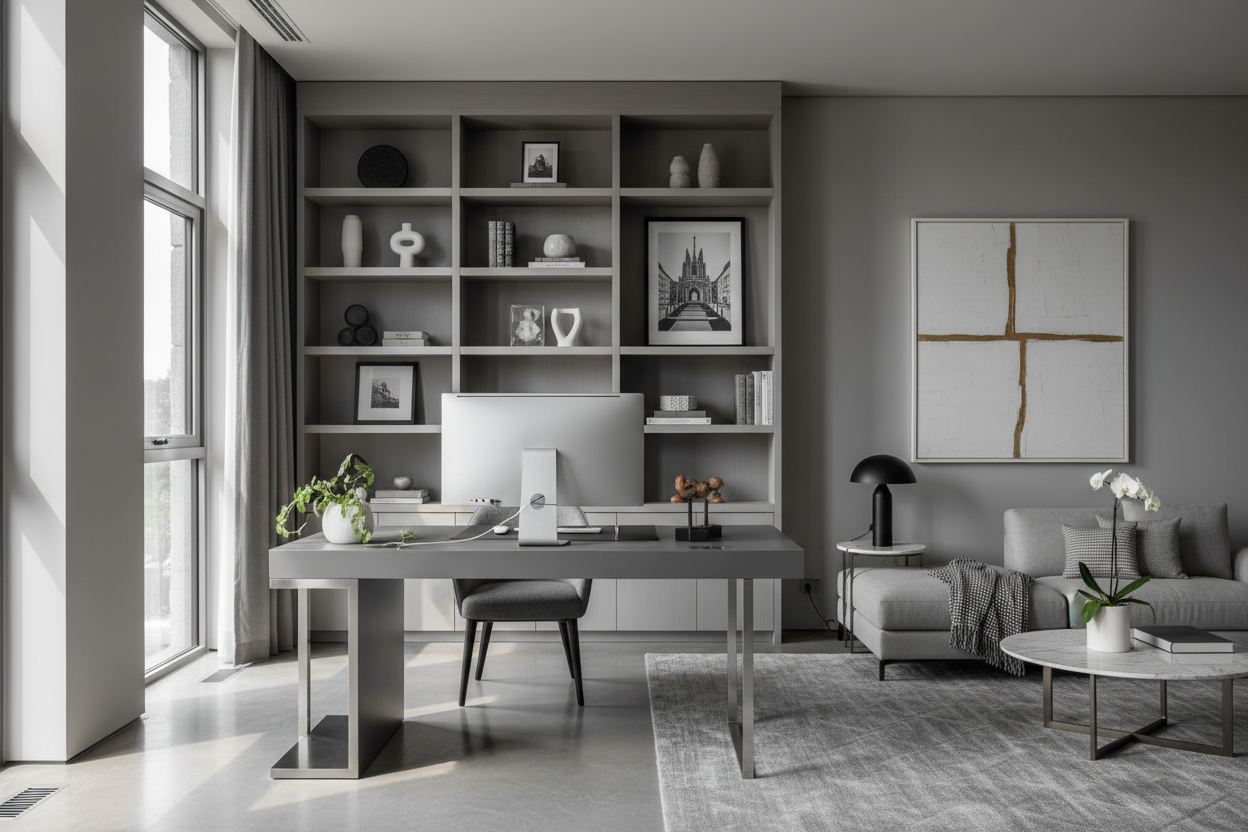
The default instinct when creating an office space in your living room is to push a desk against an empty wall. While functional, this often looks like an afterthought. In an open concept living room office, consider floating the desk. Placing a desk directly behind a floating sofa is a brilliant use of negative space. It acts as a console table when not in use and allows you to face the room—and the view—rather than a blank wall while you work.
The Alcove Advantage
If your room features architectural recesses, such as spaces flanking a fireplace, these are prime real estate for a bespoke wooden office wall design. Built-in joinery here feels intentional and permanent. By installing floating shelves above a custom desktop, you maximize vertical storage without encroaching on the floor plan.
Furniture Selection: The "Anti-Office" Aesthetic
When selecting a desk in formal living room settings, treat the piece as furniture first and a workstation second. Avoid melamine and plastic.
Materiality and Texture
For a living room office table, solid wood or high-quality veneers are non-negotiable for longevity and tactile appeal. A rich walnut desk pairs beautifully with a velvet sofa, grounding the space. If you are working with a small living room with desk area, consider a glass or acrylic desk. These materials have zero visual weight, allowing the eye to travel through the piece, making the room feel larger.
The Seating Dilemma
A massive, ergonomic mesh chair will ruin the aesthetic of a formal sitting area. Instead, look for a "living office design" chair—one that offers lumbar support but is upholstered in leather or high-performance fabric. It should look like a dining armchair or a cocktail chair, not something stolen from an IT department.
Lighting and Technology Integration
Nothing breaks the illusion of a luxury lounge faster than a tangle of HDMI cables. When planning your office space setup ideas, position the desk near floor outlets to avoid trailing cords across the rug. For office tv ideas, consider using a high-end monitor that doubles as a smart TV, or utilize a 'Frame' style TV on the wall above the desk that displays art when the spreadsheet is closed.
Lessons from My Own Projects
I recently redesigned a townhouse where the client insisted on a home office lounge room idea that felt entirely invisible after 6:00 PM. I specified a stunning, high-gloss lacquered writing desk that looked incredible in the showroom. However, here is the unpolished truth I learned from that installation: fingerprints are a nightmare.
Every time the client sat down to type, their wrists left smudges on the high-gloss surface, which were painfully visible under the downlights. We eventually had to have a custom leather blotter made to cover the working area. Additionally, we initially used a vintage rug under the desk. Within three months, the constant friction of the chair legs (even without casters) began to wear down the pile in a specific arc. Now, I always advise clients to use a low-pile, high-density rug or a transparent floor protector if they plan to use the desk daily.
Conclusion
Integrating a workspace into your main living area doesn't mean sacrificing style for utility. By focusing on material continuity, smart layouts, and furniture that whispers rather than shouts, you can create a space that is as productive as it is beautiful.
Frequently Asked Questions
How do I fit a desk in a small living room with a sofa?
In a small living room with home office requirements, utilize vertical space. A ladder desk or a wall-mounted secretary desk allows you to fold the workspace away when not in use, preserving floor space for traffic flow.
What is the best location for a desk in a family room?
For a home office in family room layouts, try to position the desk perpendicular to a window. This reduces screen glare while offering natural light. Avoid placing the desk directly in the main thoroughfare to minimize distractions.
How can I hide my monitor in a formal living room?
If you use a large monitor, consider a desk with a lift mechanism or place the desk inside an armoire with pocket doors. Alternatively, simply draping a structured linen throw over the monitor when guests arrive is a quick, stylist-approved hack.


Dejar un comentario
Este sitio está protegido por hCaptcha y se aplican la Política de privacidad de hCaptcha y los Términos del servicio.