










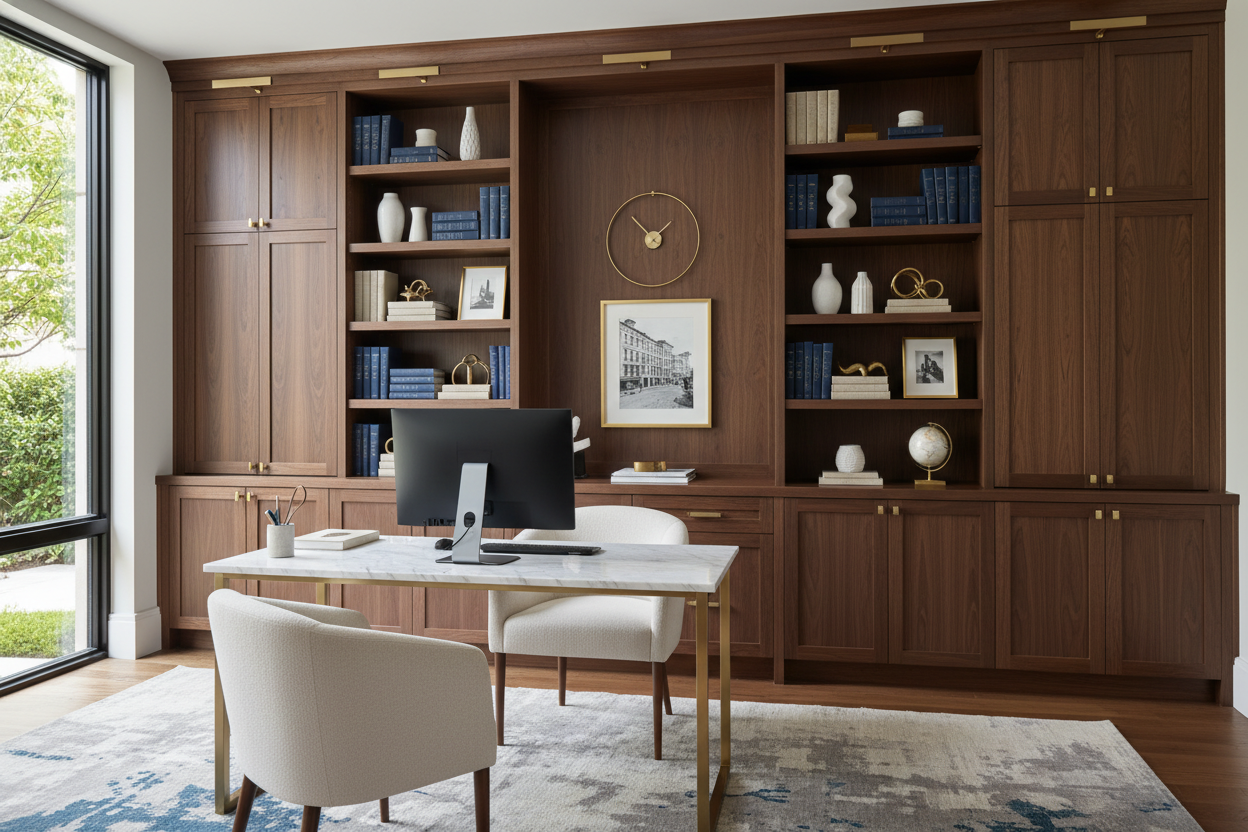
There is nothing quite as distracting as visual noise. When I walk into a client's workspace, the first thing I notice isn't the desk chair or the view—it is the clutter accumulation on temporary shelving units that don't quite fit the room's architecture. The difference between a chaotic room and a productive sanctuary often comes down to successful built in office cabinets ideas. Custom joinery does more than hide files; it anchors the room, corrects awkward architectural quirks, and provides a level of sophistication that freestanding furniture simply cannot replicate.
Key Features to Consider Before Building
- Material Durability: Opt for hardwoods or high-pressure laminates for surfaces that will endure daily friction.
- Cable Management: Ensure integrated grommets and hidden channels are planned behind the joinery to avoid wire clutter.
- Lighting Integration: Plan for routed channels to house LED strip lighting for both task and ambient illumination.
- Ergonomic Depth: Lower cabinets should generally be 24 inches deep for equipment, while upper shelving should be shallower (12-14 inches) to prevent visual heaviness.
- Hardware Selection: Treat pulls and knobs as the jewelry of the unit; they define the style era.
Defining the Layout and Silhouette
When exploring office built-in cabinet ideas, the first step is analyzing the room's footprint. A common error is assuming built-ins must occupy a single wall. In smaller rooms, I often recommend an L-shaped configuration that wraps around a corner. This maximizes square footage without encroaching on the central circulation path.
For a more executive feel, floor-to-ceiling units create a library aesthetic. However, be wary of the "wall of wood" effect. Breaking up solid cabinetry with open shelving or glass-fronted upper cabinets relieves visual weight and prevents the room from feeling claustrophobic.
Materiality: Beyond Basic White
While white shaker cabinets are timeless, current home office ideas with built in cabinets are trending toward richer, moodier tones. Walnut and white oak veneers offer warmth and texture that grounded a space. If you prefer painted finishes, consider deep charcoals, navies, or forest greens.
Mixing Materials for Depth
To avoid a flat look, incorporate contrasting materials. For example, a natural wood countertop breaking up painted vertical cabinetry adds a layer of luxury. Similarly, using a stone or quartz slab for the desktop area within the built-in not only looks stunning but provides a cool, durable surface for writing and laptop use.
Functionality: The Hidden Details
A beautiful cabinet is useless if it doesn't function. When curating home office built in cabinet ideas, consider what needs to be hidden versus displayed. Printers are notoriously unattractive; I always design a pull-out shelf on heavy-duty slides specifically for the printer, hidden behind a cabinet door. Ventilation is key here—electronics generate heat, and enclosing them without slotted toe kicks or mesh inserts can lead to equipment failure.
Lighting as a Design Element
Never rely solely on the room's overhead fixture. Built-ins offer the perfect opportunity for layered lighting. Undercabinet lighting is non-negotiable for task areas. For open display shelves, vertical LED channels recessed into the side panels cast a sophisticated glow that highlights books and decor without the glare of traditional puck lights.
Lessons from My Own Projects
I learned a hard lesson about finish selection during a project for a graphic designer a few years ago. We designed a stunning, floor-to-ceiling matte black built-in wall. It looked incredible in the photos. However, two weeks after installation, the client called me. Every time they opened a cabinet, the natural oils from their fingertips left shiny, greasy smudges on the matte finish that were nearly impossible to wipe off without streaking.
Since then, whenever I suggest dark, matte built in office cabinets ideas, I strictly specify Fenix laminate or a specialized anti-fingerprint coating. It costs about 15% more, but it saves the homeowner from constant cleaning frustration. Also, I now insist on "filler strips" of at least two inches against walls. I once had a drawer that couldn't open past 90 degrees because it hit the door casing—a rookie mistake I made early in my career that required rebuilding the entire drawer bank.
Conclusion
Investing in custom millwork is a commitment, but it is one of the few upgrades that fundamentally changes how you interact with your home. By prioritizing durable materials, smart lighting, and ergonomic layouts, you create a workspace that invites focus rather than fatigue.
Frequently Asked Questions
How deep should built-in office cabinets be?
Standard lower cabinets are typically 24 inches deep to accommodate printers and file drawers. Upper shelves should be shallower, around 12 to 14 inches, to ensure you don't hit your head while seated at the desk area.
Is it cheaper to buy pre-made cabinets or build custom?
Pre-made (stock) cabinets are significantly cheaper upfront but often require "hacking" with filler pieces to look built-in. Custom joinery is more expensive but utilizes every inch of space and allows for specific requirements like hidden printer drawers or specific wood grains.
How do I hide wires in built-in cabinets?
Planning is essential. Have your carpenter drill grommet holes through the desktop and shelves leading to a central channel behind the back panel. ensure there is an outlet installed inside the cabinet specifically for plugging in hidden electronics.

Dejar un comentario
Este sitio está protegido por hCaptcha y se aplican la Política de privacidad de hCaptcha y los Términos del servicio.