










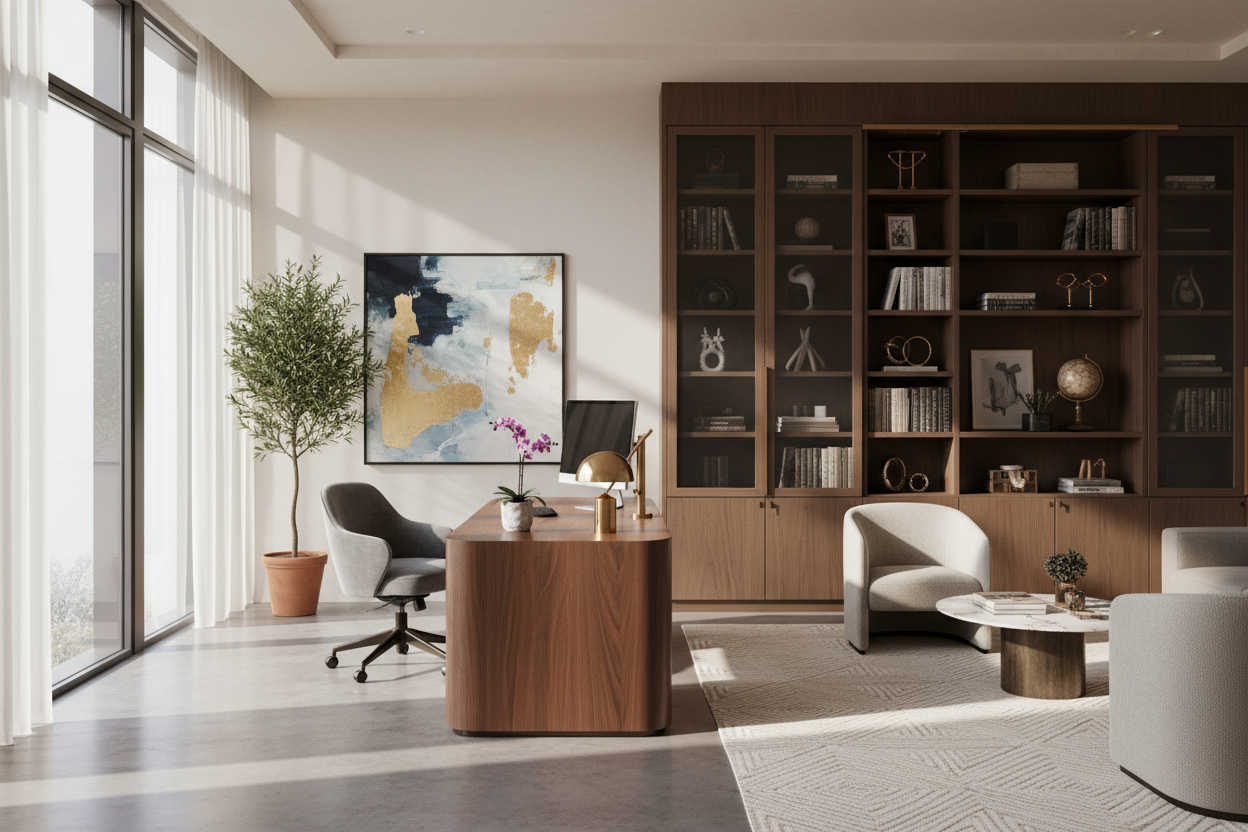
There is a distinct difference between a workspace that simply functions and one that inspires. Many homeowners find themselves stuck with utilitarian setups that feel sterile or cluttered, draining their creative energy rather than fueling it. The solution lies in curating elegant offices that balance professional ergonomics with the warmth and sophistication of a high-end library or lounge.
Key Elements of Sophisticated Workspaces
If you are looking for the quick essentials that define a luxury workspace, focus on these core pillars before purchasing any furniture:
- Material Integrity: Prioritize natural materials like solid walnut, marble, or full-grain leather over synthetic laminates.
- Visual Weight: choose a desk that anchors the room without overwhelming the square footage.
- Layered Lighting: Combine ambient overhead fixtures with focused architectural task lighting; avoid harsh fluorescent strips.
- Hidden Tech: True elegance is clutter-free; look for furniture with integrated cable management systems.
- Texture Contrast: Balance hard surfaces (wood, metal) with soft textiles (velvet drapes, wool rugs) to dampen sound and add comfort.
Defining the Aesthetic: Materiality First
When curating elegant office design ideas, the conversation must start with materials. In high-end design, tactile quality is just as important as visual appeal. A desk isn't just a surface; it is where your hands rest for hours.
I always advise clients to look for woods with rich grain patterns—think mahogany or rift-sawn oak. If you prefer a modern edge, a stone or marble top adds undeniable gravity to the room, though it requires a leather blotter to prevent the surface from feeling too cold during early morning work sessions. Avoid particle board with veneer edging; it lacks the durability and the natural patina that develops over time in truly elegant office design.
The Power Position: Layout and Flow
The placement of your furniture dictates the authority of the room. One of the most impactful elegant office ideas is to position the desk so you are facing the door—often called the "power position." This commands the room and prevents the claustrophobic feeling of staring at a wall.
Balancing Scale and Proportion
A common error is choosing a desk that is too small for the room, making the space feel sparse, or too large, impeding traffic flow. Allow at least 36 to 48 inches of clearance behind your desk for your chair to move freely. If you are incorporating guest seating, ensure there is a conversational distance between your desk and the accent chairs, creating a distinct zone for discussion separate from your workstation.
Lighting: The Jewelry of the Room
Lighting is where a functional office transforms into an elegant one. While task lighting is necessary for reading, ambient lighting sets the mood. Consider a statement chandelier or a sculptural pendant light to act as the room's focal point. Complement this with a brass or bronze desk lamp that offers adjustable directional light. The goal is to create a warm glow (aim for 3000K bulbs) that reduces eye strain while highlighting the textures of your furniture.
Lessons from My Own Projects: The Glass Desk Dilemma
I want to share a specific lesson from a project I worked on last year to save you some frustration. My client was adamant about achieving a hyper-modern look and insisted on a large, tempered glass executive desk. On paper and in renderings, it looked spectacular—airy, sleek, and minimalist.
However, two weeks after installation, I received a call. The reality of living with a glass desk in a high-traffic home office was driving him crazy. Every fingerprint showed up instantly. More annoyingly, the optical mouse didn't track well on the glass without a pad, which ruined the "clean" look he wanted. Furthermore, because the desk was transparent, there was absolutely nowhere to hide the nest of cables from his monitor and laptop. We ended up swapping it for a floating timber desk with a leather inlay. The lesson? True elegance must accommodate real life. If you can't hide the wires, the illusion of luxury breaks instantly.
Conclusion
Creating a refined workspace is about selecting pieces that age gracefully and support your workflow. By focusing on rich materials, proper scale, and layered lighting, you can build a space that feels personal and permanent. Don't settle for temporary solutions; invest in an environment that respects your work.
Frequently Asked Questions
How do I design an elegant office in a small room?
In smaller spaces, focus on verticality. Use floor-to-ceiling built-in shelving to draw the eye up, making the ceiling feel higher. Opt for a desk with slender legs (like a writing bureau) rather than a heavy block desk to maintain a sense of openness.
What are the best colors for an elegant office?
Deep, saturated hues often convey luxury. Navy blue, charcoal, forest green, or even a rich aubergine can create a cocoon-like effect that aids focus. If you prefer light colors, stick to warm creams and taupes rather than clinical stark whites.
Is a rug necessary for a home office?
Yes, a rug is essential for grounding the furniture and improving acoustics. Without one, an office can sound echoey and feel uninviting. Ensure the rug is large enough that your chair remains on it even when you push back from the desk.

Dejar un comentario
Este sitio está protegido por hCaptcha y se aplican la Política de privacidad de hCaptcha y los Términos del servicio.