










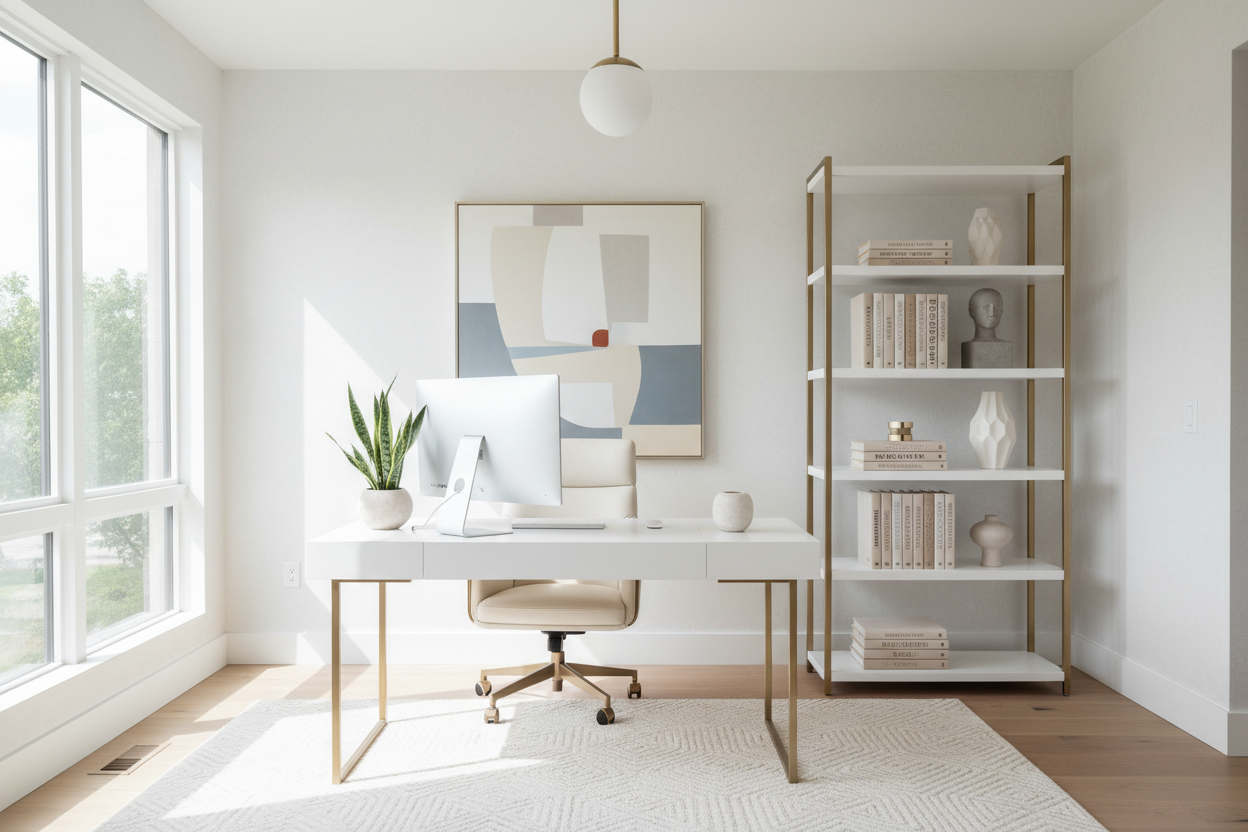
There is a fine line between a minimalist sanctuary and a sterile, clinical box. This is the most common anxiety I hear from clients facing a renovation: they want the brightness of a clean palette, but they fear the space will lack soul. The truth is, home office white walls are not an absence of design; they are the ultimate gallery backdrop. When treated with the right textural layering and furniture selection, they allow your investment pieces to breathe and command attention.
Key Elements for Styling White Spaces
- Undertone Matching: Ensure your white paint (warm vs. cool) matches your flooring and furniture materials.
- Texture Layering: Introduce tactile elements like bouclé, leather, or raw wood to prevent a flat aesthetic.
- Lighting Temperature: Use 2700K-3000K bulbs to soften the harshness of white reflective surfaces.
- Contrast Anchors: Utilize darker furniture or bold art to ground the room and provide visual weight.
Mastering the Palette: It Starts with the Paint
Before buying a single piece of furniture, you must understand that white is never just white. An office with white walls requires a deliberate choice in paint undertones. If your room faces north and lacks direct sunlight, a stark, cool white will make the space feel like a refrigerator. In these scenarios, opt for whites with creamy or taupe undertones to mimic warmth. Conversely, south-facing rooms can handle crisp, brilliant whites without feeling cold.
Materiality and Texture: The Antidote to Sterility
In a monochromatic shell, texture becomes your primary color. As a specialist, I advise against high-gloss laminates in a white room; they reflect too much light and look cheap against a pale backdrop. Instead, prioritize materials that absorb light.
Wood Tones and Grain
Solid wood or high-quality veneers are non-negotiable here. A walnut or white oak desk provides necessary organic warmth. The grain pattern acts as a natural art form against the blank canvas. If you place a white laminate desk against a white wall, the room loses its horizon line, causing vertigo-inducing flatness.
Soft Furnishings
Your office chair and window treatments should offer tactile relief. Think linen curtains that pool slightly on the floor or a desk chair upholstered in cognac leather or charcoal wool. These materials break up the visual continuity and add a sense of history and comfort to the office white walls.
Space Planning and Visual Weight
White walls expand a room visually, which is excellent for small footprints, but it can make standard furniture look diminutive. To counter this, play with scale.
The Floating Layout: Avoid pushing everything against the perimeter. Floating your desk in the center of the room, anchored by a textured area rug, creates a command position. The white walls then become a distant perimeter rather than a confining cage.
Vertical Storage: Use open shelving in wood or matte black metal. This introduces negative space and shadow lines, which are essential for giving depth to a white wall home office. Books, architectural objects, and plants break the monotony of the vertical plane.
My Personal Take on Home Office White Walls
I learned the hard way about the "reflectivity trap" during a project for a tech executive in Seattle. We painted the room a crisp 'Decorator's White' and installed a large glass desk. It looked sleek in the mood board, but once installed, the glare was unbearable. The white walls bounced the monitor light around the room, creating eye strain within an hour.
I had to pivot quickly. We brought in a large, vintage overdyed rug to absorb sound and light, and swapped the glass desk for a matte, ebonized oak table. The biggest lesson? In a white room, imperfections in your drywall finish show up instantly once you turn on a lamp. I now always recommend a matte or eggshell finish rather than satin for walls, as it hides the inevitable dings and uneven texture of the drywall much better. Also, keep a Magic Eraser in your desk drawer—scuff marks from chair casters on white baseboards are an inevitability, not a possibility.
Conclusion
Embracing a white palette requires confidence and a commitment to quality materials. By focusing on warm undertones, rich textures, and substantial furniture, you can transform a simple room into a sophisticated workspace. It is about curation, not clutter. Let your walls step back so your work—and your style—can step forward.
Frequently Asked Questions
What is the best paint finish for a home office with white walls?
Matte or eggshell is generally best for the walls themselves to reduce glare and hide surface imperfections. However, use a satin or semi-gloss on the trim and baseboards for durability and easy cleaning.
How do I stop my white office from looking boring?
The secret is high-contrast art and greenery. A large-scale piece of art or a gallery wall introduces personality, while a large floor plant (like a Ficus or Monstera) adds organic chaos that softens the rigid lines of the room.
Is a white wall home office difficult to maintain?
It requires more vigilance than darker rooms. Dust on baseboards and fingerprints near light switches are more visible. However, white paint is notoriously easy to touch up compared to dark colors, which often require repainting entire walls to blend properly.


Dejar un comentario
Este sitio está protegido por hCaptcha y se aplican la Política de privacidad de hCaptcha y los Términos del servicio.