










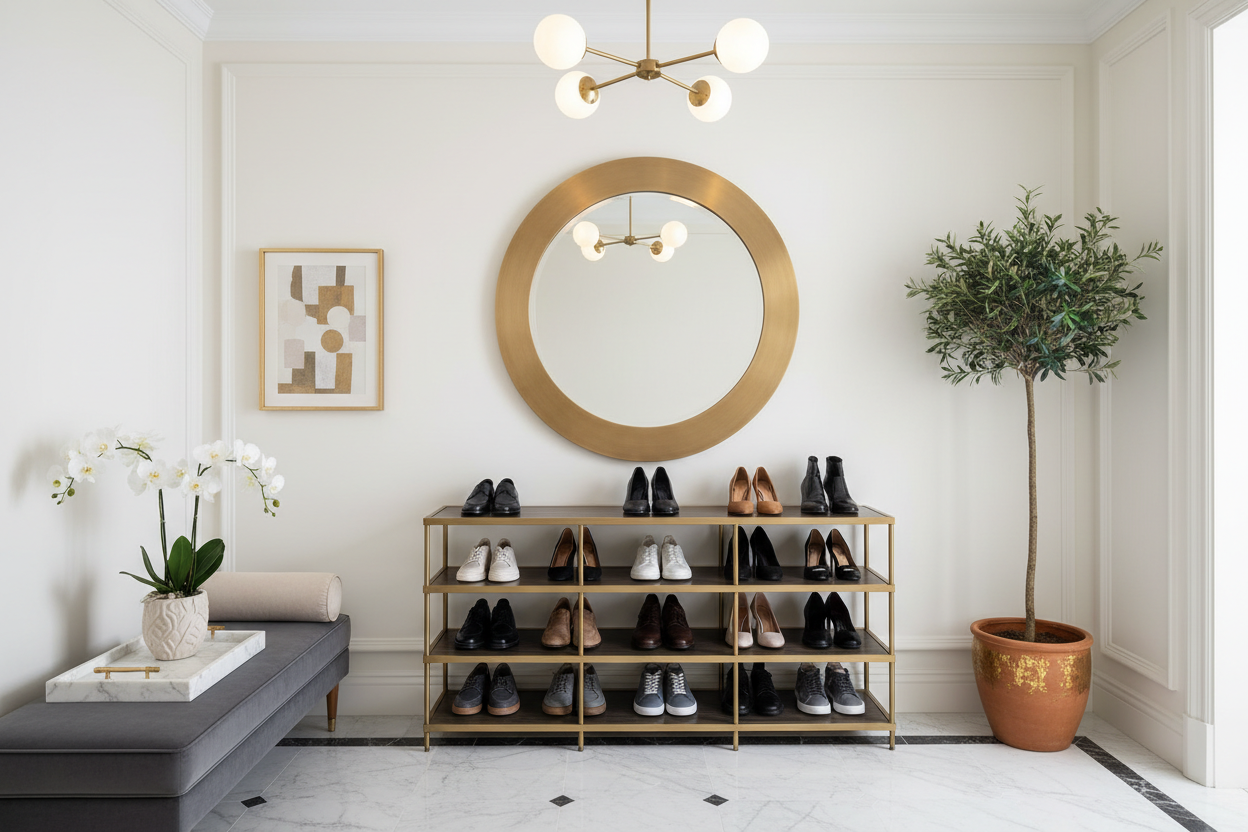
The entryway is the handshake of your home; it sets the tone before a guest even steps into the living room. Yet, it is often the most neglected zone, plagued by piles of footwear that disrupt the visual flow. As a designer, I see clients struggle to balance the utility of storage with the aesthetics of a curated space. The solution lies in selecting a front hall shoe rack that functions less like a utility bin and more like a piece of intentional architecture.
Key Features to Look For
Before committing to a purchase, consider these non-negotiable elements to ensure longevity and style:
- Ventilation: Look for louvred doors or slatted shelves to prevent odor buildup and allow leather to breathe.
- Depth & Clearance: Ensure a minimum depth of 13 inches for standard placement, or opt for tilt-out mechanisms if your hallway is narrow (under 36 inches wide).
- Material Resilience: Prioritize hardwoods or powder-coated metals over standard particle board, which swells upon contact with wet soles.
- Visual Weight: Choose legs that lift the unit off the floor to create a sense of airiness in smaller foyers.
Choosing the Right Material for Longevity
When specifying furniture for high-traffic zones, material integrity is paramount. For a sophisticated aesthetic, solid wood—specifically Oak or Walnut—offers durability and develops a rich patina over time. However, be wary of softwoods like Pine in an entryway; they dent easily under the impact of heavy boots.
If you are leaning towards a modern industrial look, powder-coated steel is an excellent choice. It resists the corrosive effects of road salt and moisture often brought in from the outdoors. For those seeking shoe storage for entrance hall areas that require a softer touch, consider units with upholstered bench tops, but insist on performance fabrics like Crypton or treated leather that can withstand daily abrasion.
Space Planning and Ergonomics
The placement of your rack dictates the flow of the entire house. A common error is ignoring the 'swing radius' of the front door. Your storage unit should never impede the full opening of the entrance. In narrow corridors, I often recommend a vertical orientation or a wall-mounted floating console. This frees up floor space, tricking the eye into perceiving the room as larger than it is.
Consider the ergonomics of the user. If this is a 'drop zone' for daily use, open shelving allows for quick access and encourages family members to actually use it. However, if you prefer a minimalist, clutter-free look, closed cabinetry is superior, provided the hardware is robust enough for repetitive opening.
Visual Balance and Styling
Treat your shoe rack as a console table. The surface shouldn't just be a catch-all for mail. Anchor the piece with a large mirror above it; this reflects light and expands the visual depth of the hallway. Create an asymmetrical vignette using a tall lamp on one side and a low tray for keys on the other. This elevation of styling turns a functional necessity into a focal point.
My Personal Take on Front Hall Shoe Racks
I learned a hard lesson early in my career regarding shelf surfaces. I once specified a gorgeous, high-gloss white lacquer unit with solid shelves for a client in a snowy climate. It looked pristine in the showroom.
Two months later, the client called. Because the shelves were solid, melting snow and mud from boots had nowhere to go. It pooled on the white lacquer, leaving stubborn, dark water rings that ruined the finish. Since then, I almost exclusively recommend slatted wood shelves or metal mesh interiors for entryways. The debris falls through to the floor (which is easier to sweep) rather than sitting in a puddle around the shoe, and the airflow dries wet soles significantly faster. Always check the interior shelf design, not just the exterior facade.
Frequently Asked Questions
How much clearance do I need for a walkway next to the shoe rack?
Ideally, you should maintain a minimum of 36 inches of walkway clearance. If your hallway is tighter than that, look for a tilt-out cabinet, which typically has a depth of only 7 to 10 inches.
Should I choose open or closed storage?
Closed storage creates a cleaner, more luxurious look and protects shoes from dust and sunlight fading. Open storage is more practical for daily runners and kids, as it removes the barrier to putting items away.
How do I protect a wood shoe rack from moisture?
Ensure the wood is sealed with a marine-grade varnish or a high-quality polyurethane. Alternatively, use plastic boot trays inside the shelves to catch water before it touches the wood grain.
Conclusion
Investing in the right storage is about reclaiming the serenity of your arrival home. By focusing on durable materials, proper scale, and smart internal features, your entryway can transition from a cluttered obstacle course into a welcoming, organized introduction to your personal sanctuary.

Dejar un comentario
Este sitio está protegido por hCaptcha y se aplican la Política de privacidad de hCaptcha y los Términos del servicio.