










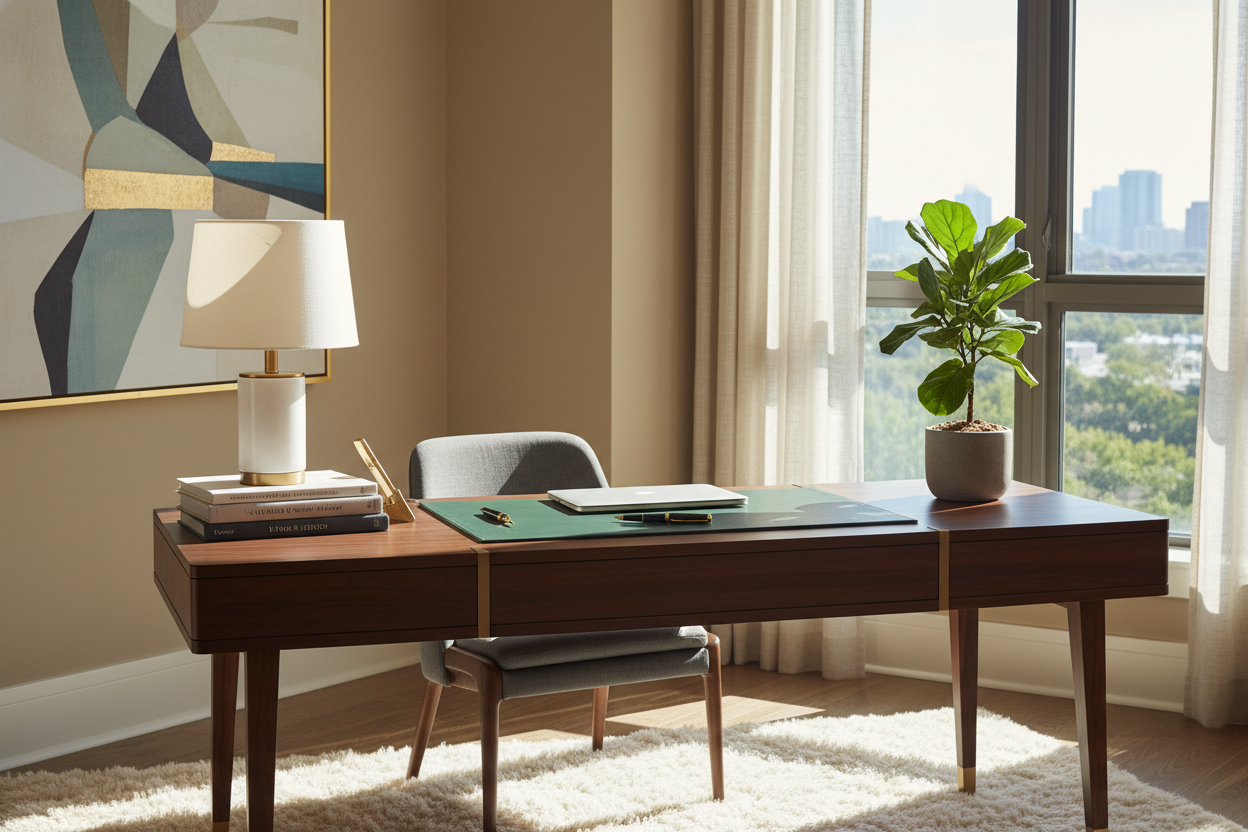
When you walk into a dedicated study or a workspace nook, the desk acts as the anchor. It is the architectural spine of the room. Yet, I frequently see homeowners treat this piece as purely utilitarian, ignoring its potential to define the room's entire atmosphere. A well-curated home office decor desk does more than hold your laptop; it sets a mental boundary between relaxation and productivity, elevating the act of working into a daily ritual.
Quick Decision Guide: Styling Essentials
If you are looking to elevate your workspace immediately, focus on these four pillars of design. These are the elements that separate a cluttered table from a curated workstation:
- Material Integrity: Choose solid woods, tempered glass, or stone. Avoid hollow-core synthetics that cheapen the tactile experience.
- Visual Weight: Balance the desk's mass with the room size. Heavy pedestal desks need large rooms; parson styles suit smaller nooks.
- The "Command Position": Orient the desk so you face the door or a view, never a blank wall.
- Layered Lighting: Combine an architectural task lamp with ambient room lighting to reduce eye strain and add warmth.
Choosing the Right Material Palette
The surface you touch every day dictates the mood of your work. In high-end residential design, we look for materials that develop a patina over time or offer a striking contrast to the surrounding architecture.
Solid Wood vs. Veneer
For a decorative home office desk, solid wood—walnut, white oak, or mahogany—remains the gold standard. It offers warmth and can be refinished if scratched. High-quality veneers are acceptable if applied over a stable substrate like MDF for stability, but ensure the edge banding is substantial. If you want a modern, airy aesthetic, glass is excellent, but be mindful of the "coldness" it brings; you will need to soften it with a rug or upholstered chair.
Mastering Visual Balance and Scale
A common error is selecting a desk that overwhelms the footprint of the room. Design is about negative space as much as positive space. If your home office is tight, look for a desk with "legs" rather than a solid base (like a blocky executive desk). Seeing the floor beneath the furniture tricks the eye into perceiving more space. Conversely, in a large library, a floating desk requires a substantial silhouette to avoid looking lost.
The Art of Accessorizing: Home Desk Decor
Once the foundation is set, we move to styling. This is where we bridge function and form. Home desk decor should follow the "Rule of Three" to maintain a clutter-free but lived-in look.
Start with a vertical element, such as a sculptural task lamp. Pair this with a horizontal element, like a stack of coffee table books or a leather blotter. Finally, add a bridge element—perhaps a ceramic vessel for pens or a small organic object like a stone or plant. This triangulation keeps the eye moving without creating visual chaos.
My Personal Take on Home Office Decor Desk
I learned a hard lesson about surface texture early in my career while designing a loft in Tribeca. I sourced a stunning, reclaimed 19th-century farmhouse table to serve as the client's primary desk. Visually, it was a masterpiece—rich patina, hand-hewn marks, and incredible character.
However, two weeks after installation, the client called me in frustration. The issue wasn't the look; it was the usability. Every time they tried to sign a contract or sketch, their pen point would catch in the deep wood grain or a knot. It was a functional nightmare. We solved it by commissioning a custom, thick saddle-leather desk blotter that provided a smooth writing surface while framing the rustic wood beautifully. The lesson? Never sacrifice surface smoothness for character without having a functional backup plan. Always test the "writability" of a surface before committing.
Conclusion
Transforming your workspace isn't just about buying furniture; it's about creating an environment that respects your time and energy. By selecting materials that age gracefully and styling with intention, your desk becomes a place where you actually want to spend time. Start with the foundation, layer your lighting, and keep the decor purposeful.
Frequently Asked Questions
How do I hide cords on a floating desk?
If your desk sits in the center of the room, cord management is vital. Look for desks with integrated modesty panels or hidden cable channels in the legs. Alternatively, use a floor-mounted outlet directly beneath the desk and run cables up a leg using color-matched zip ties or a fabric cord sleeve.
What is the ideal desk height for ergonomics and style?
Standard desk height is between 28 to 30 inches. If you fall outside average height ranges, prioritize an adjustable chair over a custom-height desk to maintain the furniture's resale value and aesthetic proportions. Ensure your elbows rest at a 90-degree angle when typing.
Can I mix metal finishes in my desk decor?
Absolutely. Mixing metals adds depth and prevents the "showroom" look. If your desk has brass legs, a matte black or brushed nickel lamp can look incredibly chic. The key is to keep the finish style (e.g., brushed, polished, matte) relatively consistent or intentionally contrasting.


Dejar un comentario
Este sitio está protegido por hCaptcha y se aplican la Política de privacidad de hCaptcha y los Términos del servicio.