










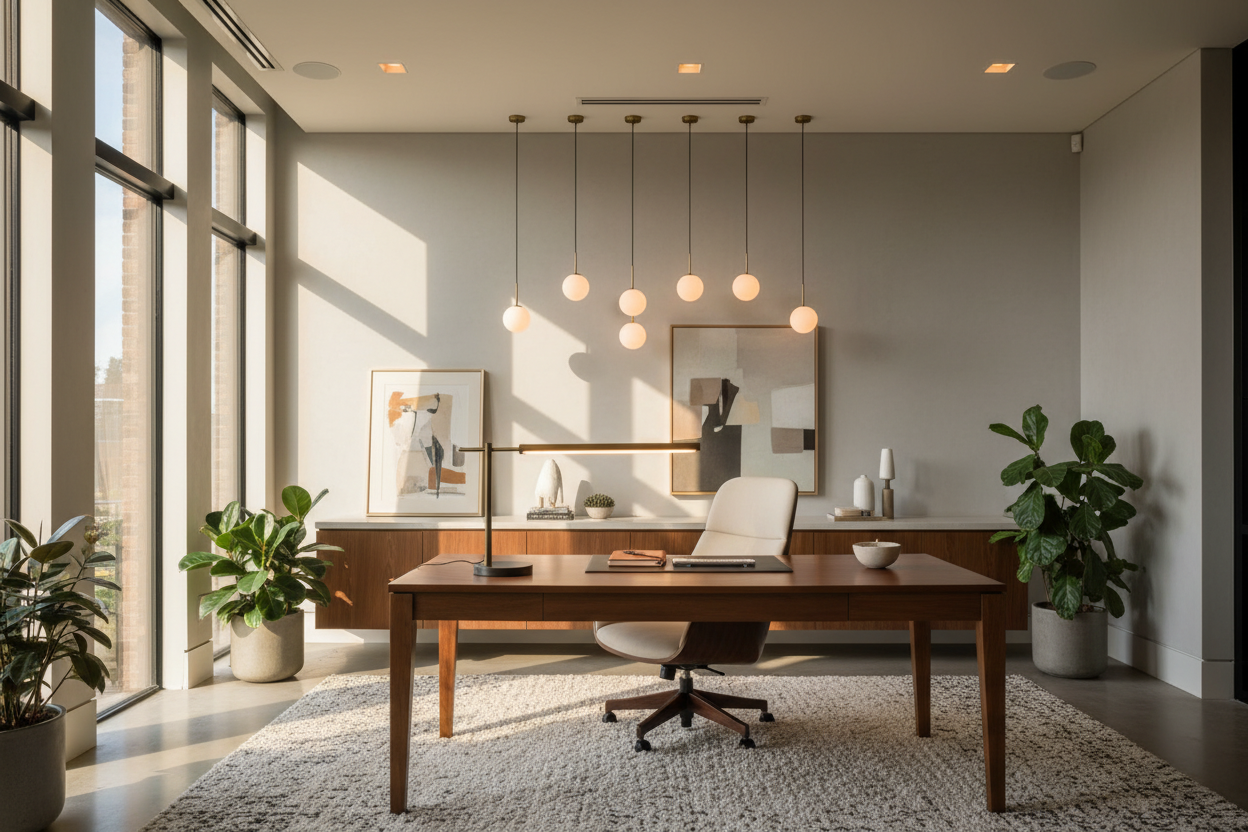
We often treat lighting as an afterthought—a utilitarian necessity simply to banish the dark. However, the moment you flip a switch, you define the mood, productivity level, and visual hierarchy of your workspace. Many homeowners struggle with glare, eye strain, or a space that feels clinically cold. The secret isn't just in the bulb you choose, but in how you layer and position your illumination. In this guide, we will explore how to curate a lighting scheme that makes you eager to turn on office light fixtures every morning, blending high-end design with ergonomic function.
Quick Decision Guide: Lighting Essentials
- Color Temperature (Kelvin): Aim for 3000K-4000K for workspaces. Anything lower is too sleepy; anything higher is too sterile.
- Color Rendering Index (CRI): Look for a CRI of 90+. This ensures wood grains and fabric textures look true to life.
- Layering: Never rely on a single overhead source. Combine ambient, task, and accent lighting.
- Adjustability: Articulating arms and dimmable switches are non-negotiable for adapting to changing daylight.
- Material Quality: Solid brass or weighted steel bases prevent wobbling and add a tactile sense of luxury.
Structuring Your Light Hierarchy
In interior design, we never rely on a single light source. To achieve a sophisticated look, you must balance three distinct layers. When you turn on the office light strategy effectively, you are actually engaging multiple fixtures working in concert.
Ambient Lighting: The Foundation
This is your general illumination. Avoid the standard "boob light" flush mount. Instead, opt for a semi-flush fixture with a linen shade to diffuse light softly, or architectural track lighting that washes the walls rather than the floor. This reduces shadows and creates a softer baseline brightness.
Task Lighting: The Workhorse
This is where ergonomics meets style. A dedicated desk lamp is crucial. When selecting a task lamp, consider the silhouette. A mid-century modern mushroom lamp offers a downward cast that protects your eyes from direct bulb exposure, while an architectural swing-arm lamp allows you to direct lumens exactly where your pen hits the paper.
Choosing Materials for Visual Balance
The fixture itself is a sculptural element, even when switched off. The material you choose dictates the "visual weight" of the piece.
Metal vs. Organic Finishes
For a sleek, executive feel, brushed brass or matte black powder-coated steel offers durability and sharp lines. However, if your desk is glass or lacquer, these metals can create unwanted reflections. In such cases, I often recommend fixtures with matte ceramic bases or wood accents. These absorb light rather than bouncing it, reducing visual clutter and adding warmth to the desktop landscape.
Ergonomics and Switch Placement
The physical interaction with your lighting matters. Fumbling for a cord behind a desk breaks focus. High-end design prioritizes accessibility. Look for lamps with base-integrated rotary dimmers or touch-sensitive stems. The tactile experience of a weighted metal switch adds a subconscious layer of quality to the daily ritual of preparing to work.
My Personal Take on Turn On Office Light Setups
In my years designing home offices, I’ve learned that the "smart" choice isn't always the best design choice. I once specified a fully automated voice-controlled system for a client in Manhattan. While technically impressive, we found that the 2-second delay between the command and the illumination was subtly frustrating. Furthermore, the "tunable white" smart bulbs often had a plastic, artificial cast that made their expensive walnut desk look gray.
My preference now? I stick to high-quality, physical switches and dedicated 3000K LED bulbs with a high CRI. There is something grounding about the mechanical click of a solid brass toggle switch. It signals to your brain that the work day has started. Also, a detail often overlooked: check the heat. I recently tested a vintage-style halogen lamp that looked stunning but raised the temperature around the user's hand by five degrees—completely impractical for long drafting sessions. Always prioritize cool-running LEDs that mimic incandescent warmth without the thermal output.
Conclusion
Lighting is the jewelry of the room, but in an office, it is also the engine of your productivity. By selecting the right temperatures, layering your sources, and investing in quality materials, you transform a mundane task into a ritual. Don't just light up a room; curate an atmosphere that inspires focus and calm.
Frequently Asked Questions
What is the best position for a desk lamp to avoid shadows?
If you are right-handed, place the lamp on your left side (and vice versa). This prevents your hand from casting a shadow across your writing or drawing surface as you work.
Can I use warm light for an office?
Yes, but be careful. While 2700K (warm white) is cozy for a living room, it can induce relaxation and drowsiness in an office. A 3000K bulb strikes the perfect balance between warmth and clarity.
How do I stop glare on my computer monitor?
Avoid placing a bright light source directly behind you, as it will reflect off the screen. Instead, use bias lighting (LED strips) behind the monitor or position your task lighting to shine downward, below eye level.

Dejar un comentario
Este sitio está protegido por hCaptcha y se aplican la Política de privacidad de hCaptcha y los Términos del servicio.