










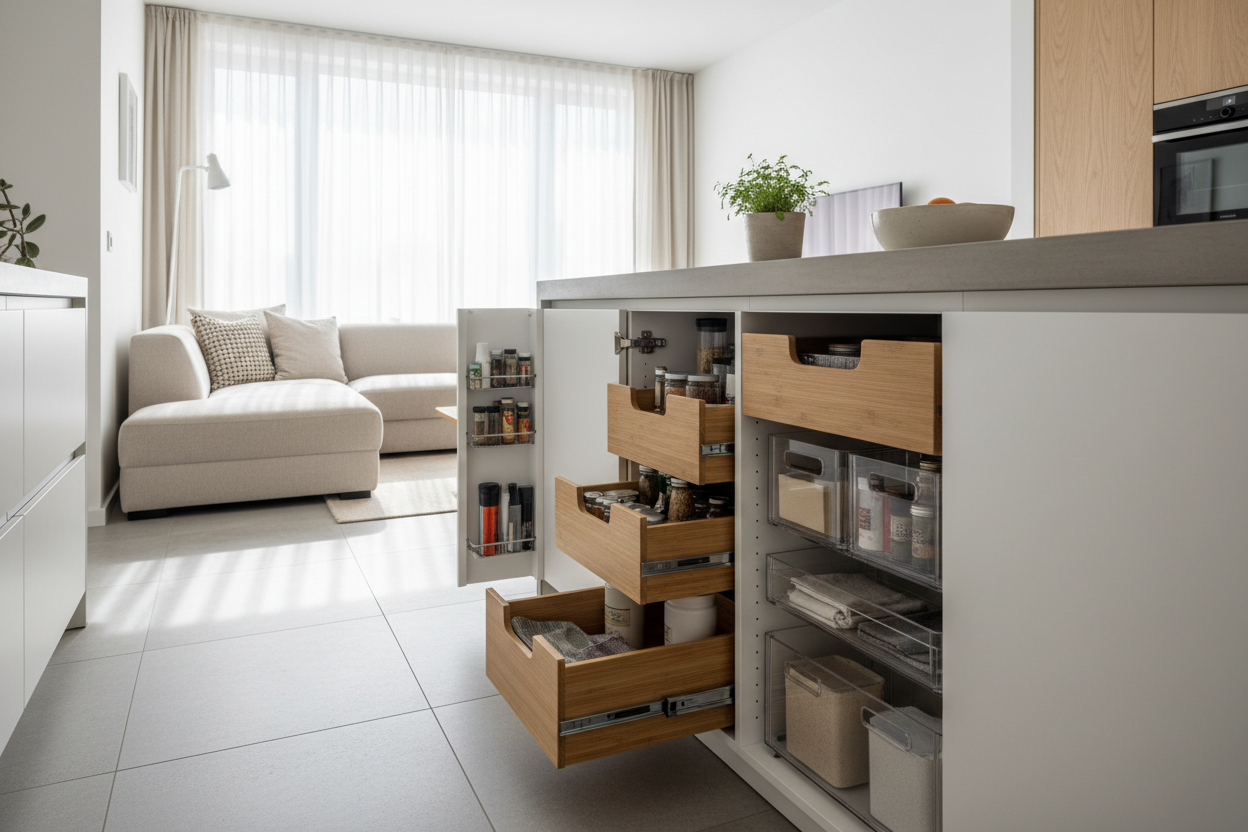
My kitchen counter used to look like a graveyard for small appliances. The Instant Pot sat next to the Vitamix, which sat next to a toaster I use exactly once a week. I had this 10-inch overhang on my kitchen peninsula that served no purpose other than being a place for my knees to knock against while I scrolled on my phone. Then I realized I could fit under the counter storage cabinets right there and finally clear the decks.
- Measure the depth of your overhang; most are 10-12 inches.
- Choose sliding doors to keep walkways clear in tight kitchens.
- Anchor shallow units to the wall to prevent tipping with heavy appliances.
- Use clear bins inside to keep small attachments from getting lost.
The Dead Space I Couldn't Ignore Anymore
I’m a storage nerd, but even I missed the obvious solution staring me in the face. My kitchen peninsula had about 48 inches of length that was just... empty air. We don't use barstools because the kitchen is too narrow, so it was just a dust-magnet zone. Finding a smart way to add storage without losing counter space became my obsession once I realized I couldn't fit one more mixing bowl in my existing cupboards.
I started looking for under the counter storage cabinets that were shallow enough to sit flush under the granite. Most standard base cabinets are 24 inches deep, which would have stuck out like a sore thumb. I needed something closer to 10 or 12 inches—basically a sturdy bookshelf with doors. Reclaiming that three-foot stretch of floor changed the entire flow of the room.
Measuring for an Under Counter Storage Unit
If you take nothing else away from my trial and error, let it be this: your baseboards will betray you. I measured the floor-to-counter height (34.5 inches is standard for most 36-inch counters) but forgot that the trim at the bottom adds about 5/8 of an inch to the wall. If you buy an under counter storage unit that is exactly the depth of your overhang, it will stick out past the counter because of that baseboard gap.
I ended up choosing a unit that was 11 inches deep for my 12-inch overhang. That one-inch 'recess' makes it look like the cabinetry was built with the house rather than shoved in as an afterthought. Also, check for support brackets. If your stone counter has metal braces underneath, you might have to find a unit that sits slightly lower or move the brackets entirely.
Sliding Doors vs. Drawers: A Harsh Lesson
I’ll be honest: I bought a cheap unit with swinging doors first. It was a disaster. My kitchen aisle is only 42 inches wide. Every time I wanted the blender, I had to back up into the dishwasher just to swing the cabinet door open. It felt clunky and annoying. I swapped it for sliding under counter storage units and the difference was night and day.
When you are browsing for storage cabinets, look for high-quality tracks. Cheap plastic sliders will jump the rail if you put a heavy 5-quart Dutch oven inside. I went with a solid wood frame and metal tracks. It costs about 40% more than the particle board stuff, but it doesn't sag under the weight of my cast iron collection. If you have a tight walkway, sliding doors are the only way to go.
What I Actually Keep in There
This isn't just for show; this cabinet is the heavy-lifter of my kitchen. I keep the 'middle-child' appliances here—the ones I use twice a month. The food processor, the slow cooker, and the vacuum sealer. Because these units are shallow, you don't have to worry about things getting lost in the back 'dark zone' like you do with standard 24-inch cabinets.
To keep it organized, I paired the shelves with under counter storage containers. I use clear acrylic bins for the small stuff, like the different blades for the processor or the extra gaskets for the pressure cooker. Without the bins, the whole thing becomes a junk drawer for oversized items. With them, I can pull out one container and have everything I need for a specific task.
Can You Use This Trick in Other Rooms?
Once I saw how much breathing room my kitchen had, I started looking at the rest of my house. This low-profile storage concept works everywhere. In my home office, I tucked under counter storage units beneath my long desk. Using under desk storage units is the exact same logic: utilize the vertical space your legs aren't using to hide printers and reams of paper.
Even the bathroom can benefit. If you have a pedestal sink or a floating vanity, you're losing prime real estate. While I prefer floor cabinets for the kitchen, some bathrooms are so cramped you might need over the toilet storage to handle the overflow. The goal is always the same: find the dead space and make it work for you.
How deep should under counter storage be?
Most kitchen overhangs are 10 to 12 inches deep. Look for a unit that is at least one inch shallower than your counter overhang so it sits flush against the baseboard without protruding.
Do these cabinets need to be anchored?
Yes, absolutely. Because they are shallow (only 10-12 inches deep), they are prone to tipping if you pull a heavy appliance off the top shelf. Screw them into the wall studs or the back of the kitchen island.
Can I use a standard bookshelf instead?
You can, but check the height. Standard kitchen counters have a clearance of about 34.5 inches. Most bookshelves are either 30 inches (too short) or 36+ inches (too tall). A dedicated under-counter unit is usually sized specifically for this gap.

Dejar un comentario
Este sitio está protegido por hCaptcha y se aplican la Política de privacidad de hCaptcha y los Términos del servicio.