











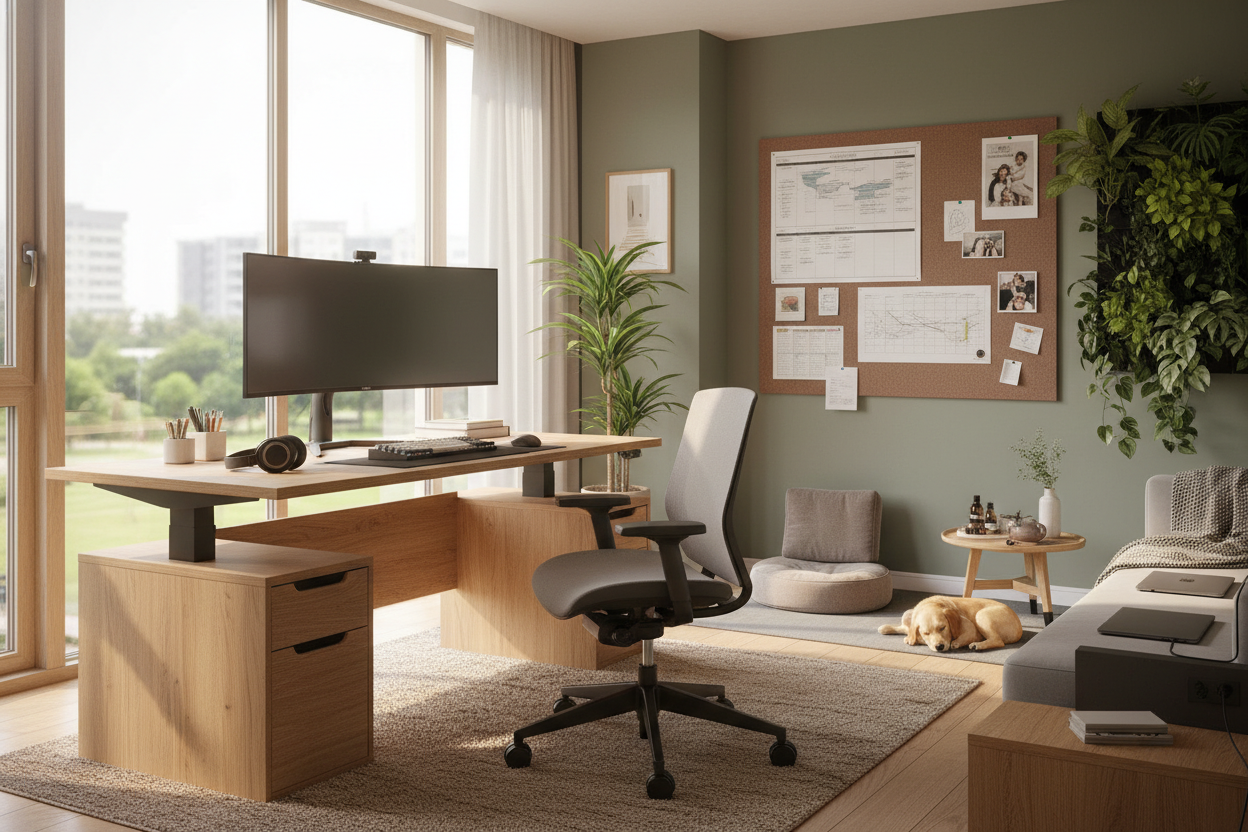
I remember the early days of remote work when clients were thrilled to answer emails from the sofa. A few years later, that novelty has completely worn off, replaced by chronic back pain and a desperate need for a door that closes. If you want to understand how working from home has changed employees, you only need to look at their living rooms. The makeshift dining table desk is out; intentional, ergonomic, and visually quiet home offices are in.
As a designer, I see the physical manifestation of workplace burnout and productivity struggles in how people arrange their furniture. We are no longer just decorating; we are solving for acoustics, posture, and mental separation. By the end of this guide, you will know exactly how to adapt your residential space to support a healthy, sustainable remote work lifestyle without sacrificing your home's aesthetic.
Quick Decision Guide
- Ergonomics dictate design: Dining chairs are built for 45-minute meals, not 8-hour shifts. Prioritize adjustable seating with proper lumbar support.
- Visual boundaries prevent burnout: Using rugs, room dividers, or strategic lighting to physically separate 'work mode' from 'home mode' is essential for mental health.
- Acoustic privacy is paramount: Soft materials like thick rugs, upholstered panels, and heavy drapery absorb the echo of endless video calls.
- Lighting does double duty: Ambient room lighting must now be paired with directional task lighting and diffused front-facing light for cameras.
Space Planning & Layout
The Decline of the Pure Open Concept
For decades, North American residential design favored knocking down walls to create massive open-concept living spaces. However, observing how working from home changed employees reveals a sharp pivot back to defined spaces. When two partners are on simultaneous video calls, an open floor plan becomes an acoustic nightmare. If you cannot add walls, you must create zones. I often use double-sided bookcases or strategically placed sofas to establish heavy visual weight, anchoring a dedicated workspace that feels distinct from the rest of the room.
Clearance and Scale for Home Offices
A common mistake is buying a massive executive desk that swallows a suburban guest room. You need a minimum of 36 inches of clearance behind a desk to comfortably push back a chair, and at least 30 inches of walkway around it. If you are squeezing a workspace into a primary bedroom, opt for a floating desk or a wall-mounted ladder desk to preserve negative space and keep the room feeling restful.
Comfort & Ergonomics
Trading the Sofa for Structure
When analyzing how working from home has changed our daily routines, the physical toll is the most obvious metric. We sit differently when we are unobserved. Cushions with low density foam might feel luxurious when watching television, but they offer zero pelvic support for typing. If you must work from a living room accent chair, ensure the seat depth is shallow enough (around 20 to 22 inches) so your feet rest flat on the floor, and pair it with a firm lumbar pillow.
Style & Coordination
Hiding the Hardware
The growing preference to work remotely from home is an example of a broader cultural shift toward prioritizing autonomy and comfort. But gaining that autonomy shouldn't mean turning your peaceful bedroom into a sterile corporate cubicle. The trick is blending utility with residential warmth. Choose desks with built-in cable management to hide the visual clutter of monitors and chargers. Opt for office chairs upholstered in performance bouclé or warm leather rather than standard black mesh, ensuring the silhouette complements your mid-century or transitional decor rather than fighting it.
Designer's Honest Take
When I look at how working from home has changed employees firsthand, I immediately think of a recent project in a downtown loft. My client insisted on using a gorgeous, sculptural velvet dining chair for her home office because it looked perfect on Instagram. I warned her against it, but we went ahead. Within two months, she was at the chiropractor.
I also learned a hard lesson on that same project about trending materials. We installed a stunning matte brass and walnut desk. It looked incredible for the first month, but I quickly realized that every single fingerprint, coffee cup ring, and pen smudge became a permanent feature. If you are using a surface for 40 hours a week, you need a high-pressure laminate or a heavily sealed wood veneer. Save the delicate, porous finishes for your console tables.
Frequently Asked Questions
How do I separate work and life in a small apartment?
Use lighting and physical habits to create boundaries. Turn off your task lamp and close your laptop at 5 PM. If your desk is in your living room, use a folding screen or simply drape a beautiful textile over your monitors at the end of the day to remove the visual reminder of work.
What are the most essential work from home changes for a living room office?
Invest in a chair that actually supports your spine, even if it means compromising slightly on aesthetics. Next, manage your cables. A tangle of black cords instantly ruins the residential feel of a living space. Use cable boxes and under-desk trays to keep them out of sight.
What size desk do I actually need?
For a laptop and a notebook, a 48-inch wide desk is sufficient. If you use dual monitors, a mechanical keyboard, and need space to review physical documents, you will need a desk that is at least 60 inches wide and 24 to 30 inches deep to maintain a healthy viewing distance from your screens.

Dejar un comentario
Este sitio está protegido por hCaptcha y se aplican la Política de privacidad de hCaptcha y los Términos del servicio.