










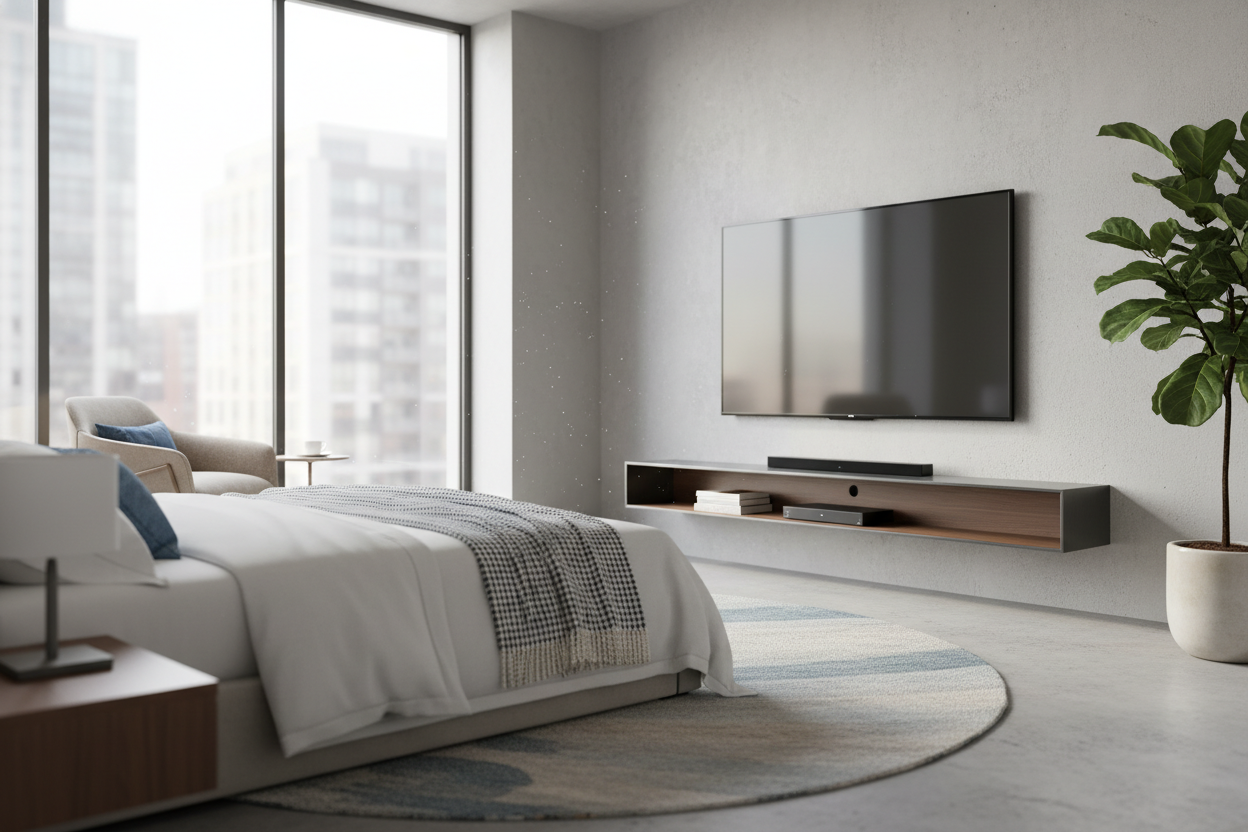
I spent three years doing a weird sideways shuffle every time I walked between my bed and the dresser. I thought I just lived in a 'cozy' apartment, but the real culprit was a bulky media console I had dragged over from my last living room. Finding the best bedroom tv stand isn't about matching your headboard; it's about reclaiming your floor space and saving your shins.
- Standard living room consoles are usually 18 inches deep—way too fat for a bedroom walkway.
- The '12-Inch Rule' is the secret to a functional layout.
- Height matters more in the bedroom because you're viewing from a bed, not a sofa.
- Integrated cord management is a non-negotiable for sleep hygiene.
Why Living Room Consoles Ruin Your Bedroom Walkways
Most TV stands are designed for a couch that sits 8 to 10 feet away. In those spaces, a deep cabinet looks proportional and holds all your gear. But in a bedroom, where the 'aisle' between your footboard and the wall is often less than three feet, that same cabinet becomes a literal roadblock. I have lost count of the number of times I have bruised my shins on a sharp corner while trying to find the bathroom at 3 AM.
When you cram a standard 18-inch deep unit into a narrow bedroom, you lose the ability to move naturally. You start pivoting and shimmying. It makes a room feel claustrophobic, even if the square footage is decent. The goal is to find a piece that provides a surface for your screen without colonizing the entire floor.
The 12-Inch Rule: Finding the Best Bedroom TV Stand
If you want the best bedroom tv stand, you need to ignore the 'media center' section of most stores and look for hallway consoles or entryway tables. You want something 12 inches deep or less. Measure your clearance: you need at least 24 inches of walking space to feel comfortable. If your room is tight, a 10-inch profile is the absolute sweet spot.
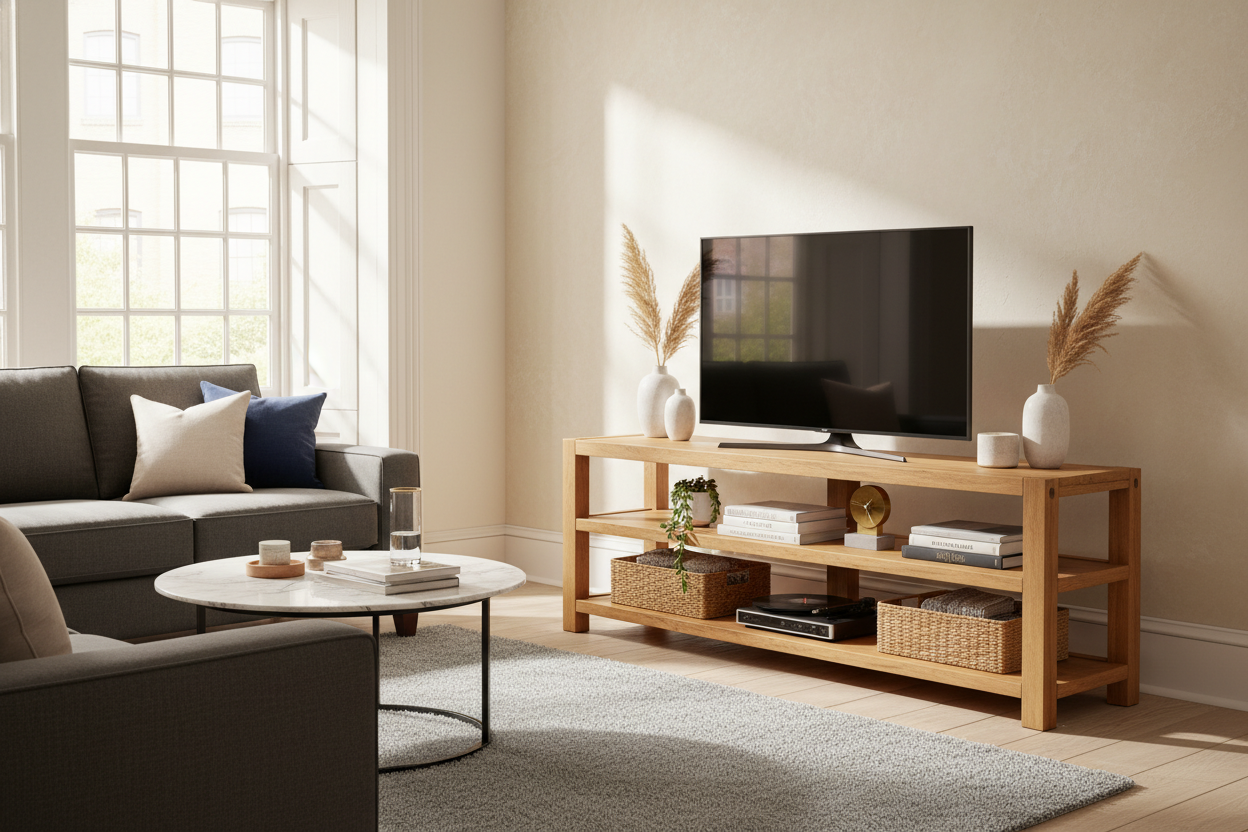
When you are browsing through standard Tv Stands, filter by depth immediately. I wasted hours falling in love with mid-century units that were 19 inches deep, which would have left me with about six inches of walking space. A narrow console hugs the wall, keeping the center of the room open and airy.
Cord Management Matters More When You're Trying to Sleep
Bedrooms are for sleeping, and nothing ruins a dark room like a tangled nest of dusty black cables or a blinking router light. I once had a glass-front stand that looked great in the store, but it turned my bedroom into a neon-lit server room every night. It was a disaster for my sleep.
The best bedroom setups use consoles with solid doors or integrated cable channels. You want to hide the 'tech' aspect as much as possible. If the stand is open-frame, use adhesive clips to run wires down the back of the legs. The less visual clutter you see from your pillow, the easier it is to actually turn your brain off.
What About Storage? (Hint: Look to the Corners)
People often panic about losing drawer space when they go thin. Here is the truth: you do not need your entire 4K collection or three gaming consoles in the bedroom. Keep the essentials—a remote, maybe a tablet—and move the bulkier stuff to the closet. If you are truly desperate for storage, How a Small TV Stand for Bedroom Corners Saved My Cramped Room is a great look at how to use that weird dead space behind the door instead of blocking the main walkway.
I personally use a narrow console for the TV and a small basket underneath for extra pillows. It keeps the footprint small but the utility high. If you need more than two drawers, you are looking for a dresser, not a TV stand—just make sure that dresser isn't a shin-killer.
Our Favorite Contenders for the Best TV Stands for Bedroom Setups
I am a fan of the 'floating' look or tall, spindly legs that let you see the floor underneath—it makes the room feel twice as big. While something like a Wide Tv Stand Entertainment Stand Adjustable Tv Stand For Living Room is a masterpiece for a massive basement or an open-concept lounge, it is total overkill for where you sleep. You want height, not width.
A taller stand (around 30-35 inches) ensures the TV is at eye level while you are propped up on pillows. Low-profile 'lowboy' stands are great for sofas, but in bed, they force you to crane your neck down, which is a one-way ticket to a morning headache. Stick to the 'tall and thin' mantra and your neck (and shins) will thank you.
How high should a bedroom TV stand be?
Usually 30 to 40 inches. Since your head is higher up when propped against a headboard compared to slouching on a sofa, a taller stand prevents neck strain.
Can I use a hallway console table as a TV stand?
Absolutely. In fact, that is my top recommendation. Just check the weight capacity to ensure it can handle your TV, though most modern LED screens are light enough for almost any sturdy console.
What is the best depth for a small bedroom?
Aim for 10 to 12 inches. This gives you enough room for the TV base while leaving maximum floor space for walking.


Dejar un comentario
Este sitio está protegido por hCaptcha y se aplican la Política de privacidad de hCaptcha y los Términos del servicio.