










I spent three years pretending I enjoyed the 'curated' look of floating shelves. In reality, I was just a slave to a microfiber cloth. Every time someone opened a window, my ceramics grew a fuzzy grey coat. I finally snapped when I realized I was spending my Saturday mornings dusting a collection of vintage glassware I never even used. I wasn't living in a home; I was maintaining a museum that nobody asked for.
I finally made the switch to glass door display cases. It wasn't about being lazy; it was about reclaiming my time and actually making my stuff look intentional instead of just... there. If you are tired of the endless cycle of wiping down every single trinket you own, it is time to admit that open shelving is a scam designed for people who don't have pets, kids, or a pulse.
- Dust Reduction: Enclosed cabinets cut down cleaning time by about 90%.
- Visual Clarity: Glass creates a boundary that makes collections look like a gallery rather than clutter.
- Hidden Storage: The best units offer a mix of glass and opaque storage for the messy stuff.
- Lighting is Key: Integrated LEDs turn a dark corner into a focal point.
The Open Shelving Delusion (And Why I Quit)
We have all seen the Instagram photos: perfectly spaced white bowls, a single sprig of eucalyptus, and not a speck of dust in sight. What they don't show you is the person behind the camera scrubbing those shelves every forty-eight hours. Open shelving demands a level of 'shelfie' perfection that is exhausting to maintain. If you actually use your kitchen or living room, those open surfaces become magnets for grease and pet hair.
Switching to a display cabinet with glass doors and shelves was the best thing I did for my sanity. It provides that airy, transparent look we all love without the high-maintenance upkeep. My glass door cabinet shelf stays pristine for months. I no longer have to wash a wine glass before I use it just because it sat out for a week. A display case glass door acts as a physical barrier between your life and the environment, and honestly, that barrier is the only thing keeping my living room looking sharp.
Why Glass Cases Don't Have to Look Like Grandma's House
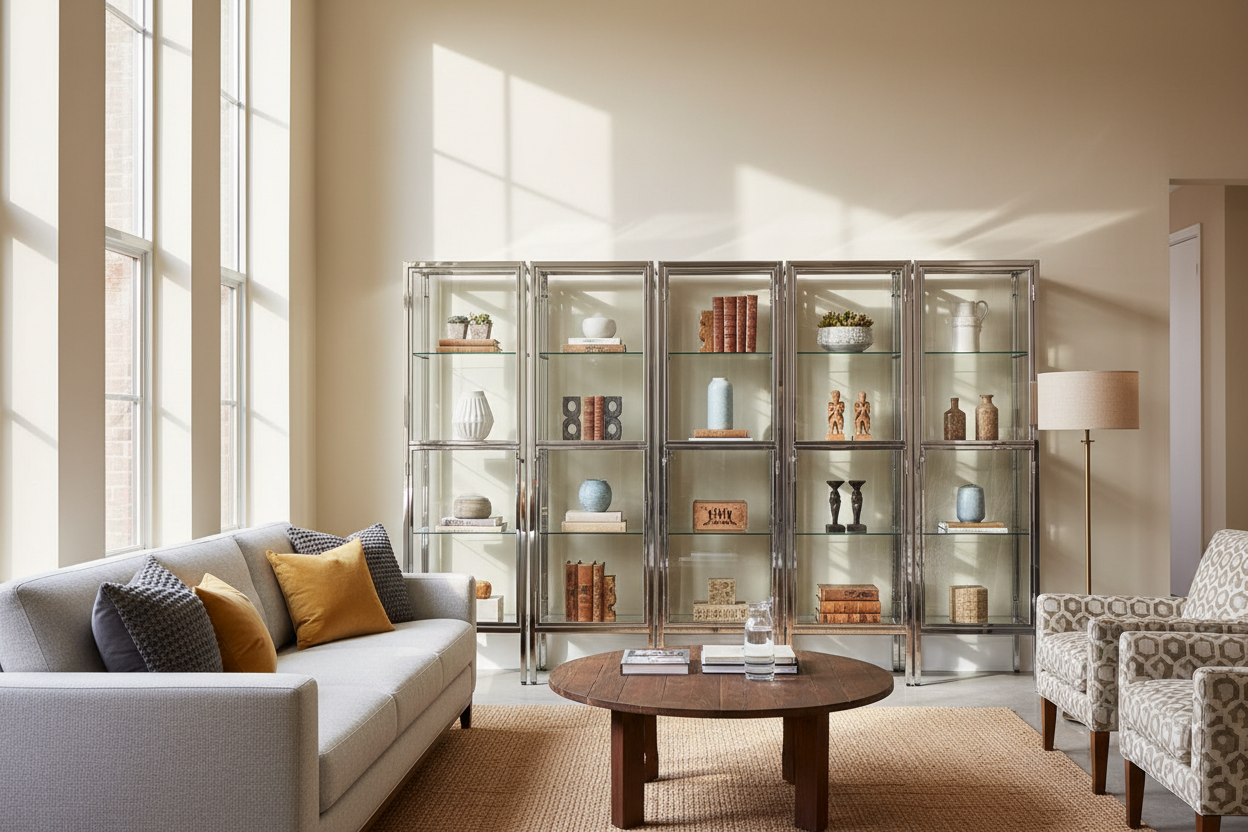
Mention a glass case and most people immediately picture a heavy oak beast from 1984 with etched mirrors and gold-filigree handles. We need to move past that. Modern silhouettes are lean, industrial, and often made of powder-coated steel or slim-profile wood. A black cabinet with glass doors acts like an architectural frame, making even a stack of basic white plates look like a high-end exhibit. It provides a sharp, matte contrast that makes the items inside pop.
When you choose a showcase glass cabinet with minimal hardware, the focus stays on your collection. I opted for a unit with thin metal frames and tempered glass. It feels modern and structural rather than bulky. The glass door display doesn't eat up the visual 'weight' of the room because you can see right through it, which is a massive win for smaller apartments where a solid wooden cabinet would feel like a tombstone.
Finding the Sweet Spot: Drawers vs. Doors
I love a display case with doors, but let's be real: we all have junk. You need a place for the 'ugly' stuff—charging cables, half-used candles, and that one manual for a toaster you bought in 2018. If your entire cabinet is glass from top to bottom, you are forced to keep it perfectly organized 24/7. That is just open shelving with extra steps.
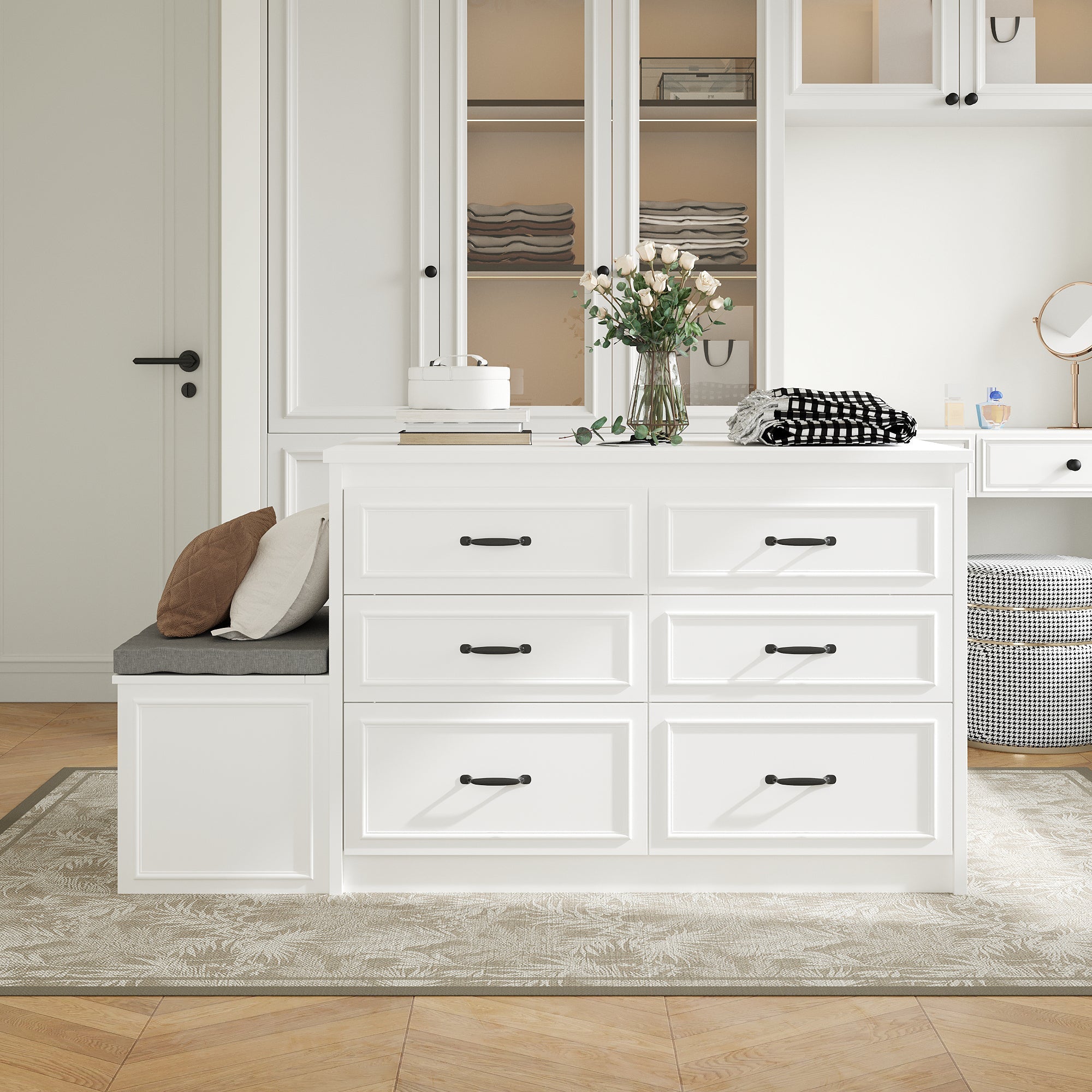
A large display cabinet with drawers is the hybrid you actually need. I use the glass section for my favorite art books and ceramics, while the drawers at the bottom hide my 'junk drawer' shame. It is the ultimate stash-and-dash solution. When guests are coming over, I can sweep the mail and the remote controls into a drawer in five seconds, and the room still looks like a professional designed it.
The Secret to Making Enclosed Shelving Look Expensive
The biggest mistake people make with display cabinets with glass shelves is forgetting about the light. Without it, your cabinet can turn into a dark, shadowy void in the corner of the room. Glass reflects light, but it also creates shadows if the room's overhead lighting is poor. Integrated illumination is what separates a basic display shelf with doors from a high-end gallery moment.
I highly recommend looking for a bookcase with built-in lights and glass doors rather than trying to hack it later with battery-operated puck lights. Hardwired LEDs that run down the sides or hide behind the top lip create an even, expensive-looking glow. It turns your furniture into a light source, which adds layers to your room's ambiance at night. It makes the glass display door look intentional and high-end.
Wait, Can I Still Keep Some Open Shelves?
You don't have to go full 'glass box' on every wall. In fact, combining open and closed display storage is the secret to a room that feels lived-in rather than stiff. I kept two floating shelves for the things I grab every single day—like my coffee mugs—and moved everything else behind glass. This balance keeps the room feeling dynamic. You get the convenience of open access for high-traffic items and the protection of a glass display door for the pieces that are purely for show.
My Golden Rules for Styling a Shallow Cabinet
Styling a shallow display cabinet with glass doors requires a different strategy than a deep bookshelf. You don't have the luxury of layering items three-deep. You have to be edited. I follow the 'zig-zag' method: if I put a tall vase on the left side of the top shelf, the next tall item goes on the right side of the second shelf. This keeps the eye moving through the cabinet rather than getting stuck on one heavy side.
Don't overstuff it. Negative space is your friend. If you crowd every glass door display, it just looks like a storage unit. Leave room for the items to 'breathe.' For more specific layouts, I usually refer back to guides on styling a 3-shelf glass cabinet to ensure my proportions are right. Grouping by color or material—like all white ceramics or all brass accents—also helps create a cohesive look that doesn't feel cluttered behind the glass.
Personal Experience: The Rattling Lesson
My first glass cabinet was a cheap find from a big-box store. It looked fine in the photos, but the glass was so thin that every time I walked past it, the display case doors would rattle. It sounded like a Victorian ghost was living in my dining room. I eventually learned that the weight of the glass matters. Look for tempered glass that is at least 5mm thick. It feels more substantial and, more importantly, it stays quiet. I ended up returning the cheap one and investing in a unit with better hinges and thicker panes, and the difference in 'feel' was worth every penny.
FAQ
Do glass cabinets make a room look smaller?
Actually, no. Because they are transparent, they often make a room feel larger than a solid wood cabinet would. They allow the eye to travel through to the back of the unit, maintaining a sense of depth.
How do I keep the glass from getting fingerprint smudges?
The trick is to use the handles! If your cabinet has minimal hardware, try to only touch the frames. I keep a small spray bottle of 50/50 water and vinegar in my cleaning kit for a quick wipe-down once a month.
Is tempered glass necessary?
Yes, 100%. If a glass door display ever breaks, tempered glass shatters into small, blunt pieces rather than sharp shards. It is a safety must, especially if you have kids or pets running around.


Dejar un comentario
Este sitio está protegido por hCaptcha y se aplican la Política de privacidad de hCaptcha y los Términos del servicio.