










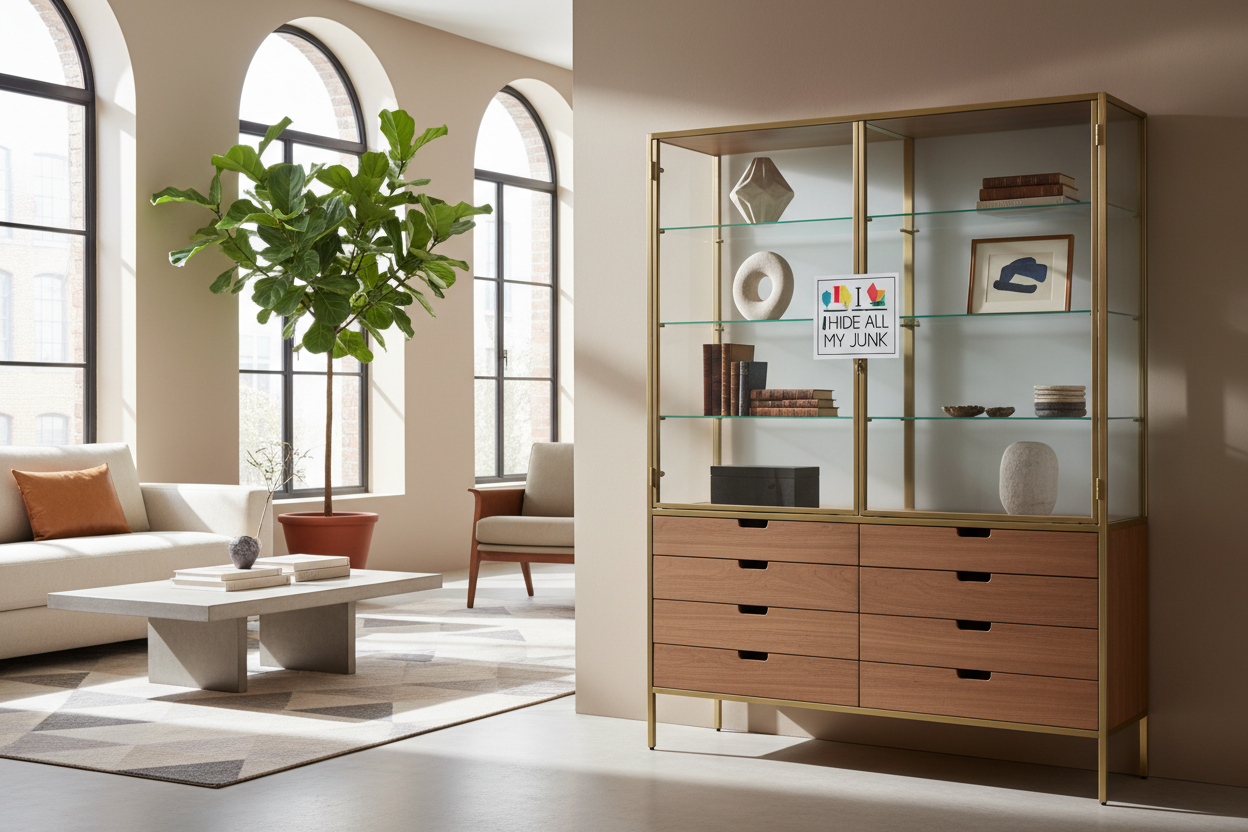
I used to think I was a minimalist. Then I bought a vintage glass curio cabinet and realized that my collection of handmade ceramics looked less like a gallery and more like a high-end garage sale. The problem with a 100% glass box is that there is nowhere for the ugly stuff to go—the extra felt pads, the instruction manuals, and the random batteries you find behind the sofa.
After six months of staring at a tangled mess of charging cables sitting right next to my favorite first-edition books, I finally caved. I swapped the all-glass unit for a display case with drawers. It was the smartest furniture pivot I have made in years. It turns out, you can have your curated cake and eat it too, as long as you have a place to stash the crumbs.
Quick Takeaways
- Hybrid storage solves the 'perfect curation' pressure by giving you a place for mess.
- Drawers ground the piece visually, preventing a tall glass unit from looking like a retail store fixture.
- Look for soft-close drawer glides; slamming a drawer full of heavy silver next to glass shelves is a recipe for disaster.
- Measure your floor depth—drawers need clearance to open, unlike sliding glass doors.
The 'All Glass' Trap (And Why I Fell For It)
We have all seen those stunning, floor-to-ceiling glass towers in design magazines. They look airy, light, and impossibly sophisticated. I bought one thinking it would force me to be tidy. I was wrong. Instead, it just broadcasted my inability to organize my life to anyone who walked into my living room.
If you own a fully transparent cabinet, you are essentially signing up for a second job as a museum curator. Every single item needs to be 'on brand.' If you have a stray remote or a pack of AA batteries, they stick out like a sore thumb. I eventually got so frustrated with the lack of utility that I considered ditching the display idea entirely for a short cabinet with drawers instead, but I missed seeing my favorite pieces at eye level.
Why a Display Case With Drawers is the Ultimate Cheat Code
The hybrid model is the middle ground we actually need. By having glass on top and solid storage on the bottom, you create a visual hierarchy. The top half is for the soul—the travel souvenirs and the pretty glassware. The bottom half is for the reality of living in a house. It is the ultimate design cheat code because it maintains that 'airy' feeling at eye level while providing a heavy base for actual storage.
I recently helped a friend pick out an elegant glass display cabinet with gold handles and the difference was immediate. The gold hardware gave it a high-end furniture feel, while the lower drawers swallowed up her entire collection of messy board games. It no longer looked like a display case; it looked like a piece of the home. Plus, having a glass display drawer near the top of some units lets you show off flat items like watches or jewelry without them getting dusty on an open shelf.
What Exactly Am I Hiding Down There?
Let's be honest about what goes into a glass display cabinet with drawers. My top shelves are currently home to three 1960s art books and a very expensive-looking (but actually cheap) ceramic vase. It looks serene. But if you pull open the bottom drawer? It is pure chaos. I have got half-used candles, three different types of HDMI cables, and a bag of plastic felt feet for furniture legs.
This is the beauty of the design. You don't need to be a perfect person to have a perfect-looking room. I have found that the lower storage is also the best place for out-of-season decor. When the holidays are over, the glass remains clear for my year-round favorites, and the tinsel goes right into the dark abyss of the drawers. It is functional, honest storage that does not demand you live like a monk.
How to Keep the Whole Thing From Looking Like a Bulky Dresser
One risk with this style is that the solid bottom can feel a bit heavy, especially in smaller 12x12 rooms. To avoid the 'bulky dresser' look, I always suggest choosing a glass display case with drawers that has some sort of leg clearance. Even two or three inches of space between the floor and the bottom of the cabinet makes the entire unit feel like it is floating, which keeps the room feeling open.
If you are going big, like a large display cabinet storage shelf, pay attention to the proportions. You want the glass section to take up at least 60% of the vertical height. If the drawers go up too high, it starts to look like a chest of drawers with a glass hat. Keep the solid weight at the bottom third to ground the room without suffocating it.
Is the Extra Storage Worth the Bigger Footprint?
Every square foot in a house is precious. A display case with storage usually has a deeper footprint than a simple wall shelf—often 15 to 18 inches deep compared to a slim 10-inch ledge. I have lived in apartments where that extra 5 inches felt like a mile, but I still think the trade-off is worth it. You are essentially replacing two pieces of furniture (a display shelf and a small chest) with one high-functioning unit.
I am a big fan of using a black cabinet with glass doors when you have a larger footprint. The dark finish makes the piece feel intentional and architectural. Yes, it takes up more physical space, but it reduces visual clutter by hiding all those small, annoying items that usually end up in 'junk bowls' on the entryway table. My living room feels twice as big now that the surfaces are clear, even if the cabinet itself is a bit of a beast.
Frequently Asked Questions
Are drawers better than cabinets for the bottom section?
Yes, 100%. With a cabinet, you have to get on your hands and knees to find what is in the back. Drawers bring the contents to you. Unless you are storing very tall items like vases, go for drawers every time.
How do I stop the drawers from rattling the glass?
Quality matters. Look for units with felt-lined drawers or add your own rubber bumpers to the drawer fronts. This prevents that jarring 'clink' of the glass shelves every time you close a drawer too hard.
Can I use this in a dining room?
It is actually the best place for it. Use the glass for your 'good' wine glasses and the drawers for table linens, napkin rings, and that one fancy tablecloth you only use once a year. It is much more practical than a traditional sideboard.

Dejar un comentario
Este sitio está protegido por hCaptcha y se aplican la Política de privacidad de hCaptcha y los Términos del servicio.