










I once spent three hours measuring my living room with a laser level and a glass of wine, only to realize the only wall long enough for a sofa was the one directly across from my floor-to-ceiling windows. This left me with a choice: put the TV in the middle of the room like a weird monolith, or commit the ultimate interior design sin and block the glass. I chose the glass, but I only made it work by hunting for tv stands short enough to stay out of the way.
- Keep the console height below the window sill to maintain light flow.
- Natural wood finishes reduce the tech-heavy silhouette against the light.
- Cable management is non-negotiable when the back of the unit is visible from outside.
- Measure your seated eye level; low units are better for your neck anyway.
The Cardinal Rule We All Break: The TV in Front of the Window
Most designers will tell you never to put a screen in front of a window. They talk about glare and visual clutter like it is a moral failing. But when you live in a 600-square-foot rental with one radiator and three doors, the perfect layout is a myth. You have to work with what you have got.
The trick isn't avoiding the window; it is making the furniture look like it was invited to the party. If your console is too tall, it looks like you are trying to board up your house. If it is low, it feels like a deliberate, architectural choice. I have found that keeping the height under 18 inches allows the room to feel open, even if a 55-inch screen is technically in the way.
Why You Need TV Stands Short Enough to Clear the Sill
You want your furniture to hug the floor. When you browse various tv stands, pay attention to anything under 18 inches. My current sill sits at 24 inches, so I went with a 14-inch unit. That 10-inch gap is where the magic happens. It allows the light to hit the floor and creates a clear line of sight to the outdoors.
It stops the TV from feeling like a giant black hole sucking the life out of your morning coffee. By keeping the top of the media unit below the window frame, you preserve the architecture of the room. You are not fighting the window; you are layering in front of it. It is the difference between a cramped apartment and a cozy, intentional space.
Measuring for the Perfect Low TV Units
Don't guess this. Sit on your actual sofa—the one you use every day—and have someone hold a tape measure. You want the middle of the screen at eye level. Most people mount or place their TVs way too high. For low tv units, you need to account for the baseboard height too. If your baseboards are chunky, your short stand might need to sit a few inches away from the wall, which eats into your floor space. Measure the distance from the floor to the bottom of your window glass; that is your hard limit.
Why Low Wood TV Stands Soften the Glare
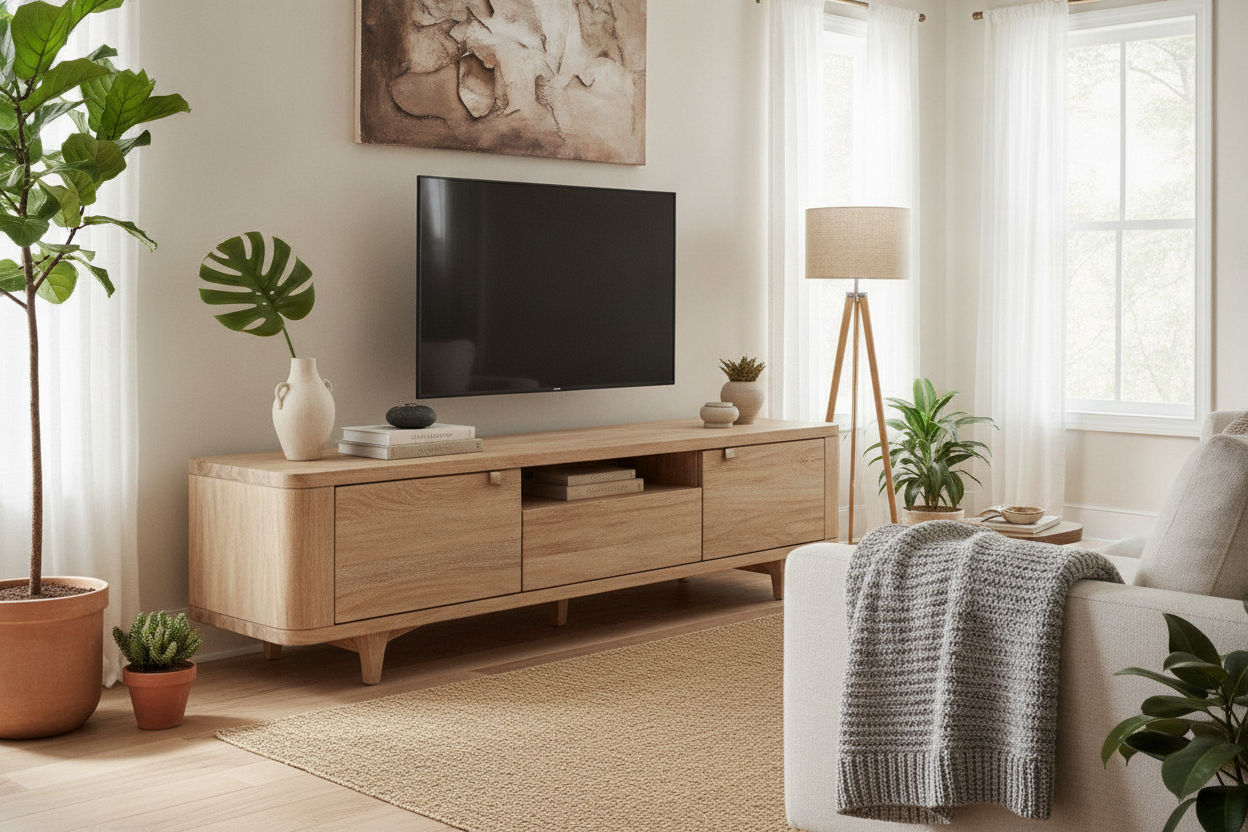
Backlighting is a beast. If you put a high-gloss black plastic unit in front of a window, the glare and the silhouette will drive you insane. I found that I Downsized to a Small Wood TV Table (And My Living Room Breathed Again) because the organic texture of low wood tv stands absorbs some of that harshness. Wood has a way of grounding the tech.
When you use low wood tv stands, the natural grain provides a matte surface that doesn't bounce light back at you. It feels less like a big-box store display and more like a curated corner of a home. I prefer white oak or walnut—anything with a bit of warmth to counteract the cold blue light of the screen.
Hiding the Cords When You Can't Hide Behind a Wall
This is the hard part. On a solid wall, you can hide wires behind a modern 3 piece entertainment center or snake them through the drywall. In front of a window, the back of your TV is visible to anyone walking by outside. You can't just leave a rat's nest of HDMI cables hanging there.
I use heavy-duty Velcro ties and run everything down the legs of the stand. I even painted my power strip the same color as my baseboards. It is about the shadow of the console—if the wires stay in that dark zone near the floor, they disappear. Use the frame of the stand to your advantage by clipping cables along the back edge where they are shielded from view.
Swapping to a TV Table Low Enough for Cohesive Sightlines
Grounding the room is about keeping the energy low. A tv table low to the ground keeps your eyes moving across the room rather than getting stuck on a massive piece of furniture. It is about respect for the architecture. The window is the star; the TV is just the guest. When I finally swapped my chunky old dresser for a sleek, low-slung table, the whole room felt three feet wider. It is a psychological trick that works every time.
My Personal Experience
I once bought a short stand that was actually a coffee table. I thought I was being clever. It was 12 inches high. It looked amazing until I realized my soundbar blocked the bottom two inches of the screen because the stand was so narrow. I had to prop the TV up on a stack of art books, which totally defeated the minimalist look. Now, I check the depth and width twice to make sure my peripherals actually fit.
FAQ
How short should my TV stand actually be?
Aim for 14 to 18 inches. Anything over 22 inches starts to feel like a standard dresser and will likely cut into your window view too much.
Will the sun damage my TV if it's in front of a window?
Modern screens are tough, but direct afternoon sun can cause heat issues. I use sheer curtains to diffuse the light during the brightest hours of the day.
What about the glare on the screen?
It's real. If you can't get a TV with an anti-reflective coating, use blackout cellular shades for movie marathons. For casual daytime watching, the low profile of the stand helps because you can tilt the screen slightly away from the light source.

Dejar un comentario
Este sitio está protegido por hCaptcha y se aplican la Política de privacidad de hCaptcha y los Términos del servicio.