










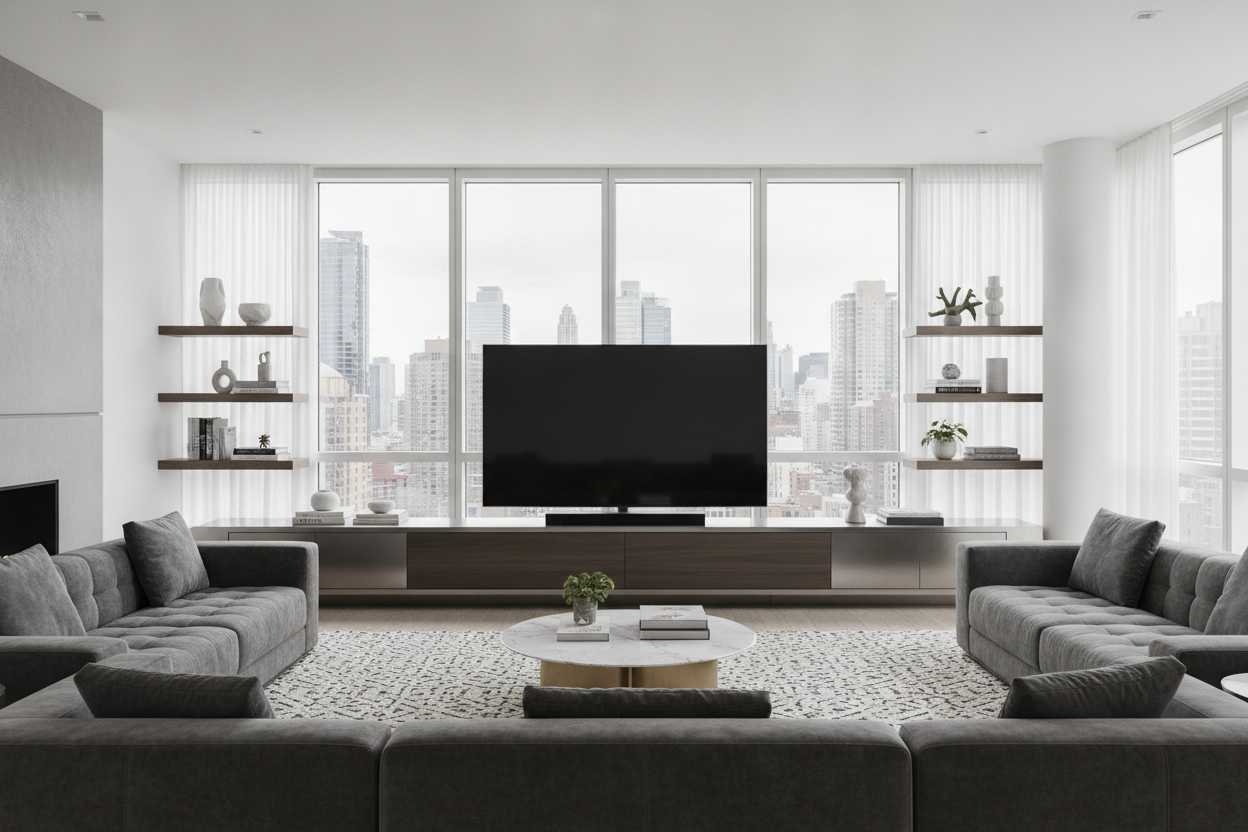
I recently walked into a friend's house and felt like I was being swallowed by a black glass monolith. They had just splurged on a massive screen, but it was perched on a console so small the edges of the TV hung over by six inches on each side. It didn't look like a high-end home theater; it looked like a glitch in the Matrix or a temporary setup that never got finished.
Finding a decent 85 inch tv stand is significantly harder than it sounds because most furniture marketed as 'large' is actually scaled for 65-inch sets. If you get the proportions wrong, your living room stops being a place to relax and starts looking like a chaotic sports bar at 1 AM. You need a piece that anchors the room, not one that looks like it's about to be crushed by the tech it's holding.
- Proportion is King: Aim for a console at least 10 inches wider than the TV's physical width.
- Weight Matters: An 85-inch screen can weigh over 100 lbs; don't trust cheap particleboard.
- Eye Level: Keep the stand height between 15-22 inches to avoid neck strain.
- Material Choice: Solid wood or steel frames prevent the dreaded 'center sag' over time.
The 'Mushroom Effect' (And Why It Looks So Awkward)
I call it the Mushroom Effect. It is that top-heavy, precarious look where a massive 85-inch screen sits on a tiny base, making the whole thing look like it's about to tip over. It is visually stressful. You spend the whole movie subconsciously wondering if a curious cat or a stray vacuum cleaner is going to send $2,000 worth of electronics face-planting onto the hardwood. When the screen is wider than the base, the room feels unbalanced and cluttered, no matter how much you spent on the rug.
A lot of the generic 85 inch TV stand Walmart sells options are technically 'rated' for the weight, but they are only 70 inches wide. Since an 85-inch TV is actually about 75 inches wide in the real world, the math just does not work for your eyeballs. You need visual 'breathing room' on the ends to anchor the piece to the floor. Without that extra width, the TV looks like it's floating in a way that feels accidental rather than intentional.
Do the Math: How Wide Should Your Console Actually Be?
Let's talk real numbers, because the marketing labels are lying to you. An 85-inch TV is measured diagonally. Physically, the screen is usually around 74 to 76 inches wide. If you buy a 75-inch console, the edges of the TV will line up perfectly with the edges of the stand. That is a design crime. It makes the screen look like it is suffocating the furniture. You want the console to be the 'frame' for the TV, which means the furniture needs to be the larger element.
My personal rule of thumb is the 'Plus 10' rule. If your TV is 75 inches wide, your media console for 85 inch tv setups should be at least 85 to 90 inches wide. This leaves five to seven inches of space on either side for a lamp, a stack of books, or just empty space to let the design breathe. Before you click buy on that Wayfair 85 inch TV stand, pull out a tape measure and mark that width on your wall with painter's tape. You will realize quickly that most 'extra long' stands are actually just average.
Weight Limits Are Not a Suggestion Anymore
I once saw a cheap MDF stand start to 'smile'—that is furniture speak for bowing in the middle—after just three months. These massive screens are not just wide; they are dense. Many 85-inch models weigh between 95 and 125 pounds once you factor in the stand legs. Most flat-pack furniture is rated for a 75-pound maximum load. If you ignore those specs, you are literally waiting for a structural failure that could destroy your floor and your tech.
You really need to hunt for heavy-duty TV stands that feature a fifth or sixth support leg in the center. If you can swing the budget, a solid wood tv stand for 85 inch tv models is the only way to ensure longevity. Kiln-dried oak, walnut, or mango wood will not sag under the pressure, and the joinery won't crumble if you have to slide the unit out to manage your cables. If the box says 'honeycomb' or 'hollow core' construction, keep walking.
To Mount or Not to Mount? (The Great Debate)
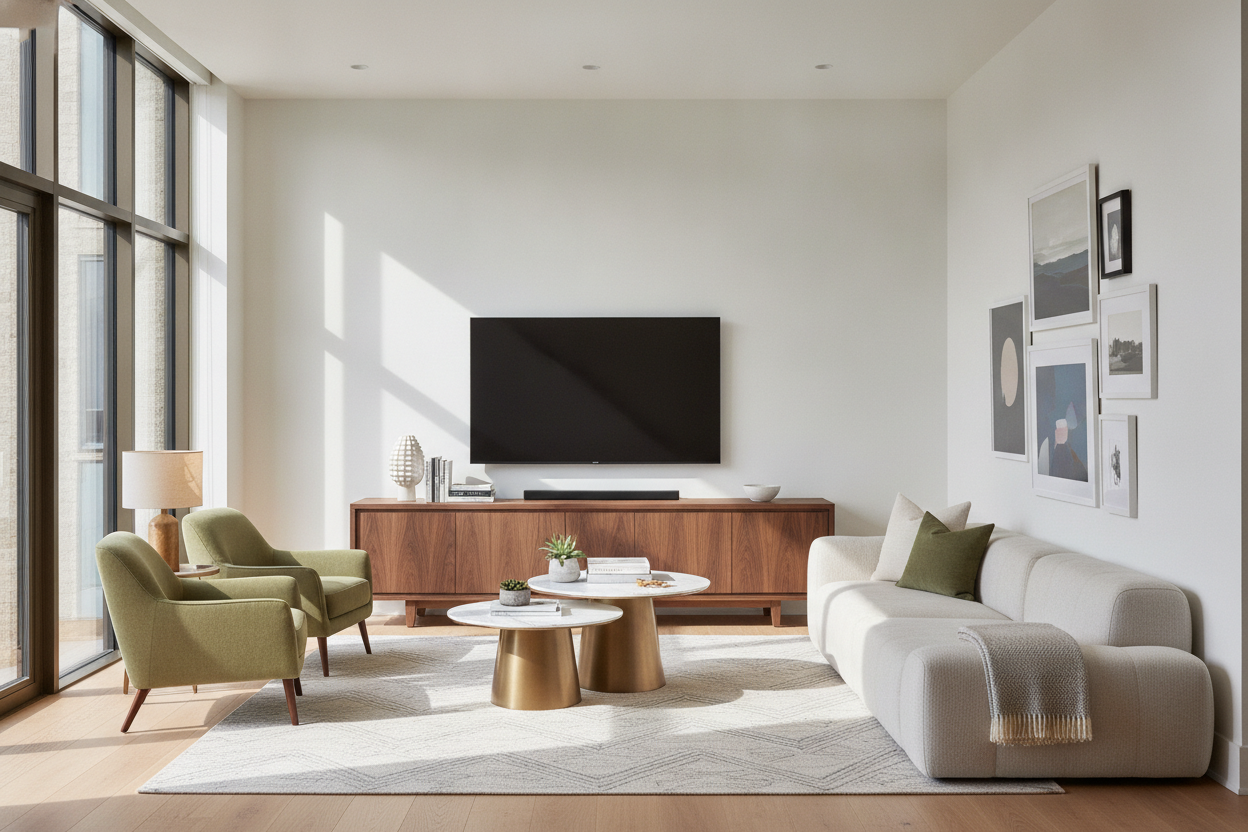
I am a huge advocate for the 'hybrid' look. Even if you have a stunning 85 inch tv cabinet, wall-mounting the screen about four to six inches above the surface is a pro move. It creates a cleaner line and lets you use the top of the 85 inch media console for decor without the factory TV legs getting in the way. It also eliminates the risk of a tip-over if you have kids or pets running around.
If you are a renter and cannot drill into the studs, look for an 85 inch tv stand with mount built-in. These integrated 'floor stands' give you that floating aesthetic without the security deposit drama. Just make sure the VESA pattern matches your TV—most 85-inchers use a 600x400 mount, which is too large for the cheap, flimsy mounts found on basic furniture. A heavy-duty swivel mount can also help manage glare in bright rooms.
Stop Settling for Sports Bar Aesthetics
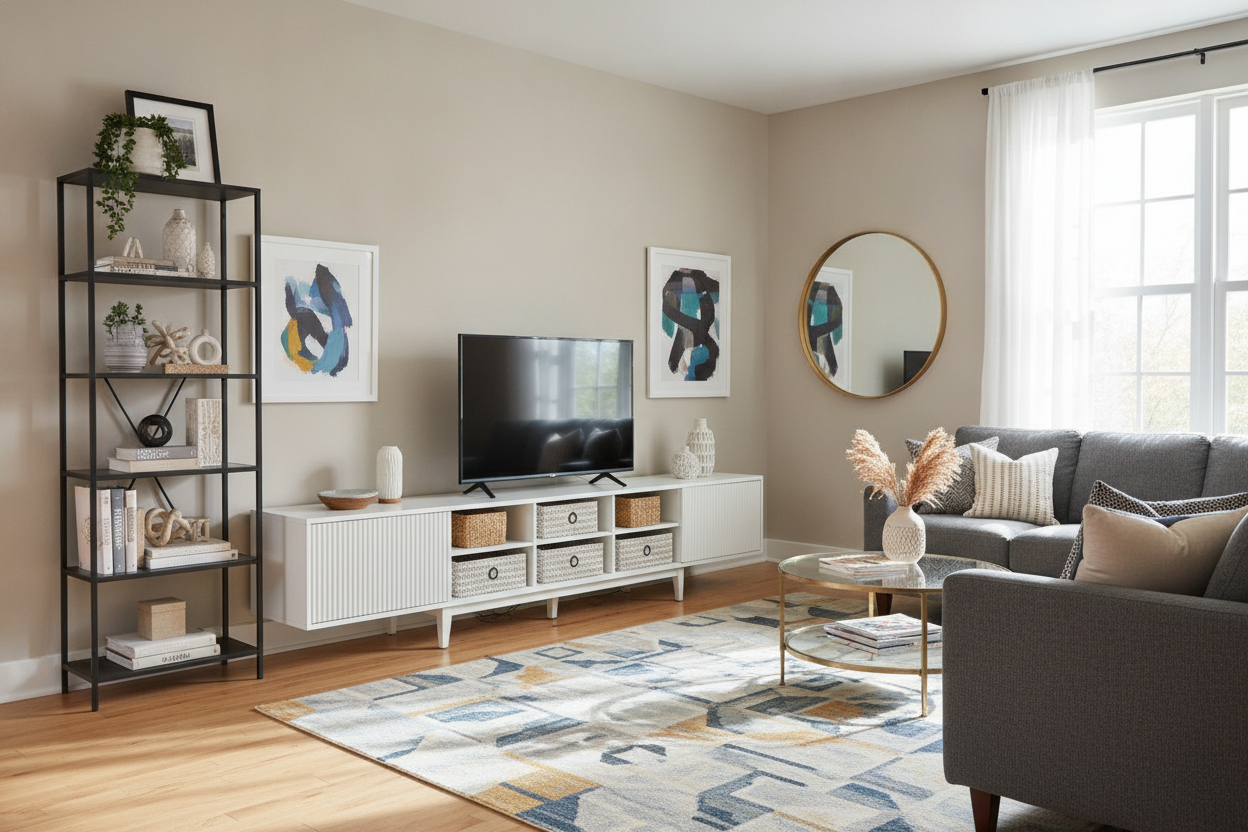
Giant TVs are aggressive. They are big, black rectangles that can suck the life out of a room when they are turned off. To counter this, you need a modern tv stand for 85 inch tv that brings some organic texture back into the room. Look for fluted wood doors, slate inserts, or a moody dark finish that makes the screen blend in rather than stand out like a sore thumb. You want the furniture to feel like a permanent part of the architecture.
If your room feels a bit cold or sterile with that much tech, I have seen people have great success using an electronic fireplace with white TV stand. The flicker of the 'flames' underneath the screen adds a layer of warmth and ambient light that balances out the blue-light glow of the LED panel. It turns the 'black hole' of a TV into a cozy focal point. Pair it with some oversized ceramic vases on one end of the console to offset the symmetry and make it look like a designer actually lives there.
How high should an 85 inch tv stand be?
Lower is better. A 15-to-22-inch height keeps the center of that massive screen at eye level. If the stand is too tall, you will be craning your neck like you are sitting in the front row of a movie theater, which is a recipe for a permanent headache.
Can I use a 70 inch stand for an 85 inch TV?
Technically, if the legs of the TV fit on the surface, you can. But it will look terrible. The 'overhang' makes the room feel cramped and the TV look unstable. Always aim for a stand that is wider than the screen.
What is the best material for a large media console?
Solid wood or a heavy-duty metal frame. Avoid thin particleboard or 'MDF with paper veneer' for anything over 75 inches. The weight of an 85-inch TV will eventually cause cheaper materials to warp or the cam-lock connectors to pull apart.

Dejar un comentario
Este sitio está protegido por hCaptcha y se aplican la Política de privacidad de hCaptcha y los Términos del servicio.