










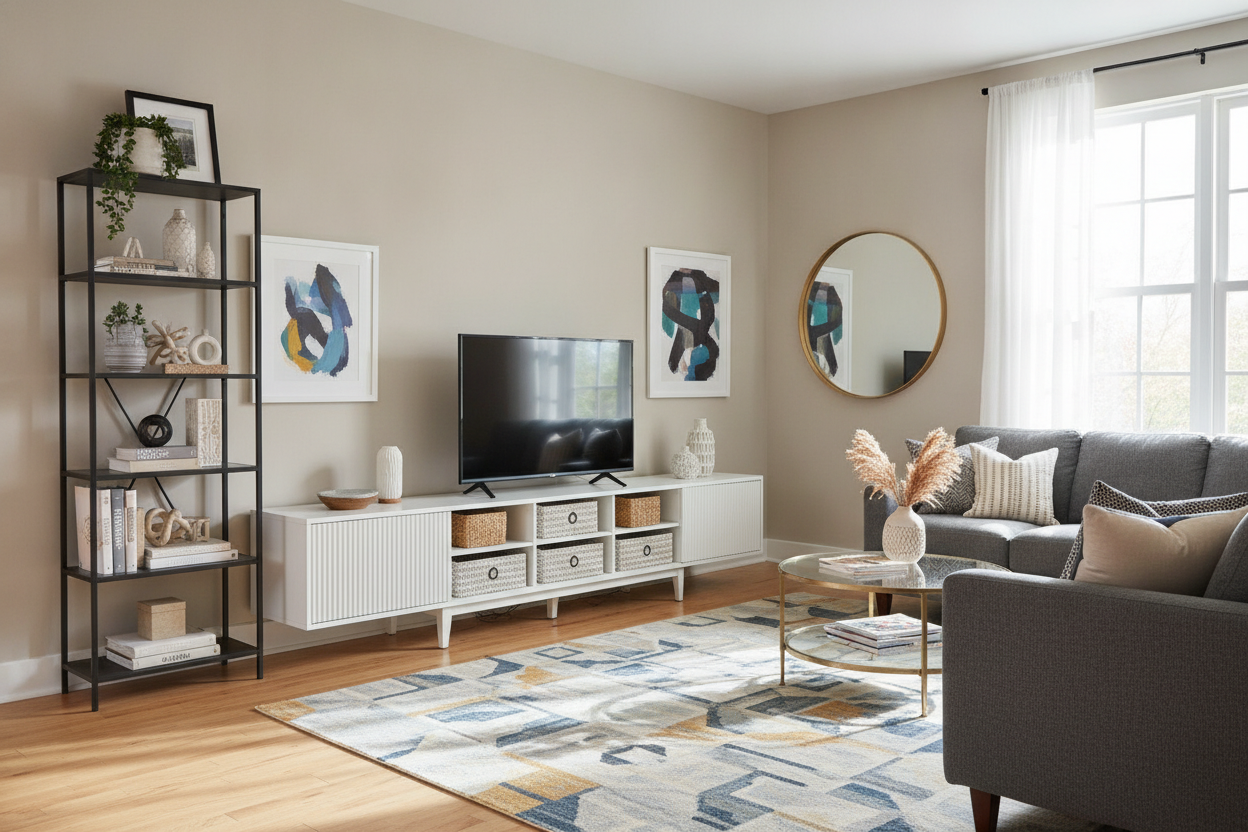
I still remember the sinking feeling when my 65-inch TV arrived and I realized my old media console looked like a toddler’s stool underneath it. I had spent weeks obsessing over refresh rates and OLED panels, but I completely forgot the 70 inch tv and stand relationship that actually makes a room look cohesive. It was a visual disaster that made the whole living room feel lopsided and top-heavy.
Finding a wayfair tv stand 70-inch isn't just about finding a flat surface; it's about managing the massive visual footprint of a modern screen. If you get it wrong, your expensive TV looks like a mistake. If you get it right, the whole wall feels intentional. I've personally assembled enough of these to know that the difference between a 'designer' look and a 'dorm room' look comes down to about six inches of overhang.
- Aim for at least 3-5 inches of 'breathing room' on each side of the TV.
- Check for a center support leg to prevent the dreaded 'MDF smile' (sagging).
- Prioritize depth if you have a soundbar; 15 inches is the bare minimum for most high-end audio.
- Hidden cord management is non-negotiable for a unit this size to avoid the 'spaghetti' look.
The 'Floating Mushroom' Effect (And How to Avoid It)
There is a specific kind of design tragedy that happens when a TV is exactly the same width as the stand it sits on. I call it the 'Floating Mushroom.' Because the screen has no border on the furniture below it, it looks top-heavy and precarious. It dominates the room in a way that feels aggressive rather than inviting.
When I first set up my living room, I made this exact mistake. I thought if the TV was 58 inches wide, a 60-inch stand was plenty. I was wrong. The screen looked like it was about to tip over at any moment. I had basically forgot the 70 inch tv and stand proportion rule: the furniture must always be wider than the tech to provide a visual anchor.
A massive screen needs a base that feels sturdy and grounded. Without that extra horizontal space on the ends, your eye just sees a giant black rectangle. By moving to a wider unit, you create a base that feels like a piece of architecture in your home. It stops being a utility rack and starts being a focal point.
Why I Only Looked at Wayfair TV Stands 70 Inch or Wider
When you start to browse endless tv stands online, the sheer volume of choices is paralyzing. You'll see thousands of options, but once you filter for wayfair tv stands 70 inch or larger, the list becomes much more manageable. Most people shy away from the 70-inch mark because they think it will overwhelm their room, but the opposite is true.
A wider stand actually makes a small room look bigger. It draws the eye across the wall, creating a long horizontal line that mimics the architecture of the space. Even for a 55-inch TV, a 70-inch stand is the sweet spot. It gives you room for a lamp or a couple of books on the ends, which breaks up the tech-heavy look of the media center.
I spent three nights scrolling through reviews, looking for a wayfair tv stand 70 inch that didn't look like cheap laminate. The trick is to look at the weight capacity first. If a 70-inch stand is only rated for 50 lbs, run away. You want something that can handle at least 100 lbs, even if your TV is light. That extra capacity is a proxy for build quality and structural integrity.
The Overhang Rule Every Designer Uses
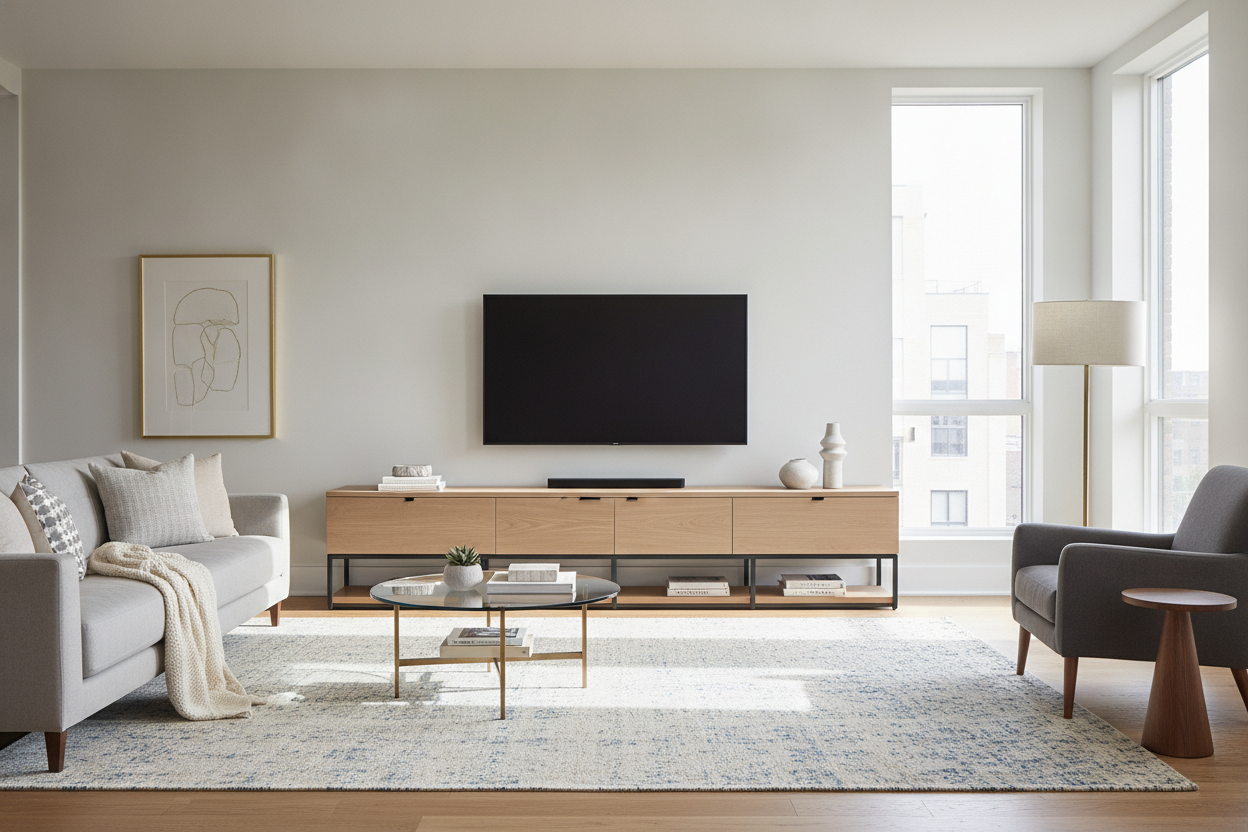
Here is the math I swear by: Your TV stand should be at least 20% wider than your TV. For a standard 65-inch TV (which is usually about 57 inches wide), a wayfair 70 inch tv stand is almost exactly that 20% buffer. This leaves about 6 inches of space on either side of the screen.
This 'overhang' is where the magic happens. It allows the TV to sit 'inside' the footprint of the stand rather than on top of it. If you go any smaller, you lose the ability to style the unit, and you’re left with a purely functional setup. Trust the math; your eyes will thank you once the furniture is assembled and the room feels balanced.
Red Flags I Hunted for in the Reviews
Buying a 70-inch piece of furniture that arrives in a flat box is a gamble. I’ve assembled enough of these to know where they fail. The biggest red flag is a lack of center support. Any unit over 60 inches needs a fifth or sixth leg in the middle. Without it, the weight of the TV and the unit itself will cause the top to bow over time. I’ve seen wayfair tv stand 70 inch units literally 'smile' at me because the MDF couldn't handle the span.
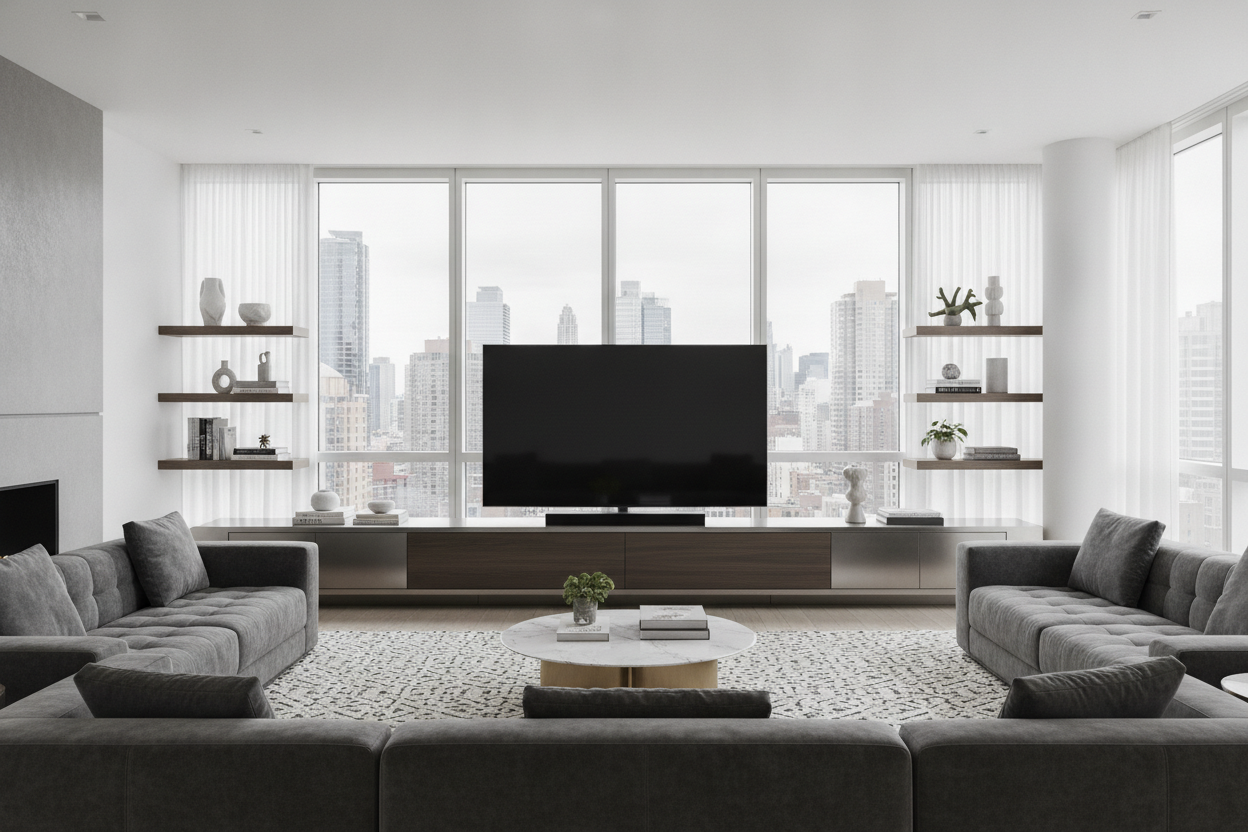
I also look closely at the door hinges in customer photos. If you see five different reviews where the cabinet doors are slightly crooked, it means the pre-drilled holes are inconsistent. That’s a nightmare to fix on your own. I’ve also become very wary of wall-mounted units for screens this size. I once considered a floating tv stand with my 70-inch tv, but the anxiety of 80 pounds of electronics hanging by a few bolts in my old drywall kept me up at night. Floor-standing is almost always the safer bet for longevity.
Lastly, check the 'back panel' description. If it's that flimsy cardboard you have to nail in with 40 tiny tacks, make sure there are pre-cut cord holes. I once spent an hour with a box cutter trying to make a hole for a surge protector because I didn't check the specs. It looked like a shark had chewed through my brand-new console by the time I was done.
Making a Giant Console Look Intentional, Not Clunky
Once the 70-inch beast is in your living room, you have to style it so it doesn't look like a giant coffin. The goal is to break up the long, flat top. I like to use the 'Rule of Three' on one side—maybe a tall vase, a medium bowl, and a small stack of books. On the other side, leave it mostly empty or add a single trailing plant like a Pothos. The greenery softens the hard edges of the wood and the glass screen.
Lighting is your best friend here. If your unit doesn't come with built-in LEDs, buy a cheap bias lighting strip for the back of the TV. It reduces eye strain and makes the whole setup feel premium. I personally opted for a modern tv stand with cabinets and drawers because it allowed me to hide the sheer amount of junk that accumulates near a TV—remotes, chargers, and those weird manuals you never read. By keeping the surface relatively clear and using the storage below, the 70-inch stand becomes a piece of furniture rather than just a utility rack.
FAQ
Can I put a 75-inch TV on a 70-inch stand?
Technically, yes, if the legs of the TV fit on the surface. But visually, it’s a mistake. The TV will hang over the edges, which looks unstable and cluttered. Stick to a TV that is at least 4-6 inches narrower than the stand.
Is MDF okay for a TV stand this big?
Most Wayfair stands are MDF or particle board. It’s fine as long as there is a center support leg. If it's a long span with only four legs at the corners, the MDF will definitely sag under the weight of a large TV over time.
How high should a 70-inch TV stand be?
For most sofas, you want a stand that is between 18 and 24 inches high. This keeps the center of the TV at eye level. Anything taller and you’ll be craning your neck, which is a one-way ticket to a tension headache.

Dejar un comentario
Este sitio está protegido por hCaptcha y se aplican la Política de privacidad de hCaptcha y los Términos del servicio.