










I remember staring at a $200 console table I bought from a big-box site during a late-night scrolling session. It looked incredible in the professional photos—crisp, white, and modern. But three months later, a single condensation ring from a forgotten glass of water turned the top into a bubbling, topographical map of regret. The 'wood' was actually just paper-thin veneer over what looked like compressed breakfast cereal.
That was the day I realized I was done with disposable furniture. I was tired of owning things that had an expiration date. I finally started looking for a solid wood storage cabinet that wouldn't dissolve if someone sneezed near it. I wanted something heavy. Something that smelled like a forest, not a chemical factory. Most importantly, I wanted something I wouldn't have to drag to the curb in two years.
- Veneer and MDF are essentially single-use materials; once they peel, they are trash.
- Solid wood can be sanded, refinished, and repaired for decades.
- Authentic timber handles moisture and weight without sagging or warping.
- The long-term cost of real wood is lower than replacing cheap units every few years.
The Day My Veneer Console Finally Betrayed Me
The betrayal wasn't just the water ring. It was the way the drawer slides started sticking because the particleboard frame was literally crumbling under the weight of my junk drawer. I spent a Saturday trying to glue the peeling edges back down, but it looked like a middle-school art project gone wrong. It felt like I was throwing money into a wood chipper every time I bought 'affordable' flat-pack pieces.
I finally stopped making excuses and started researching what designers actually think about material longevity. The consensus was brutal: if it’s not solid timber or high-grade plywood, it’s not meant to last. I realized that my 'budget-friendly' habit was actually costing me more in the long run because I was rebuying the same types of storage every few years. I needed a piece with actual soul—and actual structural integrity.
When my first real wood piece arrived, the difference was immediate. It didn't wobble when I bumped it. The doors clicked shut with a satisfying thud, not a hollow rattle. It felt like an adult lived in my house for the first time.
The Secret Superpower of Authentic Timber
There is a tactile weight to real wood that you just can't fake. When you run your hand across a solid oak or pine surface, you’re feeling the history of the tree, not a printed plastic pattern. But the real superpower isn't the look—it's the durability. I have a 70-pound goldendoodle who thinks every piece of furniture is a chew toy or a scratching post. On my old MDF cabinet, one claw mark meant the end of the world. On solid wood, it’s just 'character.'
If you have a high-traffic home, solid wood living room cabinets are the only logical choice. They act as the anchor for the room. I use mine to hold a massive 65-inch TV, three gaming consoles, and a stack of coffee table books that probably weighs as much as a small child. A cheaper unit would have developed a noticeable 'frown' in the middle shelf by now. This thing hasn't moved a millimeter.
Sandpaper is Cheaper Than a New Dresser
Here is the thing no one tells you about fast furniture: it’s unrepairable. If you scratch a laminate surface, you’re stuck with that greyish-brown scar forever. But a solid wood cabinet with drawers is a different beast entirely. Last year, I accidentally dragged a ceramic planter across the top of my cabinet and left a deep gouge. Instead of panicking, I grabbed a bit of 220-grit sandpaper and some wax. Ten minutes later, the scratch was gone.
You can also change your mind. If I decide in five years that I’m over the natural oak look, I can sand it down and stain it dark walnut or paint it a moody forest green. You can't do that with melamine. Real wood is an investment in your future indecisiveness.
Where I Hide the Mess: Scaling Up My Storage
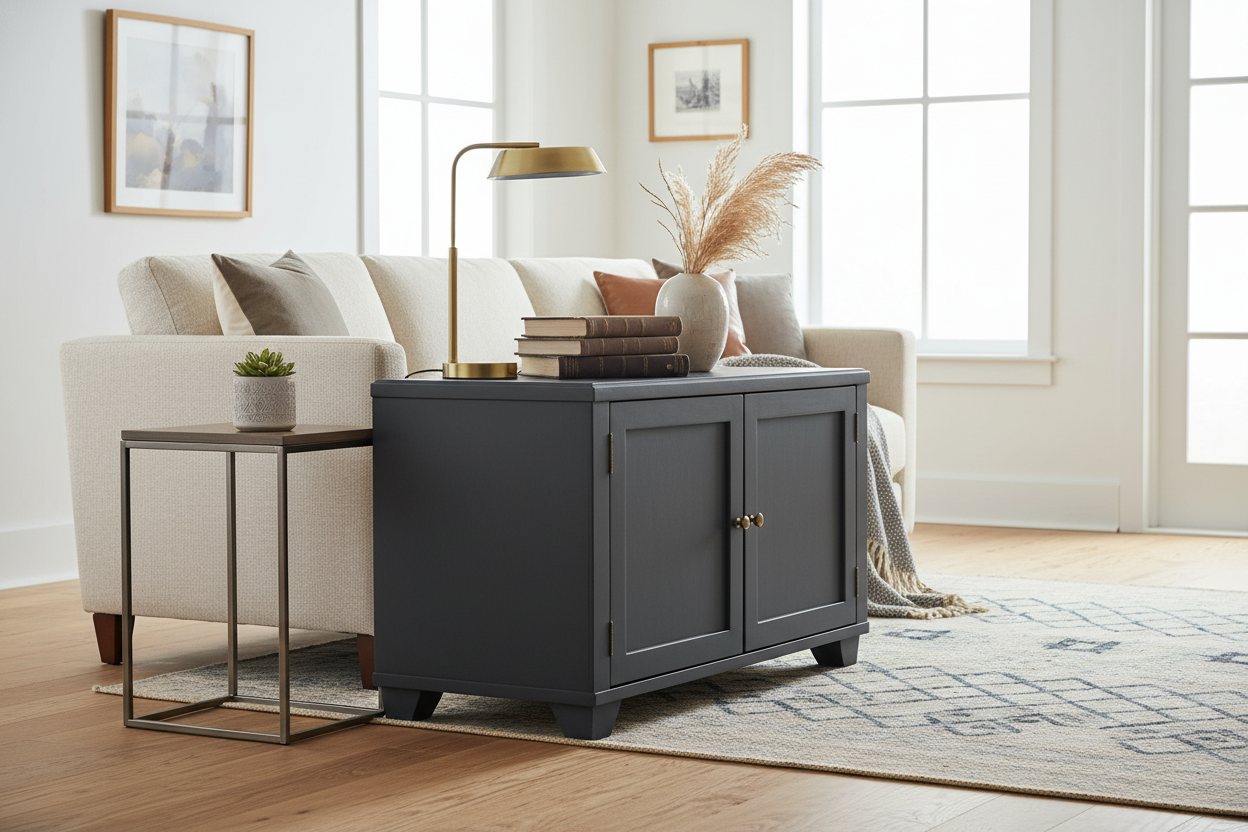
My biggest design mistake was thinking open shelving would make my house look like a magazine. It didn't. It just made my house look like a cluttered garage. I eventually learned that the key to a calm home is closed storage. A heavy-duty solid wood storage cabinet with doors is the ultimate 'panic button' for when guests are coming over. You can shove board games, extra blankets, and mismatched electronics behind those doors, and the room still looks pristine.
I put a large utility cabinet in my hallway, and it changed my life. It holds everything from the vacuum cleaner attachments to the winter coats we only wear three weeks a year. Because it's solid wood, the hinges stay tight even with constant use. I’ve had cheap wardrobes where the hinges literally ripped out of the soft particleboard side walls—that simply doesn't happen when the screws have actual wood fibers to bite into.
In the living room, I went for a piece with a mix of drawers and shelves. The drawers handle the small stuff—batteries, chargers, mail—while the shelves hide the bulky items. It’s about creating a 'home' for your mess so it doesn't end up on your kitchen island.
Yes, the Upfront Cost Stings (But Here is the Math)
I get it. Spending $800 to $1,200 on a single cabinet feels like a lot when you can find something that looks similar for $250. But do the 'Three-Cabinet Math.' If you buy the $250 version, you will likely replace it in three to four years when the drawers stop sliding or the finish starts to flake. Over twelve years, you’ve spent $1,000 on three different pieces of junk and had the headache of assembling (and disposing of) all of them.
Or, you buy one all wood storage cabinet once. It lasts thirty years. It might even be something your kids fight over when you move into a retirement home. If you're nervous about the price, start small. A small solid wood cabinet in an entryway or bathroom is a great way to test the quality before committing to a massive dining room hutch. Once you feel the difference, you won't go back.
FAQ
Is 'solid wood' the same as 'real wood'?
Not always. 'Real wood' is a marketing term that can include veneers. 'Solid wood' means the piece is made of solid timber planks all the way through. Always check the product specs for 'MDF' or 'Particleboard' in the fine print.
How do I maintain a solid wood cabinet?
Stop using those aerosol dusting sprays. They build up a nasty film. Just use a slightly damp microfiber cloth for cleaning and a good quality furniture wax once or twice a year to keep the wood hydrated.
Is it too heavy to move?
Yes, it’s heavy. That’s the point. Get some felt pads for the feet so you can slide it across hard floors, and always recruit a friend to help you lift it. Your back will thank you, and your floors will stay scratch-free.


Dejar un comentario
Este sitio está protegido por hCaptcha y se aplican la Política de privacidad de hCaptcha y los Términos del servicio.