










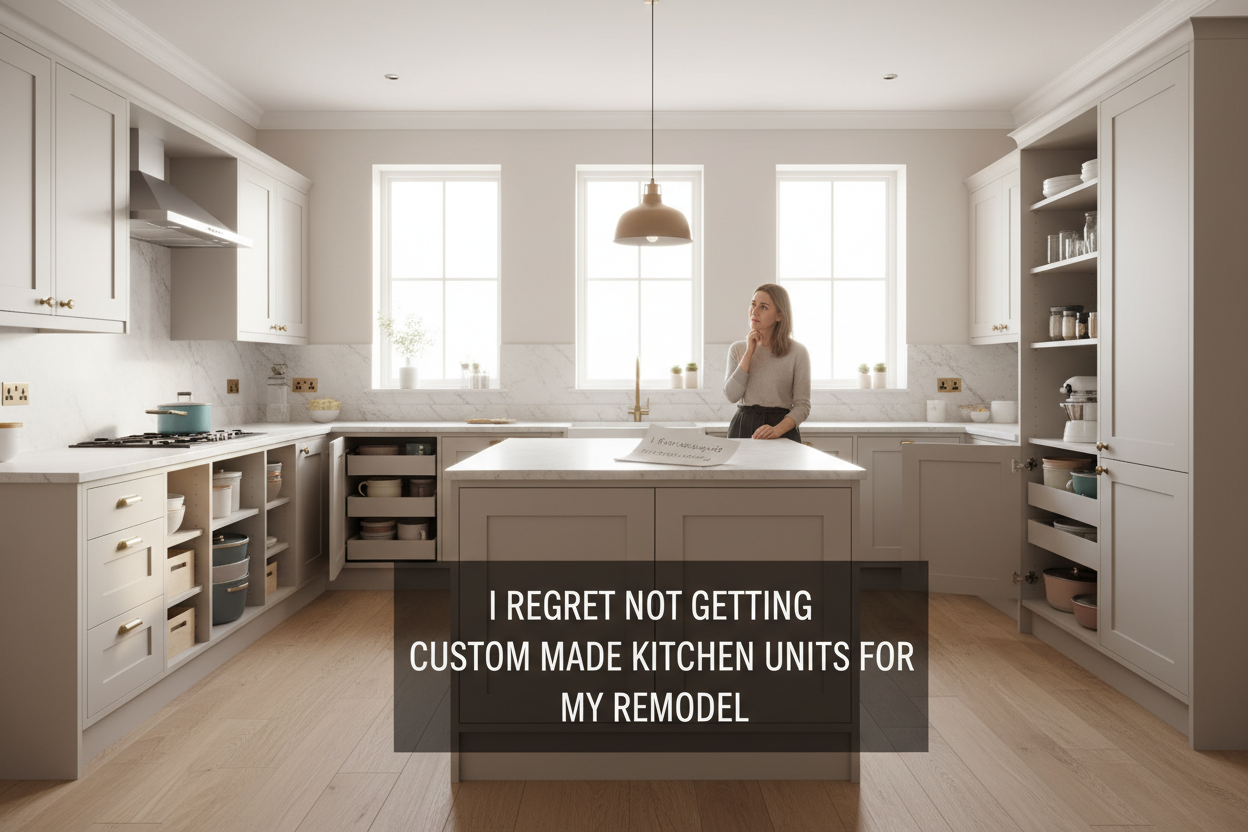
I am currently staring at a six-inch strip of plastic-coated wood that cost me $150. In the industry, they call it a 'filler panel.' In my house, I call it the 'monument to my own cheapness.' When I remodeled my kitchen two years ago, I thought I was being savvy by opting for off-the-shelf cabinets instead of custom made kitchen units. I figured a box is a box, right?
Wrong. I spent three months researching quartz patterns and brass hardware, but I spent zero minutes thinking about the actual geometry of my 1920s walls. Now, every time I try to shove a baking sheet into a narrow cabinet that could have been four inches wider, I feel that familiar twinge of renovator’s remorse. If you are standing at the edge of a kitchen project, let my mistakes be your map.
- Standard cabinets leave 'dead zones' that filler panels hide but don't utilize.
- A true bespoke unit is built to the millimeter, not the nearest 3-inch increment.
- Labor costs for 'hacking' standard boxes often equal the price of custom work.
- Old houses have no 90-degree angles; custom units are the only way to hide the lean.
The Filler Panel Fiasco (My Biggest Regret)
My kitchen is small—about 110 square feet of usable space. In a room that size, every inch is a premium. Because I bought standard 24-inch and 30-inch boxes, I ended up with a 6.5-inch gap at the end of my main counter run. The 'solution' from the big-box store was to slap a piece of matching trim over the hole. It looks fine from a distance, but it’s a total waste of space.
If I had gone with a kitchen cabinet made to order, that 6.5 inches could have been a pull-out spice rack or a dedicated slot for my heavy wooden cutting boards. Instead, it is literally empty air walled off by expensive plywood. In an older home, your walls are almost certainly 'out of plumb,' meaning they lean or curve. Standard boxes are perfectly square. When you try to put a square box against a leaning wall, you get gaps. I spent more on my finish carpenter’s time trying to scribe and shim those cheap boxes to look straight than I would have spent on the upgrade to custom units in the first place.
Wait, What Actually Counts as Custom Anymore?
The marketing in this industry is designed to confuse you. You’ll see 'semi-custom' everywhere. Usually, that just means the manufacturer has a few more door styles and maybe 15 paint colors instead of five. But at the end of the day, they are still just mass-producing 30-inch boxes on an assembly line. They aren't changing the depth or the width to fit your specific floor plan.
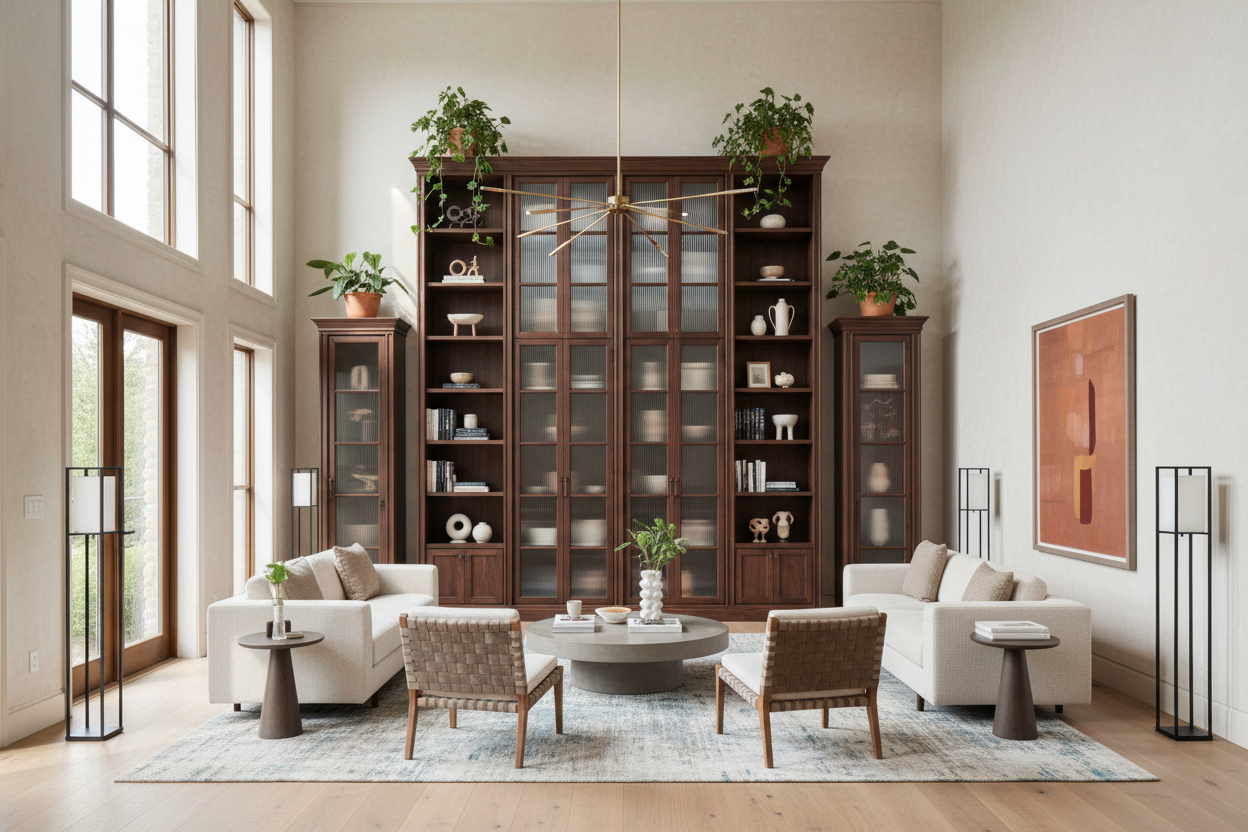
A genuine kitchen cabinet made to order is a different beast. We’re talking about a shop that takes your exact wall-to-wall measurements and builds the carcass of the cabinet to fit that footprint. If your wall is 104 and 3/8 inches, they build a run that is exactly 104 and 3/8 inches. No fillers. No gaps. This level of precision is especially vital when finding the perfect kitchen pantry, because pantries are massive vertical blocks that show every single imperfection in your floor or ceiling height.
Where Standard Sizes Will Absolutely Fail You
If you have a modern 'cookie-cutter' home with perfectly flat drywall, you might get away with standard sizes. But if you have an alcove, a sloped ceiling, or a plumbing stack that juts out into the room, standard cabinets will ruin your layout. I’ve seen people try to use standard uppers in a room with 9-foot ceilings, leaving a 12-inch gap at the top that just collects grease and dust. It looks unfinished.
Another nightmare scenario involves freestanding kitchen islands. When you use custom units for the perimeter, you can perfectly align the 'work triangle' distances. With standard boxes, you’re often forced to shift the island six inches to the left or right just to make the walkways even, which can throw off the symmetry of your overhead lighting or the placement of your sink. Custom units allow you to center everything to the inch, not the nearest foot.
The Cost Reality: Is Bespoke Actually That Unaffordable?
Let’s talk numbers. People hear 'bespoke' and think they need a six-figure budget. While kitchen cupboards made to order are definitely more expensive upfront, the gap is closing. A mid-range set of 'stock' cabinets for a medium kitchen might run you $8,000. The custom equivalent might be $13,000. That $5,000 difference feels huge during a demo, but consider this: you are likely going to live with this kitchen for 15 to 20 years.
When you factor in the cost of the trim carpenter who has to spend three extra days 'making it work' with the cheap boxes, the price difference shrinks. Plus, custom units almost always use superior materials—think 3/4-inch furniture-grade plywood instead of the 1/2-inch particle board found in big-box aisles. The drawers won't sag in five years, and the hinges won't rip out of the soft MDF walls.
Smart Workarounds if Full Custom Isn't Happening
If your budget is truly tapped out, don't just settle for a kitchen full of filler panels. Use a 'hybrid' approach. Buy standard boxes for the long, easy runs where the math actually works out. Then, hire a local cabinet maker to build just one or two custom units for the awkward corners or the end of the run. This gives you the 'built-in' look without the total custom price tag.
Another trick is to skip built-in lower cabinets on one wall and use a high-quality standalone piece instead. For example, a 55-inch wide buffet sideboard can provide a massive amount of storage and prep surface for a fraction of the cost of three base cabinets and a slab of granite. It looks like a deliberate design choice rather than a compromise, and it allows you to allocate your remaining budget to a custom pantry or a better range.
FAQ
Do custom cabinets increase home value?
Absolutely. High-end buyers can spot filler panels and 'stock' sizes instantly. Custom cabinetry is one of the few kitchen upgrades that offers a tangible return because it maximizes the usable square footage of the room.
How long is the lead time for made-to-order units?
Expect to wait. While you can get stock cabinets in a week, custom shops usually have a lead time of 8 to 12 weeks. You have to plan your demo around their delivery schedule, not the other way around.
What material should I insist on for custom units?
Insist on 3/4-inch plywood boxes and solid wood drawer boxes with dovetail joints. If they suggest 'furniture board' (which is just fancy talk for high-density particle board), make sure the price reflects that lower-tier material.

Dejar un comentario
Este sitio está protegido por hCaptcha y se aplican la Política de privacidad de hCaptcha y los Términos del servicio.