










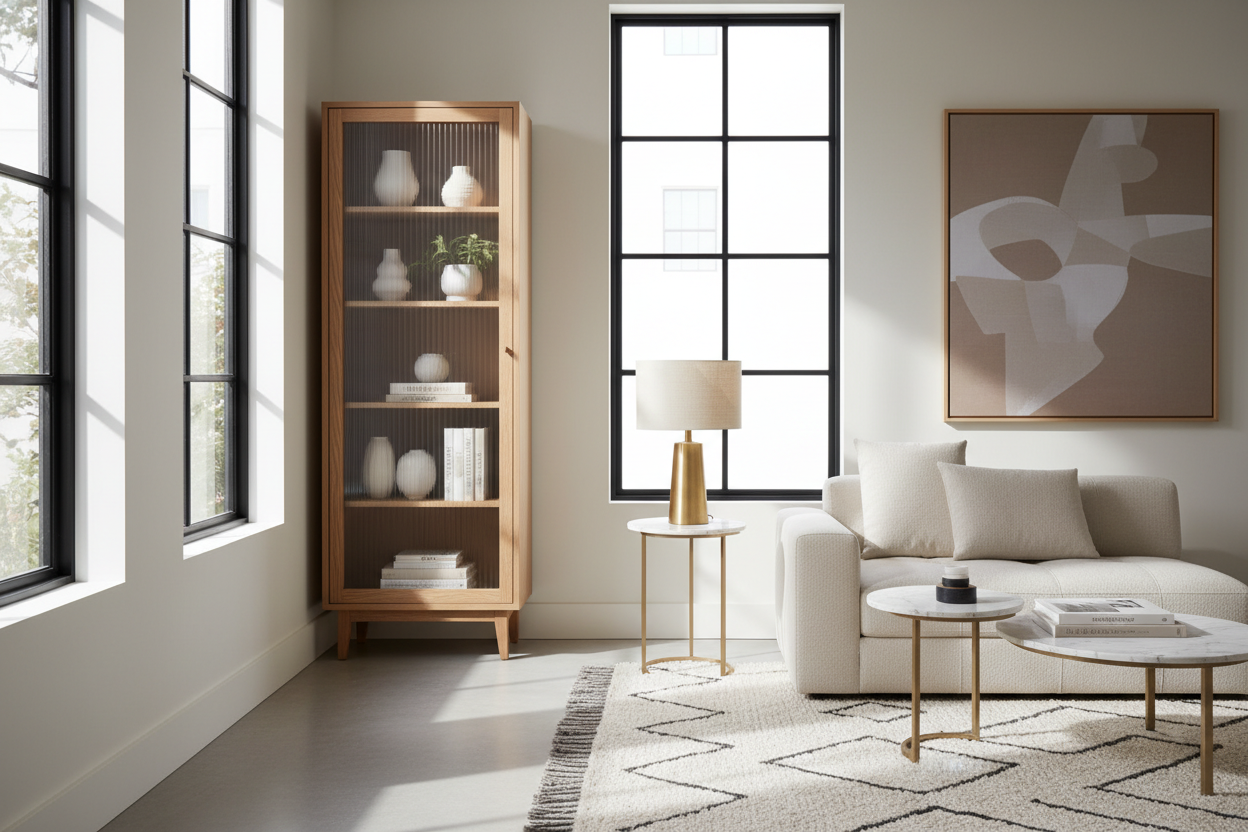
I spent three months staring at a 17-inch gap between my living room window and the radiator. It was a vacuum for dust bunnies and a place where my vacuum cord always got tangled. I tried a plant stand, but it looked like a toothpick in a canyon. I tried a floor lamp, but it just highlighted the empty wall behind it and made the whole room feel lopsided.
Then I discovered the magic of the tall narrow accent cabinet. It is the secret weapon for anyone living in a home designed by someone who clearly never intended for people to actually own things. By going vertical, I turned a useless sliver of floor into the most functional spot in my apartment without making the room feel like a crowded storage unit.
Quick Takeaways
- Measure the swing zone: Ensure the door can open fully without hitting your sofa or a doorway.
- Anchor is mandatory: Because these are tall and skinny, they are top-heavy by nature. Use the wall straps.
- Material matters: Skip the flimsy 1.2 lb density fiberboard; look for solid wood or high-grade MDF if you want the doors to stay aligned.
- Glass is a cheat code: Glass fronts make a narrow piece feel lighter and less like a locker.
Every Home Has That One Weird, Unusable Corner
You know the spot. It is that 15-to-20 inch gap next to the fireplace that is too small for a chair but too large to leave empty. Or it is the end of a hallway where the wall just... stops. In the design world, we call this dead space. It is frustrating because it feels like wasted square footage, especially when you are already struggling to find a place for your books, linens, or that collection of fancy candles you refuse to burn.
Most people try to ignore these gaps, but an empty corner actually makes a room feel unfinished. It creates a visual break that stops the eye and makes the space feel smaller than it is. I used to think the only solution was custom cabinetry, which costs more than my car, but a vertical storage piece solves the problem for a fraction of the price. The key is finding something that fits the footprint exactly—anything too small looks like an accident, and anything too large makes the room feel claustrophobic.
Why I Finally Stopped Buying Tiny, Useless End Tables
For years, my go-to move for awkward corners was a tiny plant stand or a wobbly side table. I thought I was being clever by keeping the furniture 'small.' I was wrong. Small furniture in a narrow gap often emphasizes the emptiness rather than filling it. It looks like you didn't have enough money to buy a real piece of furniture, so you just threw a stool in the corner and hoped for the best.
When I finally bought the 71 6 tall 2 shutter door square accent cabinet, the room's proportions immediately clicked. Because it stands over 70 inches tall, it draws the eye upward, making my eight-foot ceilings feel significantly higher. It turned that weird alcove into a focal point. Instead of a 'hole' in the room, I had a structured, architectural element that balanced out my bulky sectional sofa. It is about scale, not just floor space.
How a Skinny Footprint Saved My Hallway Traffic
The real beauty of a skinny accent cabinet is the footprint. In my old hallway, I tried a standard-depth dresser, and I spent six months hip-checking the corner of it every time I walked to the bathroom. It was a bruise-inducing nightmare. A narrow piece—something in the 12-to-15 inch depth range—gives you all the storage you need without encroaching on the 'walking path' of your home.
I eventually realized that I needed an accent cabinet narrow enough to walk past while carrying a laundry basket. If you can't walk past a piece of furniture with your arms full, it doesn't belong in a high-traffic area. These skinny pieces are specifically designed for those high-stakes zones like entryways and tight corridors where every inch of clearance is a victory for your shins.
Wait, What Actually Fits Inside These Things?
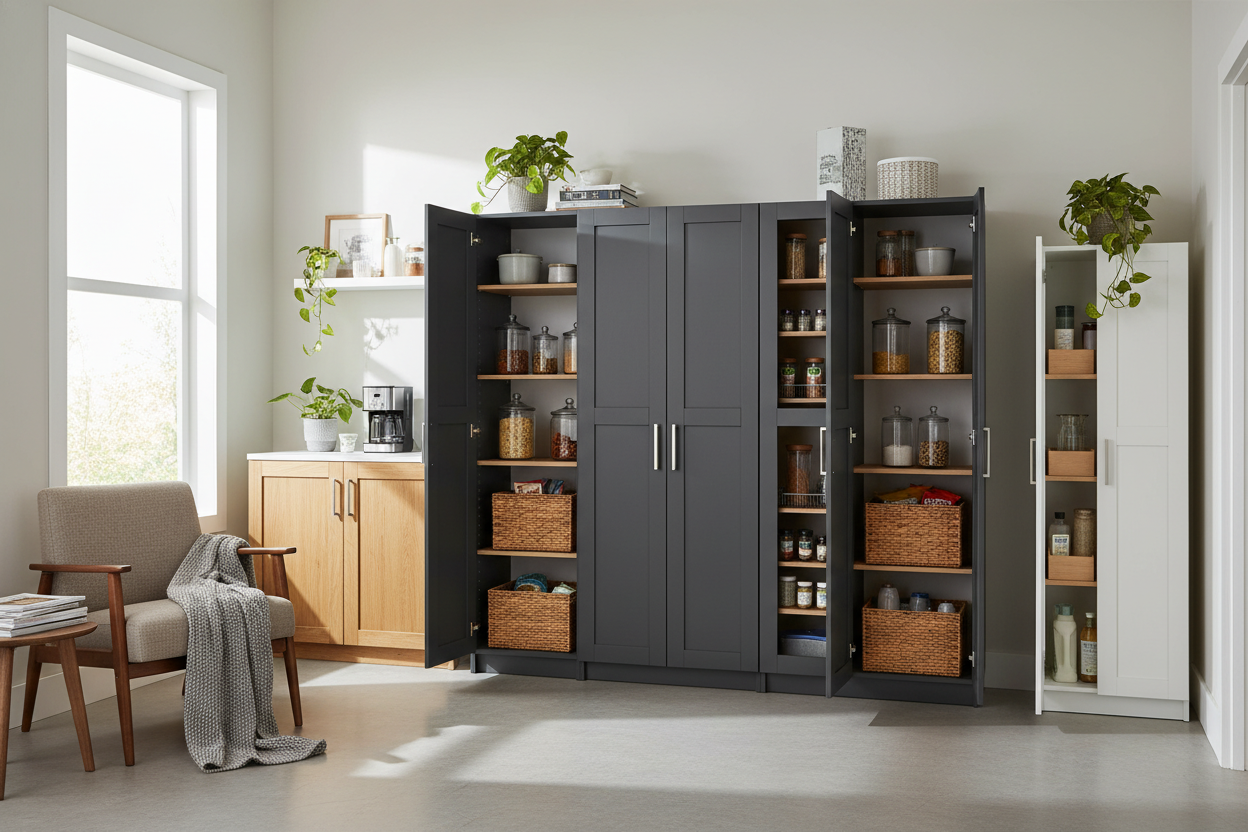
I’ll be honest: you aren't going to fit a microwave or a stack of board games inside a small narrow accent cabinet. But that isn't the point. These pieces are designed for the 'clutter creep'—the random stuff that usually ends up in a pile on your kitchen counter. In mine, I’ve got dog leashes on the bottom shelf, spare lightbulbs on the second, and a stack of 'to-be-filed' mail on the third.
If you struggle with 'doom piles' (those stacks of random items that migrate from room to room), a small accent cabinet with drawers is a total lifesaver. It forces you to organize vertically. I use the drawers for things like batteries, coasters, and that one specific Allen wrench I need for the dining chairs. It’s about micro-organization. When everything has a tiny, narrow home, the rest of your house stays remarkably clear.
My 3 Rules for Styling High-Impact Dead Spaces
If you just shove a tall skinny accent cabinet into a corner and leave it alone, it might look like a locker in a gym. You have to style it with intention to make it look like a narrow decorative cabinet. First, play with contrast. If your walls are white, go for a dark wood or a bold color. This makes the piece look like an architectural choice rather than a storage necessity.
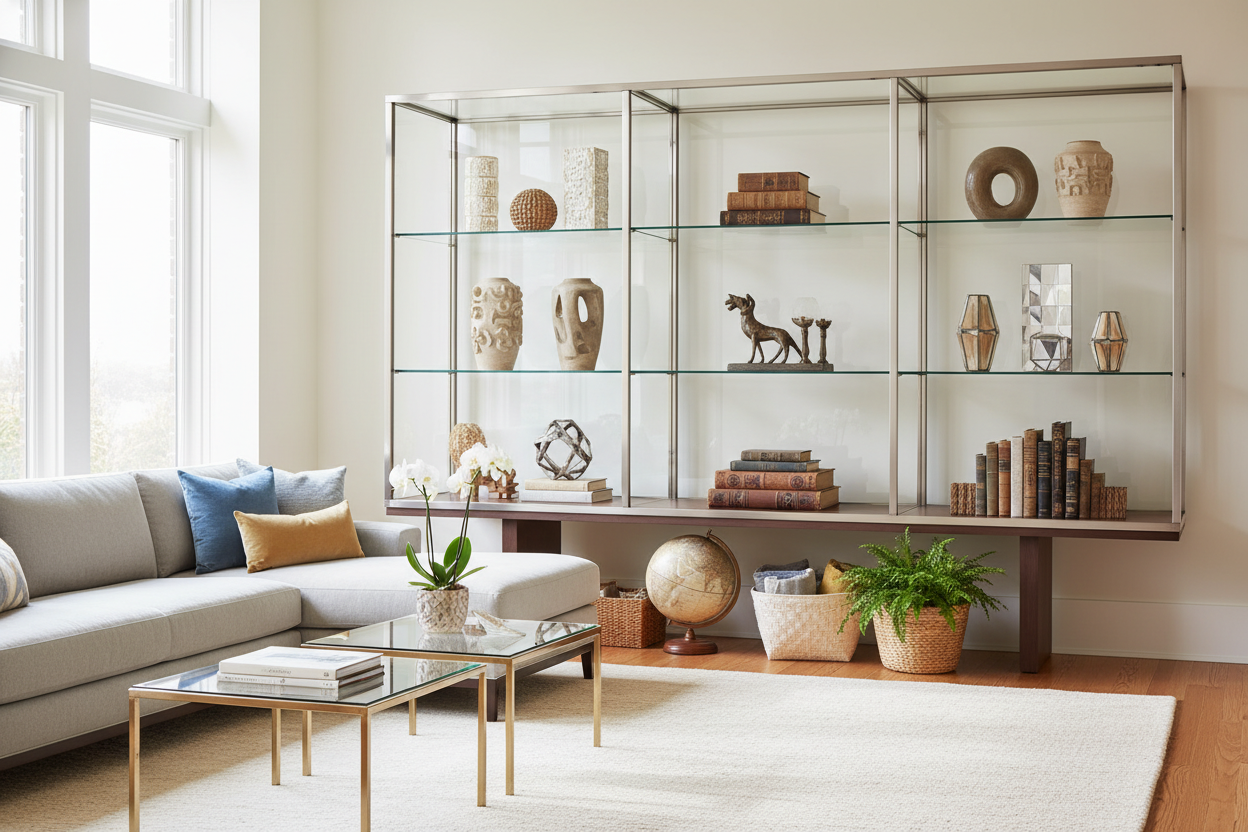
Second, use glass to your advantage. A black cabinet with glass doors is my personal favorite because it allows you to display your 'pretty' things—like vintage glassware or leather-bound books—while keeping them dust-free. Third, don't over-style the top. Since these pieces are narrow, putting a huge lamp on top will make it look top-heavy and nervous. Stick to a single tall vase or a small tray for keys.
Personal Experience: The Wobble Factor
I once bought a cheap, $60 version of a tall cabinet that was made of what I am fairly certain was spray-painted cardboard. Every time a truck drove by my apartment, the cabinet would shimmy. It drove me insane. I eventually learned that with tall, narrow furniture, weight distribution is everything. If you can't afford solid wood, at least look for a piece with a heavy base or metal legs. And I cannot stress this enough: use the wall anchor. I didn't once, and a heavy gust of wind through an open window almost ended my favorite ceramic bowl's life.
FAQ
How narrow can these cabinets actually get?
You can find pieces as slim as 10 inches, but 12 to 15 inches is the sweet spot. Anything narrower than 10 inches becomes difficult to use for anything other than spice jars or CDs (if you still have those).
Are they stable on carpet?
Generally, no. Tall, narrow furniture and plush carpet are a bad mix. If you must put one on carpet, you absolutely have to anchor it to a wall stud, and you might need to use shims under the front feet to keep it from leaning forward.
Can I use a tall narrow cabinet in a bathroom?
Yes, but check the material. If it is cheap MDF, the steam from your shower will cause the 'wood' to swell and the paint to peel within six months. Look for solid wood, metal, or pieces specifically rated for high-moisture environments.

Dejar un comentario
Este sitio está protegido por hCaptcha y se aplican la Política de privacidad de hCaptcha y los Términos del servicio.