










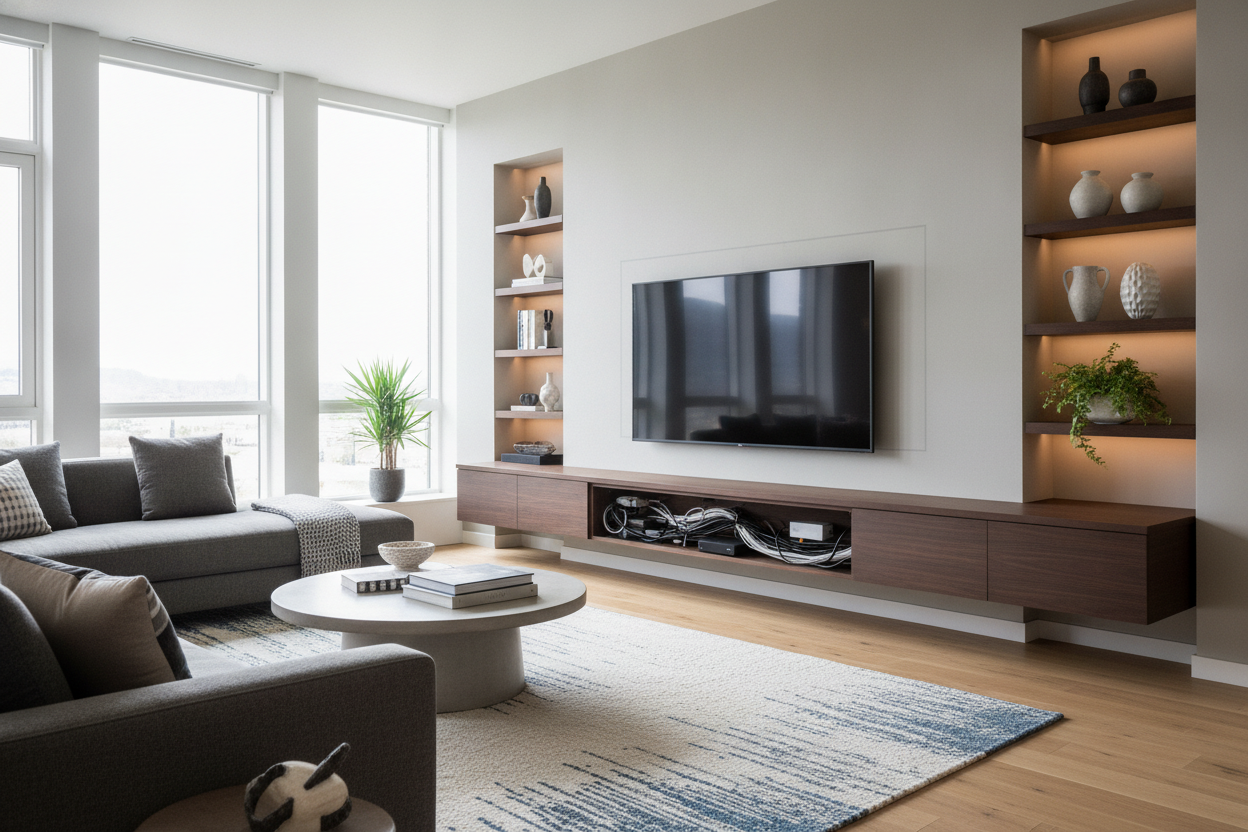
I spent three months staring at a 12-foot blank wall in my living room. I tried a gallery wall, which looked like a cluttered mess, and a single oversized mirror that just made the room feel like a dance studio. Eventually, I realized the only way to fix a scale problem this big was to go nuclear with a 140 inch entertainment center.
It was a decision born out of desperation and a very strong cup of coffee. I wanted that built-in look without the $5,000 contractor bill, but I wasn't quite prepared for the physical toll an 11.6-foot piece of furniture takes on a person’s lower back.
- The delivery involves at least six massive, heavy boxes.
- You absolutely cannot build this solo without losing your mind.
- It will make your 65-inch TV look like a handheld tablet.
- The storage capacity is essentially a second closet for your living room.
The Delivery Day Panic (and the Box Tetris)
When the freight truck pulled up, I realized my first mistake: I hadn't cleared the driveway. Six boxes, each weighing between 80 and 120 pounds, were stacked on a pallet like a game of high-stakes Tetris. This isn't your standard flat-pack delivery that hides on the porch; this is a logistical event.
I spent forty-five minutes just dragging cardboard into the house. If you live in an apartment or have a narrow hallway, measure your turns. Getting a 140 inch tv stand base through a tight corner is a masterclass in frustration. I ended up unboxing half of it on the lawn just to make the pieces light enough to carry inside without calling an ambulance.
Pro tip: Keep the hardware bags organized. When you’re dealing with 200+ screws and dowels, 'winging it' is how you end up with a leaning tower of media. I used muffin tins to sort the bits, which felt domestic and organized until I tripped over a baseplate three hours later.
Why Didn't I Just Buy a 140 Inch TV Stand Instead?
About four hours into the build, I hit the Wall. Not the physical wall, but the mental one where you regret every life choice that led to this moment. I was surrounded by half-finished towers and a sea of styrofoam peanuts. I looked at the skeletal frame and genuinely wondered why I didn't just buy a sleek black tv stand entertainment center and call it a day.
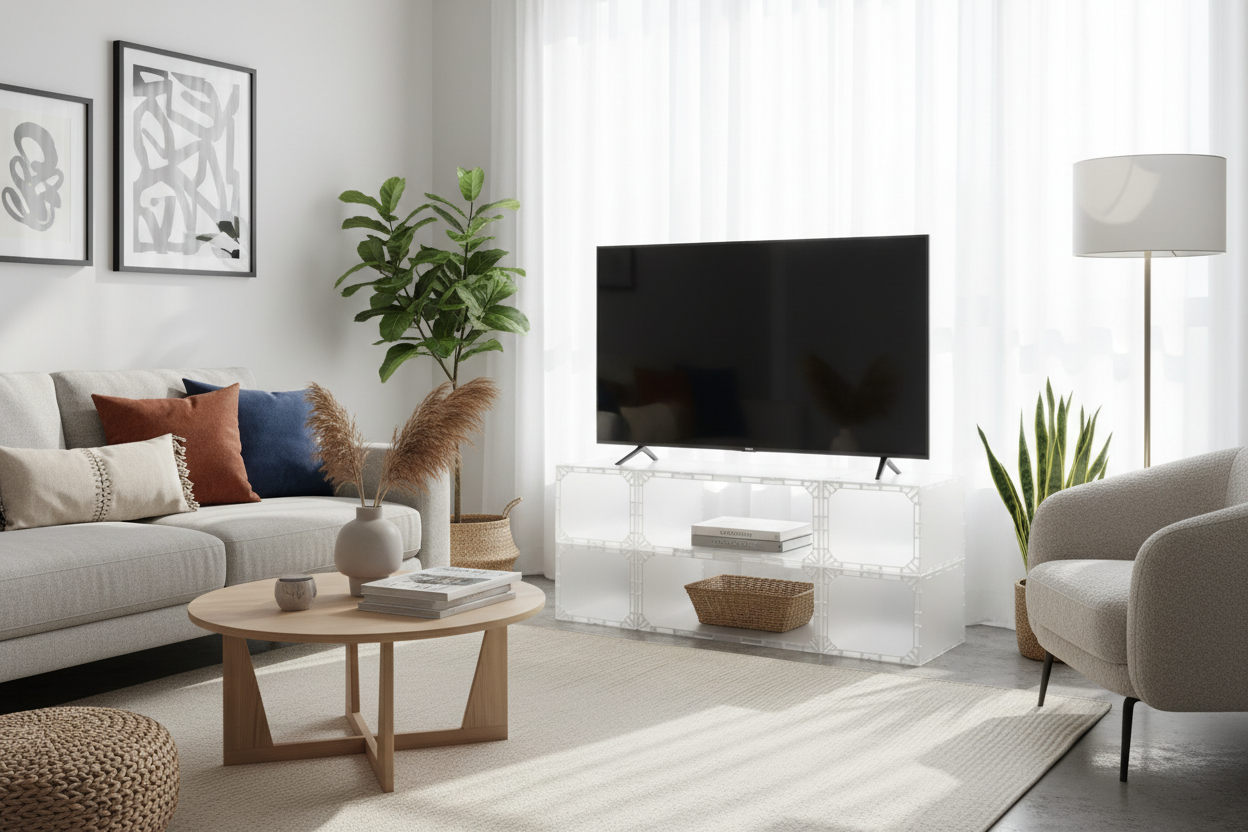
A low-profile stand would have been done in forty minutes. I could have been watching Netflix instead of wrestling with upper-shelf stabilizers. But then I looked at the sheer volume of stuff I needed to hide—the Xbox, the router, and my partner’s collection of vintage cameras. A simple stand wouldn't have cut it.
The difference between a stand and a full-wall unit is the visual weight. A stand leaves the top half of your wall feeling naked and awkward. Pushing through the assembly fatigue is the price you pay for a room that actually looks finished.
The Moment the Room Finally Made Sense
The 'aha' moment happened when I finally locked the base units together and stepped back. Suddenly, the room didn't feel like a cavernous void anymore. It felt anchored. Standard furniture often makes large rooms feel disjointed, but a massive entertainment center creates a focal point that actually commands the space.
I’ve seen people try to fill 12 feet of wall with two different consoles or a mix of bookshelves, and it almost always looks like a temporary solution. Once the crown molding on this unit clicked into place, the scale was perfect. It turned a 'living room with a TV' into a 'home theater.'
The sheer horizontal span draws the eye across the room, making the ceiling feel higher than it actually is. It’s a weird optical illusion, but by taking up more floor space, the room actually feels more expensive and intentional. No more awkward gaps or 'what do I put in this corner?' dilemmas.
Is a Giant Wall Unit Actually Worth the Space?
People always ask if I feel claustrophobic with a nearly 12-foot unit. The truth? I actually gained space. Because this thing is so massive, it swallowed the contents of three other sideboards and a bookshelf. It’s a storage powerhouse that hides the chaos of daily life behind closed doors.
If you're debating if a unit this size is worth the space, look at your current clutter. If you have cables dangling and three different 'stations' for your electronics, the answer is yes. It consolidates the visual noise into one clean, architectural element.
The depth is usually around 15-18 inches, which is less than a standard armchair. You’re trading a bit of floor depth for a massive amount of vertical utility. For me, that’s a trade I’ll make every single time, especially when it means I can finally hide the router lights that blink like a spaceship at night.
Three Things to Check Before You Go This Big
Before you hit 'buy' on a 140-inch monster, check your baseboards. Most of these units are designed to sit flush against the wall. If you have thick, decorative baseboards, you’ll either need to notch the back of the furniture or live with a two-inch gap that swallows dust and dropped remote controls.
Second, find your studs. A unit this big is heavy on its own, but once you load it with books and a 75-inch TV, you need to anchor it. Don't rely on drywall toggles. You want those anti-tip brackets screwed directly into the wood framing of your house. Safety isn't sexy, but neither is a crushed TV.
Lastly, plan your outlets. Once this thing is built, you aren't moving it to plug in a lamp. I had to cut a small hole in the back panel of one shelf because the factory-drilled holes didn't line up with my weirdly placed wall sockets. Avoid these sizing mistakes by mapping out your power needs before the first screw goes in.
How long does assembly actually take?
Budget a full Saturday. If you’re working with a partner and you’re both handy, you’re looking at 5-7 hours. If you’re doing it solo and stop to cry twice, make it 10.
Do I need a huge TV for a 140-inch unit?
Ideally, yes. Anything smaller than 65 inches will look like a postage stamp in the middle of all that wood. A 75 or 85-inch screen is the sweet spot for this scale.
Can I assemble this on carpet?
You can, but it’s harder to get the units level. Use a piece of plywood or the flattened cardboard boxes to create a firm, level surface while you’re connecting the main sections.

Dejar un comentario
Este sitio está protegido por hCaptcha y se aplican la Política de privacidad de hCaptcha y los Términos del servicio.