










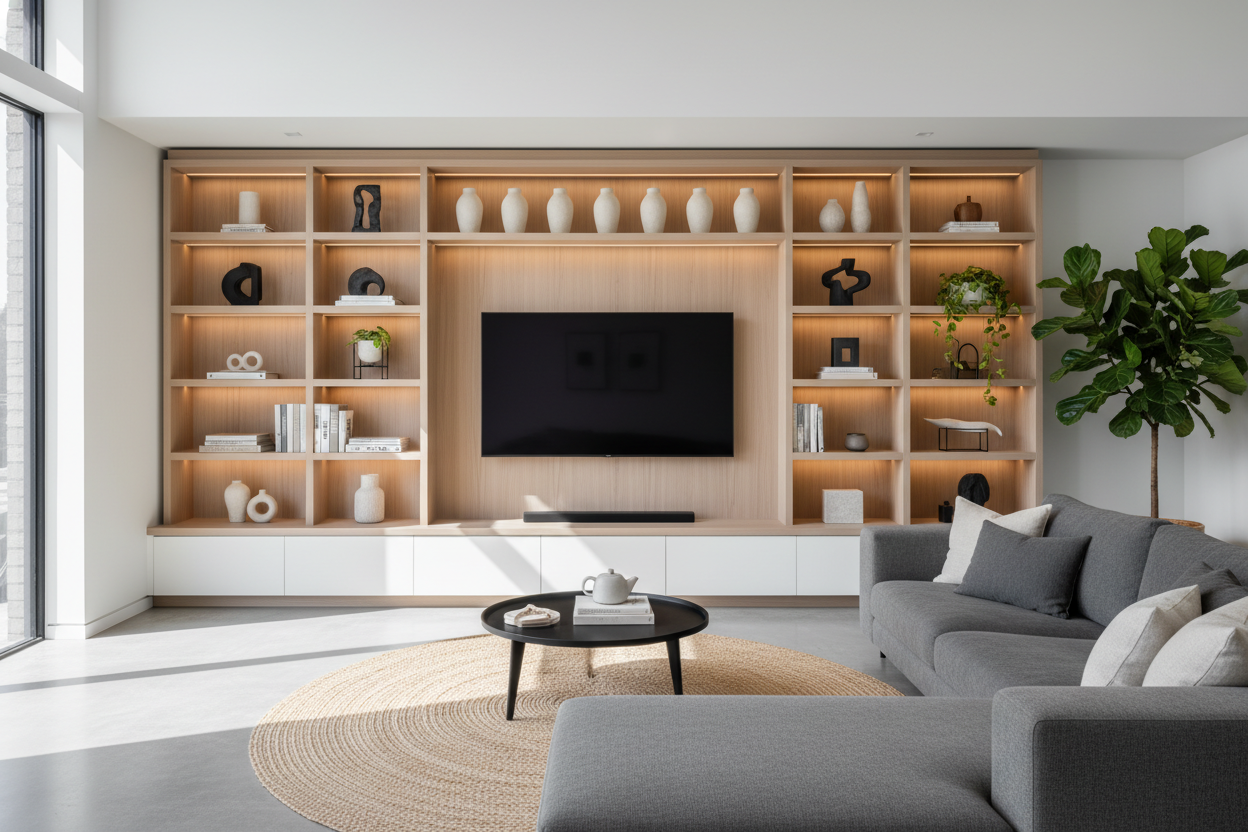
I spent three years staring at 14 crooked frames surrounding my 55-inch TV. Every time I sat down to watch a movie, my eyes would drift to the slightly tilted botanical print or the dust gathering on the ledge of a cheap plastic frame. It was visual noise I couldn't mute. I finally hit a breaking point and ripped it all down, patched the holes, and installed one massive media wall shelf instead.
The difference was immediate. My living room didn't just look cleaner; it felt like I had finally stopped trying too hard. If you are currently drowning in a sea of Command strips and mismatched frames, here is why you should consider the big-shelf approach.
- One long shelf creates a stronger architectural line than a cluster of small items.
- It forces you to edit your decor, reducing the 'clutter' feel.
- It makes the TV look like a deliberate design choice rather than an eyesore.
- Installation is actually easier than leveling a dozen individual frames.
The 'Decorate Around the TV' Trap
We have all seen the Pinterest boards: the TV hidden in a sea of art prints. It sounds good in theory, but in reality, it creates a massive amount of visual exhaustion. When the screen is off, you have a giant black rectangle competing with 20 other rectangles. When the screen is on, your peripheral vision is constantly being pulled away by the busy patterns surrounding the action.
I realized my gallery wall wasn't hiding the TV; it was highlighting it. It felt like I was trying to apologize for owning a television. By clearing the clutter and opting for wall media shelves that run the length of the wall, I gave the room a singular focal point that feels calm and intentional. No more squinting through a forest of frames just to watch the news.
Why a Single Media Wall Shelf Works Better
A single, sturdy horizontal line does something magical for a room's proportions. It anchors the wall. Instead of your eyes jumping from frame to frame, they follow one smooth path. It mimics the look of high-end custom built-ins without the five-figure price tag. I used a thick white oak ledge, and it instantly made my 9-foot ceilings feel even taller.
I found that pairing my top ledge with a minimalist floating media console below created a perfectly balanced entertainment zone. The console handles the heavy lifting—cables, consoles, and the router—while the top shelf is purely for the 'pretty' stuff. This sandwich effect makes the TV feel integrated into the architecture rather than just stuck on the drywall like an afterthought.
How Long Should Wall Media Shelves Actually Be?
The biggest mistake I see is people buying a shelf that is the exact same width as their TV. It looks pinched and awkward. To get that 'designer' look, your shelf needs to breathe. I follow a strict rule: it must extend at least 10 inches past the TV on both sides. If you have an 80-inch wall, go for a 72-inch shelf. It needs to feel substantial.
If you want to take it a step further, I highly recommend painting the wall and shelf the same color. I did this with a deep charcoal in my last apartment, and the shelf practically vanished into the wall. It makes the whole setup look like expensive custom architecture instead of a bolted-on addition. It is the easiest way to make a $50 piece of wood look like a professional renovation.
The Only 3 Things Allowed on My Ledge
Once you have that much surface area, the temptation to fill it with random mail and spare keys is real. I had to set ground rules to prevent the minimalist dream from becoming a junk drawer. My shelf only holds three categories: one trailing plant (Pothos is my go-to because it is hard to kill), two oversized art books stacked horizontally, and one piece of textured ceramic. That is it.
For those who cannot commit to a static look, I suggest looking into adjustable shelf storage systems. They allow you to swap out heights as your plant grows or when you finally splurge on that massive Taschen book. The key is negative space. If the shelf is 70% empty, it looks like a curated gallery. If it is 100% full, it looks like a storage unit.
What If You Rent and Can't Drill Huge Holes?
I get it—heavy-duty toggle bolts aren't exactly 'security deposit friendly.' If you are in a rental and the thought of patching drywall gives you hives, you can still get this look. You do not necessarily need to mount something to the studs to get that grounded, horizontal feel. I once used a long bench as a 'floor shelf' and it worked surprisingly well.
A great alternative is a low-profile free-standing bookcase pushed right against the wall below the TV. Look for something long and lean with open shelving. It provides the same visual anchor as a shelf but stays on the floor. It mimics the 'ledge' look without the permanent commitment to the wall, and you can take it with you when your lease is up.
FAQ
How high should I mount the shelf above the TV?
Aim for 6 to 8 inches above the top of the screen. Any higher and it looks like it's floating away; any lower and it feels like it's crushing the TV. You want enough room for a small plant but not enough for a cat to comfortably nap.
Can a media shelf hold a soundbar?
Technically yes, but I would not recommend it. Soundbars belong on the lower console or mounted directly under the TV. Putting it on a high shelf messes with the acoustics and makes the wiring a total nightmare to hide.
What material is best for a long shelf?
Avoid thin MDF for long spans; it will sag in the middle within six months. Go for solid wood or a heavy-duty steel bracket system. If you go over 48 inches, you absolutely need a center support bracket to prevent that sad, U-shaped dip.

Dejar un comentario
Este sitio está protegido por hCaptcha y se aplican la Política de privacidad de hCaptcha y los Términos del servicio.