










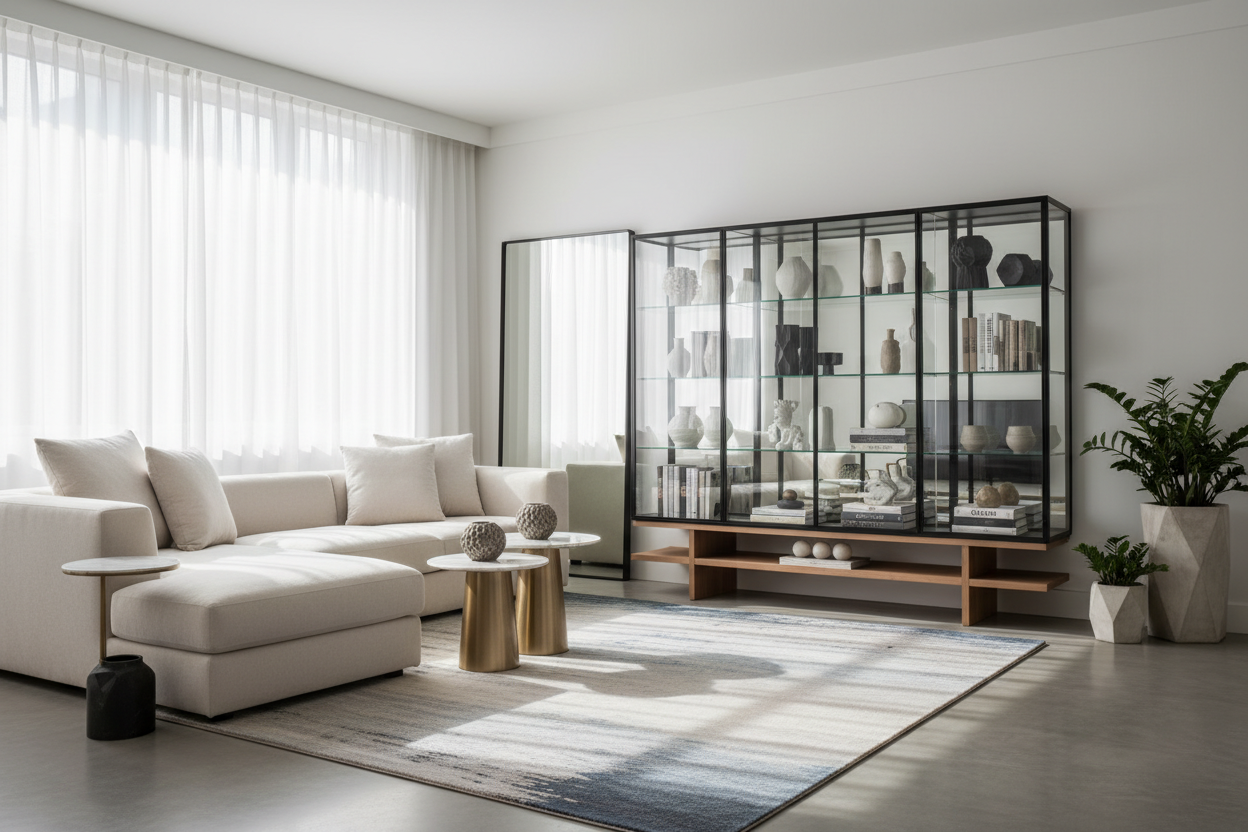
I spent three months stalking a specific arched cabinet on Instagram. When it finally arrived, I felt like I'd made it. But then I tried to actually put things in it. My oversized art books and a vintage ceramic vase fought for space because the curve of the top literally shoved them into the center. It was a rectangular display case I actually needed, not a glorified tombstone for my decor.
- Arches look great in photos but fail on utility.
- Rectangles maximize every inch of vertical and horizontal space.
- Clean lines balance out 'soft' rooms with lots of curves.
- Lighting is more consistent in a box than a dome.
I Fell Hard for the Arched Furniture Trend (And Regretted It)
The arched trend is seductive. It feels soft, architectural, and very 'Parisian apartment.' But after living with one for six months, I realized I was paying for 20% 'dead space' at the top. If you have anything taller than a standard paperback, the arch forces it toward the middle of the shelf, leaving the corners empty and awkward. My collection of 12-inch vinyl records? They only fit on the bottom two shelves. The top shelf was basically useless for anything but a single, lonely candle.
I found myself constantly rearranging items like a Tetris pro just to make them fit. It wasn't about the aesthetic anymore; it was about the frustration of having a $900 piece of furniture that didn't actually hold my stuff. I finally admitted defeat and started looking for a classic rectangular glass display case that could actually accommodate my life.
The Brutal Geometry of 'Dead Zones'
Furniture should work for you, not the other way around. A standard rectangular display box doesn't play games with physics. You get 90-degree angles that actually meet the wall. My old arched piece left these weird, dust-collecting gaps behind it because the base was wider than the top. It felt like it was floating awkwardly in the room rather than belonging to it.
A straight-edged unit can act as a true corner display case, sitting flush and reclaiming that lost square footage. When you use a rectangle, you get 100% of your shelf width from corner to corner. No items awkwardly bumping into a sloping glass roof. I can line up my entire collection of glassware without the end pieces leaning inward like they're trying to hide from the ceiling. It’s about utility—every square inch is usable.
Why the Boring Rectangle is Actually Genius
Switching to a rectangular glass display case felt like an immediate relief. It grounds the room. If you’ve already got a rounded coffee table or a boucle sofa, adding more curves makes the room look like a cartoon. The clean, architectural lines of a box provide the necessary 'visual anchor' that a room needs to feel balanced. It’s the difference between a room that looks 'decorated' and one that looks 'designed.'
I opted for a 4 layer glass door display case with LED light because I wanted even illumination across every level. In an arched case, the light usually pools at the top or creates weird, cavernous shadows in the corners. Knowing where to put a big glass display case is half the battle—I placed mine against a dark accent wall. The straight lines allow it to blend into the architecture rather than sticking out like a sore thumb.
Material Matters: Don't Let Your Box Look Cheap
Don't buy the first flimsy rectangular display box you see at a big-box store. The framework matters heavily when you're dealing with rigid geometric shapes. If the frame is slightly off, the whole thing looks crooked. I look for powder-coated steel or solid kiln-dried wood frames—avoid the hollow aluminum stuff that wobbles when you walk past. You want something that feels like a permanent fixture, not a temporary shelf.
Then there's the panel debate. I've tested glass vs acrylic and for a main living room piece, tempered glass is the clear winner. Acrylic is lighter, sure, but it scratches if you use the wrong cloth to dust it. In a large rectangle, acrylic can also 'bow' over time, making your expensive collectibles look like they're in a funhouse mirror. Stick to glass for that crisp, high-end museum look.
How to Style It So It Doesn't Look Like a Pharmacy
The biggest fear with a rectangle glass display box is that it will look like a retail shop or a doctor's office. The trick is to break the rigid lines with organic shapes inside. I use trailing ivy on the top shelf to let the leaves spill over the edges. I also mix in round pottery and staggered stacks of books to soften the overall look.
Think of the cabinet as the frame and your decor as the art. You want a mix of heights and textures. If everything is a perfect square inside a perfect square, it feels sterile. But with a few round elements and some greenery, that 'boring' rectangle becomes the most sophisticated piece in the room. It’s about creating a curated gallery, not a storage locker.
Is a rectangular case too boring for a modern living room?
Not at all. It’s a classic for a reason. It acts as a neutral frame that lets your actual belongings be the focal point instead of the furniture itself competing for attention. It’s timeless.
Will it make my small room look too boxy?
Only if every single piece of furniture is a hard rectangle. Pair it with a round rug or a curved armchair to create a balance of shapes. The transparency of the glass also keeps it from feeling heavy.
How do I keep the glass from looking smudgy?
Use a microfiber cloth and a dedicated glass cleaner. Since rectangular cases have flat surfaces, they are actually much easier to wipe down than curved glass panels which tend to catch the light at weird angles.

Dejar un comentario
Este sitio está protegido por hCaptcha y se aplican la Política de privacidad de hCaptcha y los Términos del servicio.