










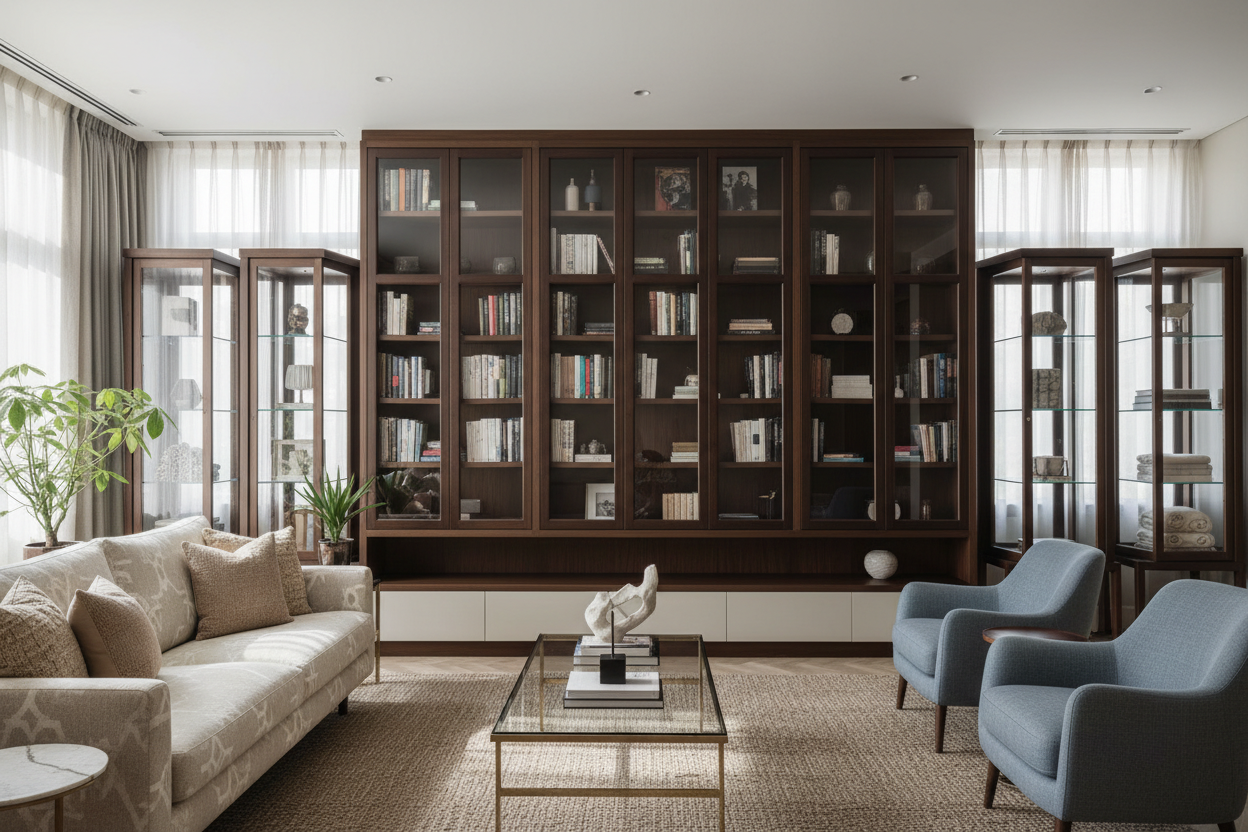
I spent three years living the Pinterest dream with raw oak open ledges in my kitchen and living room. I thought they made my space look 'airy' and 'curated.' In reality, they just made me a slave to a microfiber cloth. Every time I reached for a wine glass, I had to wash a layer of sticky city grime off it first. I’m a lazy cleaner at heart, and I finally hit my breaking point last month when I realized my favorite vintage ceramics were literally changing color under a coat of gray dust.
That was the day I pivoted to enclosed glass shelves. It’s the ultimate hack for people who want to show off their cool stuff without spending their entire Saturday morning dusting. You get all the visual benefits of transparency with none of the maintenance headaches. It’s like putting your life in a museum case, and honestly, your knick-knacks deserve that level of respect.
Quick Takeaways
- Dust protection is the primary win; you’ll go from dusting weekly to maybe once every six months.
- Glass units create a 'gallery' feel that makes random thrift store finds look like a deliberate collection.
- Enclosed units protect fragile items from pets, toddlers, and accidental elbow bumps.
- Visibility remains 100%, so you don't lose the 'open' feeling of the room.
The Open Shelving Regret (Yes, It's Real)
We’ve all been sold the lie that open shelving is the peak of modern design. It looks great in a staged photo where nobody actually lives. In a real home? It’s a magnet for every floating particle in the air. If you have a dog that sheds or a kitchen that isn't ventilated like a laboratory, your open shelves are basically just expensive dust collectors.
I noticed that my books were getting that yellowed, dusty smell much faster than they should. My small indoor plants were struggling because their leaves were coated in a film of household debris. The aesthetic honeymoon phase ended the moment I realized I was spending twenty minutes a week just moving things around to wipe down a piece of wood. A glass enclosed shelf solves this by creating a literal barrier between your treasures and the chaos of your living environment.
Why Enclosed Glass Shelves Are the Ultimate Fix
The 'aha' moment came when I visited a friend who keeps her entire collection of 1960s barware in a sealed unit. Everything was sparkling. She hasn't touched a duster in months. That’s when I realized you can have the 'look' without the labor. Enclosed units provide a structured frame for your life, turning a messy pile of objects into a focused display.
If you’re working with a smaller footprint, a 3 shelf glass cabinet provides enough height to feel substantial without dominating the entire wall. It’s about visual weight—the glass keeps things light and lets the eye travel through the piece, while the frame provides the necessary boundaries to keep the room from looking cluttered. You’re essentially 'zoning' your decor, which is a classic interior design trick to make a room feel organized.
Finding the Right Glass Enclosed Shelf for Your Space
Don't just buy the first thing you see on a big-box website. You need to think about depth. Most people buy units that are too deep, and their small items get lost in the shadows at the back. Look for something between 12 and 15 inches deep for standard books and decor. Frame material matters too—black metal looks industrial and sharp, while brass or light wood feels more 'organic modern.'
I always look for adjustable shelf storage because my collection of oversized art books never fits the standard 12-inch clearance. Having the ability to move a ledge up or down by even two inches is the difference between a professional-looking display and a shelf where everything is crammed in at an angle. Also, check the glass thickness; 5mm tempered glass is the sweet spot for durability and safety.
How to Style Behind Glass Without It Looking Cluttered
Just because you’ve sealed your stuff away doesn't mean you can stop editing. The biggest mistake I see is people treating a glass cabinet like a storage closet. If you can see through it, every item needs to earn its spot. Group items in odd numbers—threes and fives—and vary the heights. Put a tall vase next to a small stack of books and a flat decorative bowl.
It’s a fine line between a curated gallery and a thrift store shelf; you need to know if you actually have space for a serious collection before you start cramming things in. If you have fifty items but the shelf only looks good with twenty, the other thirty need to go into a drawer. Use the 'breathability' rule: leave at least 30% of the shelf surface empty. This allows the eye to rest and makes the items you actually keep look more important.
Mixing Enclosed Storage With Your Current Furniture
You don't want your new glass unit to look like a lonely trophy case in the corner. The trick is to balance it with 'heavy' furniture. I like to anchor a room with a heavy wood piece and then place a wine bar cabinet with light nearby to keep the vibe airy. The contrast between solid wood and transparent glass creates a sophisticated layering effect that makes a room feel 'finished.'
If you want to carry the theme through the room, look for a chest with a tempered glass top to mirror the transparency of your main display. This creates a visual thread that ties the room together. My personal setup involves a dark walnut sideboard paired with a slim black-framed glass tower. The wood brings the warmth, and the glass brings the modern edge. It’s the most grown-up my living room has ever felt.
My Honest Experience
I’ll be real: my first glass unit was a disaster. I bought a cheap one with thin, non-tempered glass and no leveling feet. Every time my neighbor’s kid ran down the hallway, the whole thing rattled like a maraca. It felt dangerous and sounded cheap. I eventually upgraded to a unit with a heavy steel frame and weighted base. The lesson? If it’s made of glass, don’t go for the budget 'assembly required' special that weighs ten pounds. You want something with some heft to it.
FAQ
How do I keep the glass from getting fingerprints?
Use a microfiber cloth and a mix of distilled water and white vinegar. Avoid paper towels; they leave lint behind which defeats the whole purpose of a dust-free environment. Only touch the handles, never the glass itself.
Are glass shelves safe for heavy books?
Only if they are tempered glass and rated for the weight. Check the manufacturer's specs. Most quality glass shelves can hold about 15-25 lbs, which is plenty for a few art books, but maybe not a 50-book encyclopedia set.
Should I add lighting inside the unit?
Yes, but keep it subtle. Puck lights or LED strips tucked behind the front frame can make your items pop at night. Just make sure the color temperature is warm (2700K-3000K) so it doesn't look like a jewelry store in a mall.

Dejar un comentario
Este sitio está protegido por hCaptcha y se aplican la Política de privacidad de hCaptcha y los Términos del servicio.