










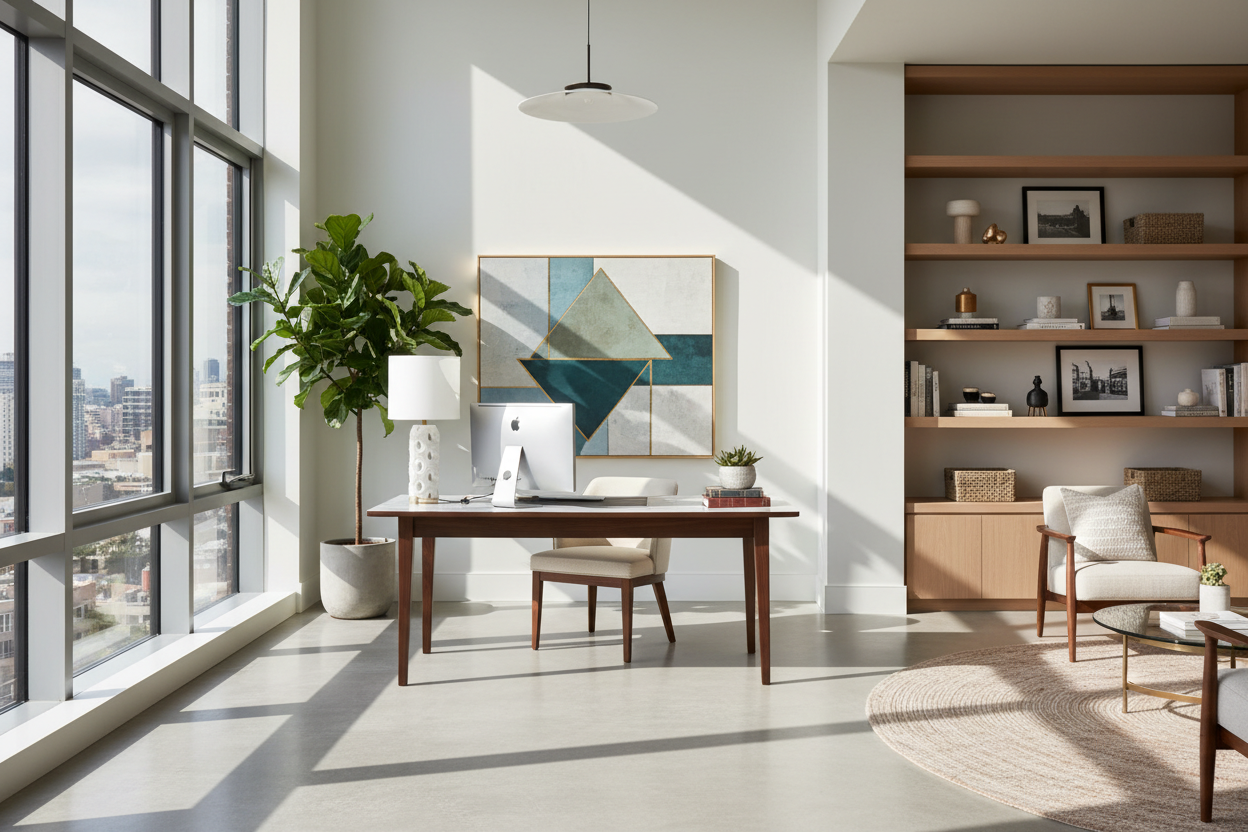
We have all been there—staring at a screen full of beautiful workspaces, wondering why our own setup feels like a chaotic afterthought. You buy the trendy chair, center the desk, and yet, something is missing. When you browse images of decorated offices, it is easy to get swept up in the aesthetic without understanding the structural design choices that make the room work. Today, we are going to break down exactly what makes those stunning office decor images so appealing, and more importantly, how you can apply those hidden rules to your own home workspace.
Key Takeaways
- Analyze the lighting: Professional photos rely on layered lighting. You need ambient, task, and accent sources, not just a harsh overhead bulb.
- Note the negative space: The best setups allow the eye to rest. Resist the urge to fill every wall and shelf.
- Check the wire management: What you do not see matters most. High-end spaces meticulously hide cables.
- Examine the textures: Wood, metal, leather, and textiles are balanced to prevent the room from feeling flat or sterile.
Deconstructing Office Decoration Pictures
When clients bring me a mood board full of office decoration pictures, the first thing I do is strip away the styling props. We mentally remove the perfectly placed espresso cup and the artfully opened notebook to look at the bones of the room.
Looking Past the Filters
Many office decor photos rely heavily on natural light and wide-angle lenses, which can make a standard 10x10 suburban bedroom look like a massive executive suite. Pay attention to the actual footprint. Where is the door? How close is the bookshelf to the desk chair? Understanding these proportions prevents you from buying oversized furniture that will choke your room's flow.
Layering Textures and Tones
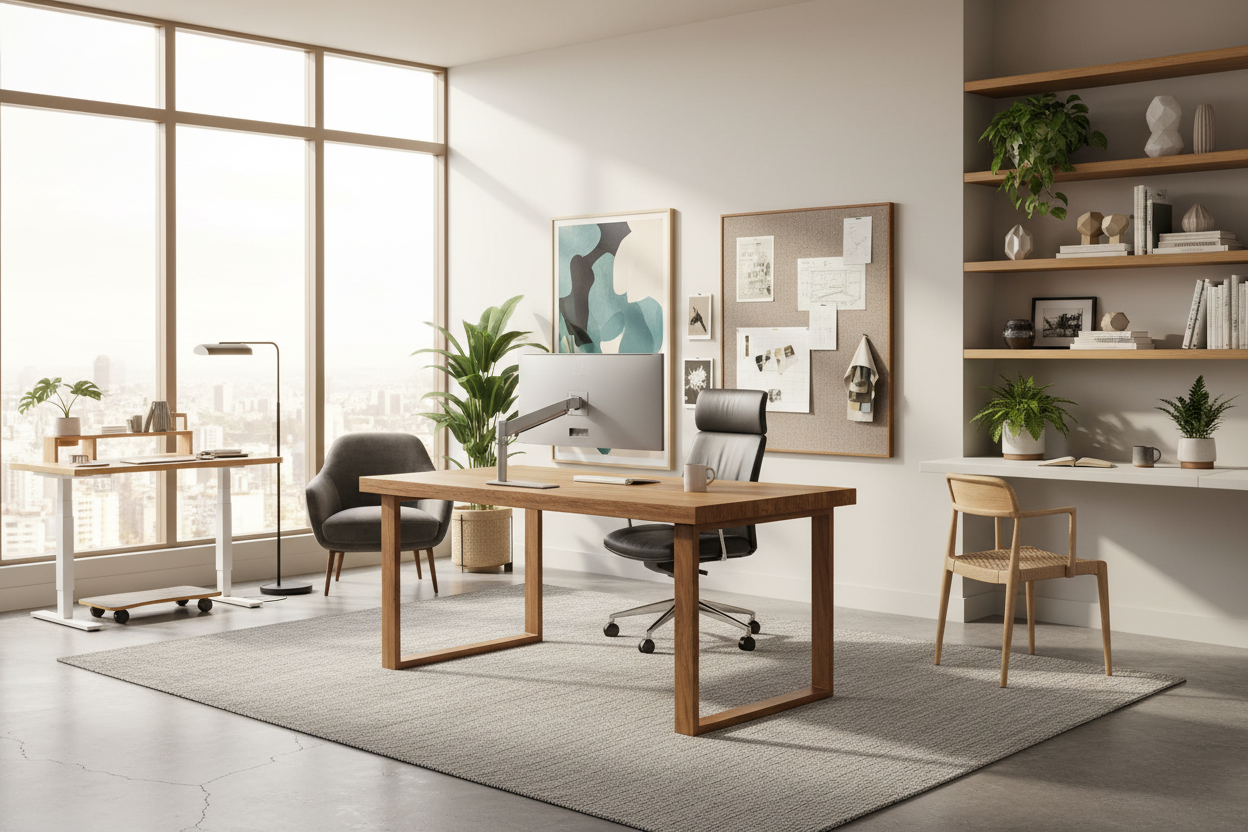
A common mistake is buying a matching desk, filing cabinet, and bookshelf set. Instead, study your favorite inspiration shots. You will notice they mix materials. A warm walnut desk might sit on a textured wool rug, paired with a matte black metal lamp and a soft leather chair. This layering creates visual depth.
Space Planning for Real Workspaces
It is one thing to admire pictures of offices decorated by professionals, and another to actually sit in that room for eight hours a day. Layout dictates function.
Where the Desk Actually Goes
Floating a desk in the center of the room looks incredibly powerful. It is a classic command position layout. However, doing this requires floor outlets or clever rug routing for your power cords. If you are renting or cannot modify the floors, placing the desk perpendicular to a wall or window is often a more practical way to achieve a similar feel without the cord clutter.
Clearance and Flow
Always leave at least 36 to 42 inches of clearance behind your desk chair. If you have a guest chair or a secondary seating area, ensure there is a clear walkway that does not require dodging the edge of a credenza. The physical comfort of moving through the space is just as important as the aesthetic.
Lighting and Visual Weight
Lighting can make or break a workspace. If you look closely at a high-quality office decoration image, you will rarely see a single overhead light doing all the work.
Task vs. Ambient Lighting
You need a dedicated task light for your work surface, ideally with an adjustable arm. Pair this with ambient lighting, like a floor lamp in the corner or wall sconces, to reduce eye strain. Balancing the visual weight of the room—ensuring one side isn't heavily weighed down by dark, bulky furniture while the other side is empty—also keeps the space feeling grounded and calm.
Designer's Honest Take
Early in my career, a client brought me a specific office decoration pic they were obsessed with. It featured a massive, sleek glass desk placed directly in front of a floor-to-ceiling, south-facing window. It looked incredible on paper.
I sourced a similar desk and set it up exactly as requested. Within a week, the client was miserable. The afternoon glare off the glass was blinding, the desk surface showed every single fingerprint and speck of dust, and because it was transparent, the rat's nest of computer cables was visible from every angle. I learned the hard way that highly reflective surfaces and exposed wiring are the enemies of a working office. We ended up swapping the glass for a matte solid oak top and adding a modesty panel to hide the cords. It wasn't the exact Pinterest replica they initially wanted, but it was actually functional.
Frequently Asked Questions
How do I make my home office look professional?
Focus on decluttering, cable management, and intentional lighting. Hide your printer and routers in a ventilated cabinet, use a monitor arm to free up desk space, and invest in a quality chair that complements the room's color palette.
Where can I find realistic office decorating ideas pictures?
While Pinterest and Instagram are great for aesthetic inspiration, look at architectural digest tours or interior design portfolios for more realistic spatial planning. Pay attention to photos that show the whole room, not just tight, styled vignettes.
How do I hide messy cords?
Use under-desk cable trays, zip ties, and neoprene cable sleeves. If your desk floats in the room, run the cords down the back of a desk leg and cover them with a floor cord protector that matches your rug or flooring.


Dejar un comentario
Este sitio está protegido por hCaptcha y se aplican la Política de privacidad de hCaptcha y los Términos del servicio.