










I’ve spent the last decade hunting down the perfect walnut credenzas and teak side tables, only to realize my living room started looking less like a curated home and more like a lumberyard. It’s a real thing called 'wood fatigue.' When your oak floors meet your walnut coffee table and your cherry bookshelves, the whole room starts to feel heavy, dated, and overwhelmingly brown.
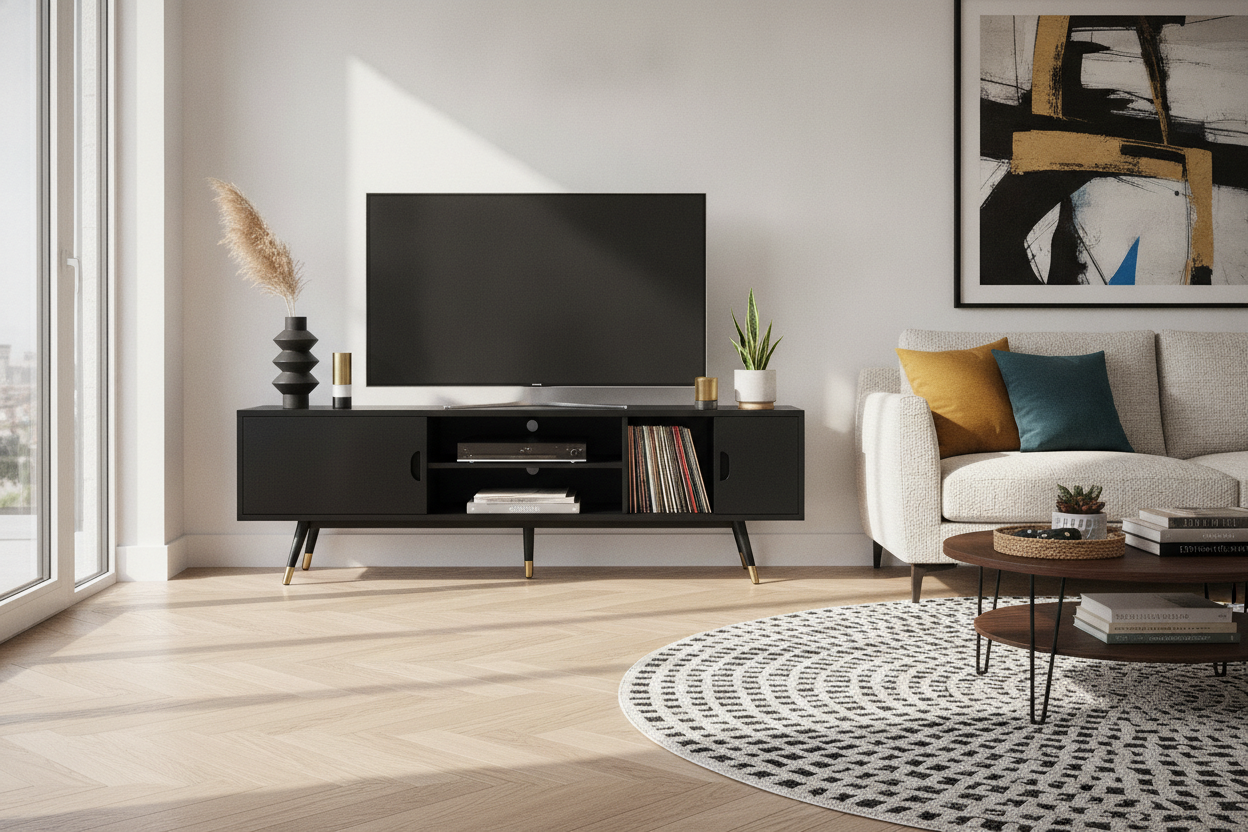
I finally broke the cycle when I swapped my traditional wood media unit for a black mid century modern tv stand. It was a total reset for the eyes. By keeping the vintage silhouette but ditching the wood grain, I managed to ground the room without losing that retro soul I love so much.
Quick Takeaways
- Black finishes provide a visual 'anchor' that breaks up monotonous wood tones.
- The iconic tapered legs of MCM design keep a dark piece from feeling too heavy or bulky.
- Black surfaces are the ultimate disguise for messy black power cables and tech boxes.
- Mixing black with warm woods creates a sophisticated, multi-layered look rather than a 'showroom' vibe.
The Danger of the 'All Wood Everything' Living Room
We’ve all been there. You buy one beautiful mid-century dresser, and suddenly you’re on a quest to match every single piece of furniture to that specific shade of acorn or walnut. Before you know it, your space feels flat. There’s no contrast, no tension, and certainly no breathing room for your eyes.
When everything is wood, nothing stands out. I realized this when I looked at a photo of my own living room and couldn't tell where the floor ended and the furniture began. It felt like living inside a cedar chest. You need a 'palette cleanser'—something sharp and definitive to tell the wood tones to take a seat.
Enter the Black Mid Century Media Console
The beauty of a stylish black TV stand is that it retains the architecture we love—the splayed legs, the sliding doors, the geometric precision—but renders it in a neutral that plays nice with everything. A black mid century media console acts like a tuxedo for your television.
It’s a design trick that works because black is a 'receding' color. While a massive oak unit might dominate a wall, a black version feels more like a shadow, making the room feel larger while providing a crisp backdrop for your tech. I found that my 65-inch screen actually looked smaller and less intrusive once it was sitting on a dark surface.
Why the Silhouette Still Matters
You have to be careful with black furniture. If you go too chunky, it looks like a dorm room setup from 2004. The reason a black mid century modern tv console works is all in the legs. Those slim, angled supports create 'negative space' underneath the unit, which is the secret to making small rooms feel airy.
This specific silhouette prevents the black finish from leaning too far into the 'tech-bro' industrial aesthetic. It maintains a foot in the past while looking firmly toward the future. I've found that swapping traditional mid-century for post-modern or matte black finishes is the easiest way to keep a vintage collection from feeling like a museum period piece.
3 Rules for Mixing a Black TV Unit With Warm Woods
If you're worried about a black piece looking like a 'hole' in your room, don't be. You just need to follow a few simple rules for integration. First, repeat the black elsewhere. If you have a black media unit, add a matte black floor lamp or some thin black picture frames on the opposite wall. This creates a visual 'triangle' that makes the color choice feel intentional.
Second, lean into the hardware. A black mid century tv stand with brass or gold knobs creates a bridge to the warm wood tones in the rest of your room. The gold reflects the warmth of your walnut coffee table, tying the two together. I personally swapped the cheap plastic legs on my last unit for solid brass ones, and it changed the entire vibe of the room for about forty bucks.
Third, look for mixed materials. You can browse modern TV stands that feature black frames with wood doors, or vice versa. This is the 'training wheels' version of the trend if you aren't ready to go full noir just yet.
What About Dust? (And Other Practical Truths)
Let’s be real: black furniture shows dust. If you’re the type of person who hasn't seen a Swiffer since the Obama administration, a black mid century tv console might test your patience. You will see every speck of lint. However, the trade-off is worth it for one major reason: cord management.
I hate wires. On a light oak stand, that cluster of black HDMI cables and power bricks looks like a nest of snakes. On a black console, they virtually disappear. I’ve found that my 'tech clutter' is 80% less noticeable simply because the background matches the gear. For me, wiping a surface once a week is a small price to pay for hiding the cable nightmare.
My Favorite Way to Style the Top Surface
A solid black block can look a bit sterile if you don't soften the edges. I always suggest adding something organic. A trailing pothos or philodendron looks incredible against a dark backdrop—the green pops in a way it never does against brown wood. I also like to use slatted doors and open shelves to add physical texture.
Stack a few art books with colorful spines and top them with a textured ceramic bowl. The goal is to break up the flat black plane with different heights and materials. My own black mid century tv stand currently hosts a vintage brass tray and a stack of old National Geographics, and it feels perfectly lived-in rather than cold.
FAQ
Does black furniture make a small living room look smaller?
Actually, the opposite is often true. Because black recedes, a slim mid-century unit can 'melt' into the wall, especially if your walls are a darker hue or if the unit has high legs that show plenty of floor underneath.
How do I keep my black TV stand from looking too modern?
Stick to the MCM 'rules.' Look for tapered legs, wood-grain textures visible through the black stain, and organic shapes. Avoid high-gloss 'piano' finishes, which tend to look more contemporary and show fingerprints instantly.
Is a matte or glossy finish better?
Matte or 'satin' is almost always the winner for home interiors. It looks more expensive and hides minor scratches better than a high-shine finish, which can end up looking like cheap plastic under bright living room lights.

Dejar un comentario
Este sitio está protegido por hCaptcha y se aplican la Política de privacidad de hCaptcha y los Términos del servicio.