











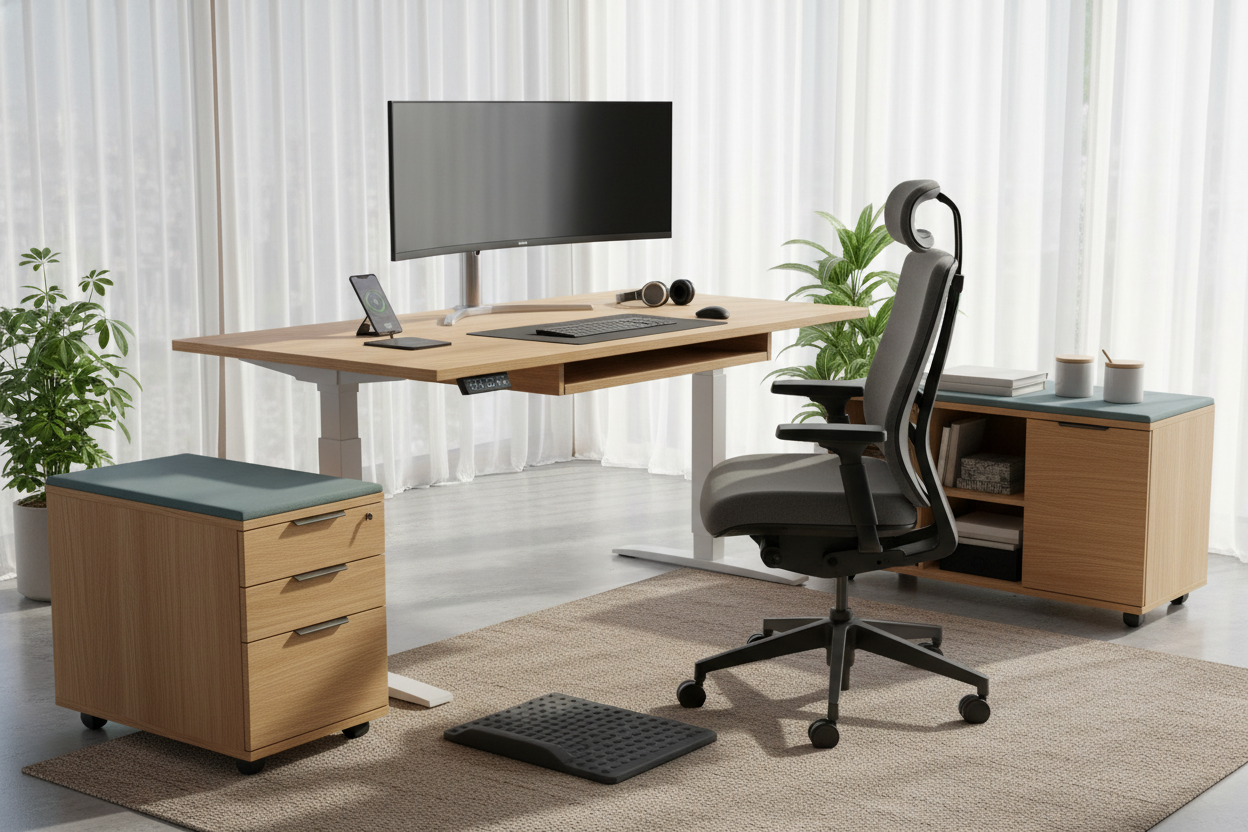
We have all stared at the tangled mess of cords beneath our desks or felt that mid-afternoon back strain, wondering if there is a better way to work. The disconnect between a streamlined, beautiful home aesthetic and the chaotic reality of a workspace is a dilemma I solve for clients weekly. The solution often points toward smart office furniture, but navigating this market requires more than just picking the desk with the most USB ports.
Key Features to Look For
Before committing to a purchase, review this checklist to ensure the piece meets both functional and aesthetic standards:
- Integrated Power & Data: Look for flush-mounted outlets and Qi wireless charging pads that eliminate desktop clutter.
- Motor Quality & Noise: For sit-stand desks, dual-motor systems offer smoother, quieter transitions than single-motor variants.
- Cable Management Channels: Essential for hiding wires; look for built-in trays or spinal cord organizers.
- Anti-Collision Technology: A safety must-have that stops the desk from crushing objects (or chair arms) during height adjustments.
- Surface Durability: High-pressure laminates or sealed solid wood facilitate longevity against heat and moisture.
Balancing Tech with Aesthetics
The biggest hesitation homeowners have regarding smart furniture is the fear that their home office will start looking like a corporate call center. The goal is to integrate technology seamlessly, not display it.
Material Selection: Warmth Over Cold Tech
Avoid the clinical look of high-gloss white plastics or standard grey metals. Instead, opt for smart office furniture that utilizes natural materials. A walnut veneer standing desk with a hidden control panel adds warmth and texture, grounding the room. If you prefer a modern silhouette, matte finishes in charcoal or navy absorb light and reduce visual clutter, whereas glossy finishes tend to highlight dust and fingerprints.
The Ergonomic Equation
Smart furniture is not just about connectivity; it is about kinetic movement. The ability to shift from sitting to standing with a memory preset button allows you to maintain flow without breaking focus to manually crank a handle.
Visual Weight and Scale
When selecting a smart desk or ergonomic chair, consider the visual weight. Many tech-integrated desks have bulky legs to house motors. If you are working with a smaller footprint, look for 'T-frame' legs rather than 'C-frame' legs for better stability without the bulk. Ensure the chair you pair with it has a silhouette that complements the desk rather than competing with it.
Lessons from My Own Projects
I want to share a specific experience that changed how I specify these pieces. I once designed a home office for a software developer who insisted on a budget-friendly smart desk he found online. Visually, it looked fine. However, two months later, he called me back.
The issue wasn't the look; it was the physics. The cheaper desk had a single motor and a thin particle board top. Every time he typed vigorously, his dual-monitor setup wobbled just enough to cause motion sickness. Furthermore, the 'smart' control panel had a bright blue LED display that couldn't be dimmed, creating an annoying glare during his late-night coding sessions.
We replaced it with a dual-motor solid wood desk. The difference in stability was immediate—the 'thud' test (knocking on the desk) sounded solid, not hollow. I also learned to always check for 'anti-fingerprint' coatings on matte black finishes. Without it, your sleek smart desk looks greasy within a week. These tactile and auditory details are rarely on the spec sheet, but they define your daily experience.
Conclusion
Investing in intelligent furniture is about future-proofing your health and your workflow. When you choose pieces that prioritize stability, material quality, and hidden functionality, you create a workspace that invites productivity rather than clutter. Treat your office furniture as a tool for your career, and select it with the same care you would a high-performance laptop.
Frequently Asked Questions
How long do the motors in smart desks typically last?
High-quality dual-motor desks are generally rated for 10,000 to 20,000 cycles. With typical daily use (shifting 4-6 times a day), a reputable mechanism should last 7 to 10 years without failure.
Can I assemble smart office furniture myself?
While possible, it is significantly more complex than standard flat-pack furniture due to the wiring and heavy motor legs. I usually recommend professional installation to ensure the anti-collision sensors are calibrated correctly and cords are managed safely.
Is smart furniture suitable for small apartments?
Absolutely, provided you choose the right scale. Look for 'wall-hugging' designs or single-column smart desks. These minimize the floor footprint while still offering the vertical versatility needed in a multi-purpose room.

Dejar un comentario
Este sitio está protegido por hCaptcha y se aplican la Política de privacidad de hCaptcha y los Términos del servicio.