










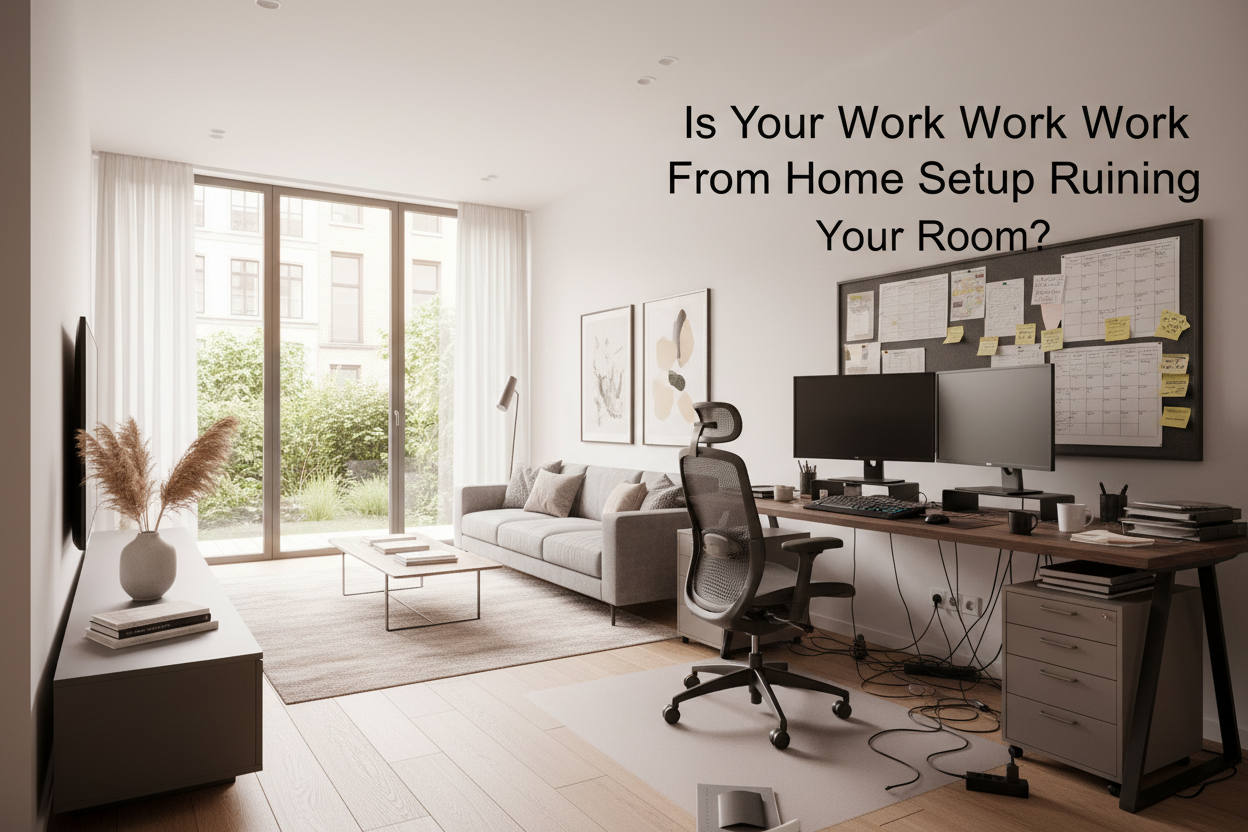
It usually starts at the dining table. You bring your laptop out for a few hours, and before you know it, your carefully curated dining space is buried under monitors, tangled cables, and coffee mugs. The reality of the modern work work work from home lifestyle is that it demands a dedicated physical footprint. When people browse home working job vacancies or scroll through job vacancies working from home, they rarely consider how a 48-inch desk is going to impact their living room's traffic flow.
If you have recently secured a work at home opportunity, you need a setup that supports eight hours of focus without making your home feel like a corporate cubicle. Today, we are going to break down how to properly size, place, and style your home workspace so it functions beautifully without compromising your home's aesthetic.
Quick Decision Guide
- Float the desk: Whenever possible, avoid pushing your desk flat against a wall. Facing into the room reduces eye strain and commands the space.
- Mind the clearance: Leave a minimum of 36 inches behind your desk for your chair to roll back without hitting a wall or sofa.
- Prioritize task lighting: Relying on overhead recessed lighting casts harsh shadows. Use an articulated desk lamp to reduce glare and add ambient warmth.
- Mix materials: Soften the hard lines of monitors and tech gear with natural materials like warm walnut, leather, or woven rattan.
Space Planning: Fitting an Office into a Shared Room
Not everyone has a spare bedroom to dedicate entirely to their work at home employment. Often, the office needs to coexist within a primary living area or a bedroom.
The Visual Weight of Your Desk
When placing a desk in a living room, pay attention to its silhouette. A heavy, solid-wood executive desk will visually anchor a room, which is great if it is the intended focal point, but terrible if it is supposed to blend in. For shared spaces, opt for a writing desk with slim, tapered legs. This introduces negative space, allowing the eye to travel through the piece rather than stopping abruptly at a bulky block of wood.
Traffic Flow and Placement
If you are treating your home like you work from work, you need distinct zones. Try placing a slim desk behind a floating sofa, using the sofa's back as a room divider. This keeps your workspace integrated but clearly defined, requiring only about three extra feet of depth in your overall floor plan.
Comfort & Ergonomics: Beyond the Aesthetics
Many of the homeworkers jobs I design for involve long hours at a screen. A beautiful space means nothing if it destroys your posture or leaves you fatigued by noon.
The Truth About Dining Chairs
I frequently see clients trying to use a spare dining chair for their daily grind. Dining chairs are pitched for eating, not typing. A proper office chair should have adjustable seat depth and lumbar support. If a traditional ergonomic chair clashes with your decor, look for fully upholstered, height-adjustable armchairs on casters that bridge the gap between residential style and commercial function.
Designer's Honest Take: My Glass Desk Mistake
A few years ago, I thought a sleek, tempered glass desk was the perfect solution for my own small office. I wanted something that visually disappeared. It looked stunning in photos, but the day-to-day reality was a nightmare.
Every single fingerprint, dust speck, and water ring was magnified. Worse, because glass is transparent, there was absolutely nowhere to hide the chaotic web of monitor cables and power cords. I spent more time trying to manage wire clutter than I did designing. I eventually swapped it for a solid white oak desk with built-in cable management channels. The lesson? Function has to lead when it comes to daily workspaces. Never sacrifice wire management for a minimalist silhouette.
Frequently Asked Questions
How do I hide my monitors when I am done working?
If you want to completely conceal your tech after hours, consider a secretary desk or an armoire. These pieces offer drop-down or slide-out work surfaces that allow you to literally close the doors on your job home worker setup at 5 PM. It is the perfect solution when you finally score a job vacancy work from home but lack a dedicated spare room.
What is the minimum desk size for a dual-monitor setup?
You need a desk that is at least 48 inches wide and 24 inches deep. Anything shallower will place the screens too close to your eyes, and anything narrower will leave your monitors hanging precariously off the edges.
How can I make a corporate office chair look better in my living room?
Drape a textured throw blanket over the back of the chair when not in use. It immediately softens the hard plastics and meshes, tying the piece back into the residential textures and color palette of the room.

Dejar un comentario
Este sitio está protegido por hCaptcha y se aplican la Política de privacidad de hCaptcha y los Términos del servicio.