










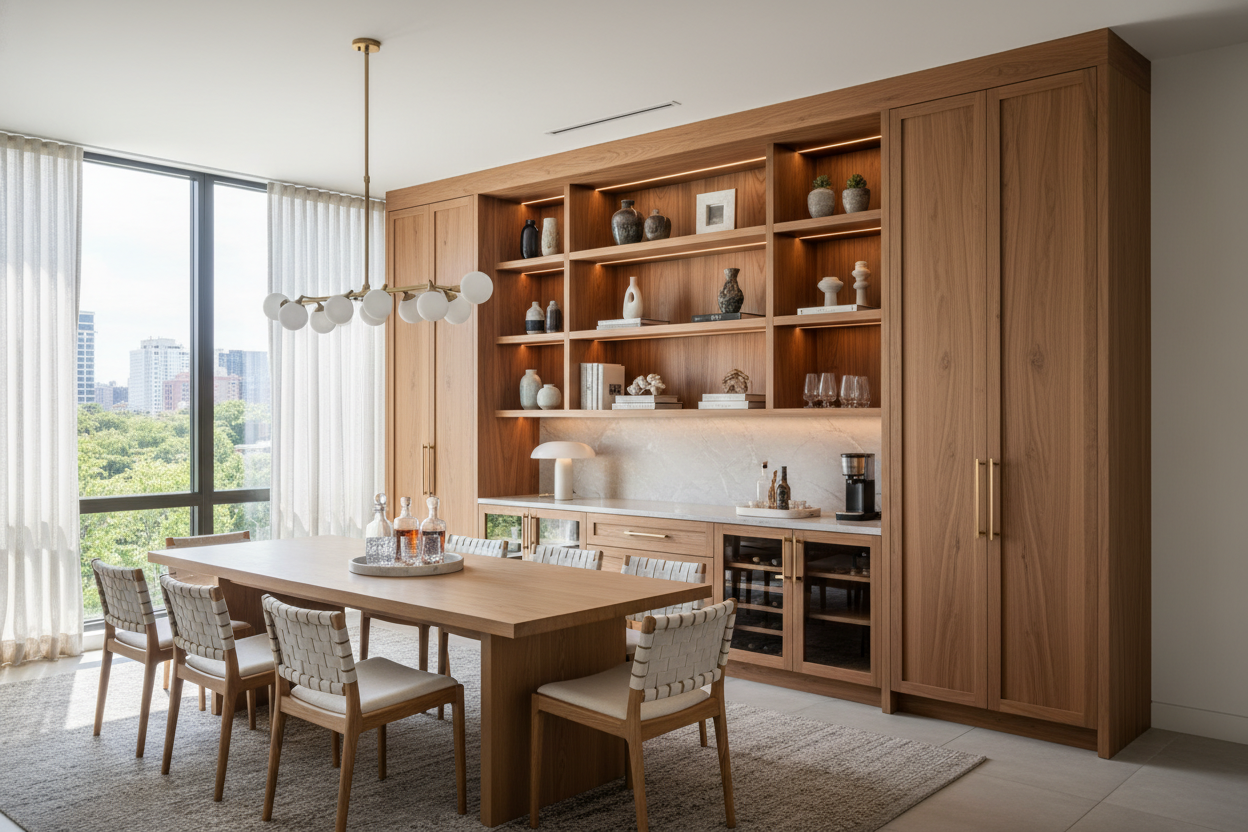
I remember walking into a client's home last year—they'd just moved into a 1920s colonial with a beautiful but awkward dining room. The space had one wall that was essentially dead, and they were using a rickety old bookshelf to store linens, serving platters, and their good china. It looked cluttered and felt temporary. They asked me, 'Can we just put some kitchen cabinets here? But I don't want it to feel like the kitchen spilled over.' That's the exact dilemma I hear most often.
You love the idea of that clean, built-in storage, but you're worried it'll make your dining room look like a kitchen annex. The good news? When done thoughtfully, kitchen cabinets in dining room setups can be the most functional and stylish upgrade you make. They solve real problems: where to stash tablecloths, wine glasses, holiday dishes, and all the servingware that usually ends up in random boxes.
Quick Takeaways
- Think 'dining room storage,' not 'kitchen cabinetry.' The design intent changes everything.
- Scale is non-negotiable. A 36-inch tall upper cabinet often feels too kitchen-y; consider a full-height, furniture-like built-in instead.
- Materials matter. A painted finish or a warm wood stain can integrate with your dining set, while high-gloss laminate might not.
- Plan for a mix: closed cabinets for clutter, and some open shelving or glass-front doors for display to keep it feeling curated.
Why Kitchen Cabinets Belong in Your Dining Room
Let's be honest: most dining rooms are storage-challenged. A traditional china cabinet is lovely, but it often offers limited, inflexible space. By using cabinet systems designed for kitchens, you gain incredible functionality. I'm talking about drawers with dividers for flatware, pull-out trays for platters, and adjustable shelving that can accommodate everything from tall vases to stacks of plates.
The aesthetic benefit is about creating a cohesive, intentional look. Instead of a collection of freestanding pieces—a buffet here, a cabinet there—a run of custom dining room cabinets gives the room architecture. It defines the space. In a recent project with a 14x16 foot dining room, we installed a 10-foot long, floor-to-ceiling unit on the main wall. We used a Shaker-style door in a soft gray-green, which tied into the home's existing millwork. It didn't scream 'kitchen'; it whispered 'purposeful, beautiful storage.' For versatile pieces that can complement such an installation, browse our Dining Room collection for inspiration.
Custom Dining Room Cabinets: Design Considerations That Matter
This is where the magic happens. Going custom means you control every detail to ensure the cabinets feel like they were always meant for the dining room. The first consideration is always scale and proportion. In a kitchen, you often have a standard 36-inch countertop height with uppers above. In a dining room, I frequently design furniture-height cabinets, around 32-34 inches tall, to double as a substantial sideboard. Or, I'll go full-height, from floor to an 8-foot ceiling, to create a built-in library or display wall effect.
Next, consider the door style. A simple, flat-panel or Shaker door reads as more furniture-like than an ornate, raised-panel door common in some traditional kitchens. The hardware is another tell. Instead of stainless steel bar pulls, opt for unlacquered brass bin pulls or simple, recessed finger pulls. The goal is to complement your dining table and chairs, not compete with your refrigerator. For a deeper dive into how these choices compare to traditional solutions, my China cabinets design guide breaks down the pros and cons.
Material Selection: From Solid Wood to Modern Finishes
Your material choice sets the tone. Solid wood, like oak, walnut, or maple, brings warmth and authenticity. A cabinet made from kiln-dried hardwood with a oil-rubbed finish feels like heirloom furniture. It's durable and can be refinished over time. The downside? Cost and potential sensitivity to humidity changes.
Painted medium-density fibreboard (MDF) is a fantastic, stable option for a crisp, modern look. You can match any color in your room. For a more contemporary feel, consider laminates in matte textures or even wood veneers. They're incredibly scratch-resistant and easy to clean. Remember, the dining room sees less moisture and grease than a kitchen, so your options are wider. For a look at a quality wood option, this solid wood sideboard example shows the beauty of real wood grain in a dining context.
Functional Layouts: Storage Solutions That Actually Work
This is about smart interior planning. For a standard 24-inch deep base cabinet, I specify deep drawers for table linens—they're easier to access than a deep shelf. Above, or in a tall unit, I always include at least some adjustable shelving. Why? Your needs change. One season you're displaying art glass, the next you need to store a large punch bowl.
Specialized compartments are key. A vertical slot for trays or cutting boards (yes, for cheese boards!), a wine rack insert, or a drawer with a removable silverware organizer make daily use effortless. Don't forget lighting. LED strip lights under a wall-mounted cabinet or inside a glass-front unit add drama and functionality, making your displayed items glow. A product like this modern buffet cabinet with lighting illustrates how integrated lighting elevates the display.
Avoiding Common Pitfalls: What Designers Actually Notice
The biggest mistake I see is a mismatch in scale. A single, 30-inch wide upper cabinet floating on a big wall looks lost and oddly utilitarian. Either commit to a substantial run of cabinets or choose a freestanding furniture piece. Another pitfall is ignoring the room's traffic flow. Always maintain at least 36 inches of clear walkway between the cabinet face and the dining chairs when they're pulled out.
Style conflict is subtle but critical. If your home is a mid-century modern ranch, installing ultra-ornate, white raised-panel cabinets will feel disjointed. The cabinet style should be a sibling to your home's architectural style, not a distant cousin. For more expert advice on navigating these choices, my designer's guide to dining cabinets covers these nuances in detail.
Personal Experience: The Honest Downside
In my own home, I installed custom floor-to-ceiling cabinets in our dining nook. I loved the clean look and the massive amount of storage. The downside I didn't fully anticipate? Cost. Going truly custom with dovetail drawer boxes, soft-close hinges, and a custom paint match was a significant investment—about 40% more than a stock kitchen cabinet solution. Also, because it's a permanent built-in, it limits future furniture rearrangement in that room. It was the right choice for us, but it's a commitment.
FAQ
How deep should dining room cabinets be?
Base cabinets are typically 24 inches deep (like a kitchen). Upper cabinets or display cabinets can be shallower, 12-16 inches, to feel less imposing and be perfect for dishes and glassware.
Can I use IKEA or other ready-to-assemble kitchen cabinets?
Absolutely. Their SEKTION system is very adaptable. The key is choosing the right door style (like the BODBYN or GRIMSLOV) and adding furniture-style legs or a toe-kick panel to make it look built-in, not like a kitchen module.
What's a good countertop material for a dining room cabinet?
Since you're not chopping food here, you have options. A 3/4" thick wood slab (like walnut) is beautiful and warm. Quartz is durable for serving. I've even used marble, as staining from cooking oils isn't a concern.
How do I handle the back of an island-style cabinet in the middle of the room?
Finish it! Use the same material as the front, or add beadboard or a simple panel. Never leave the unfinished 'back' of cabinet boxes exposed; it instantly looks temporary.

Dejar un comentario
Este sitio está protegido por hCaptcha y se aplican la Política de privacidad de hCaptcha y los Términos del servicio.