










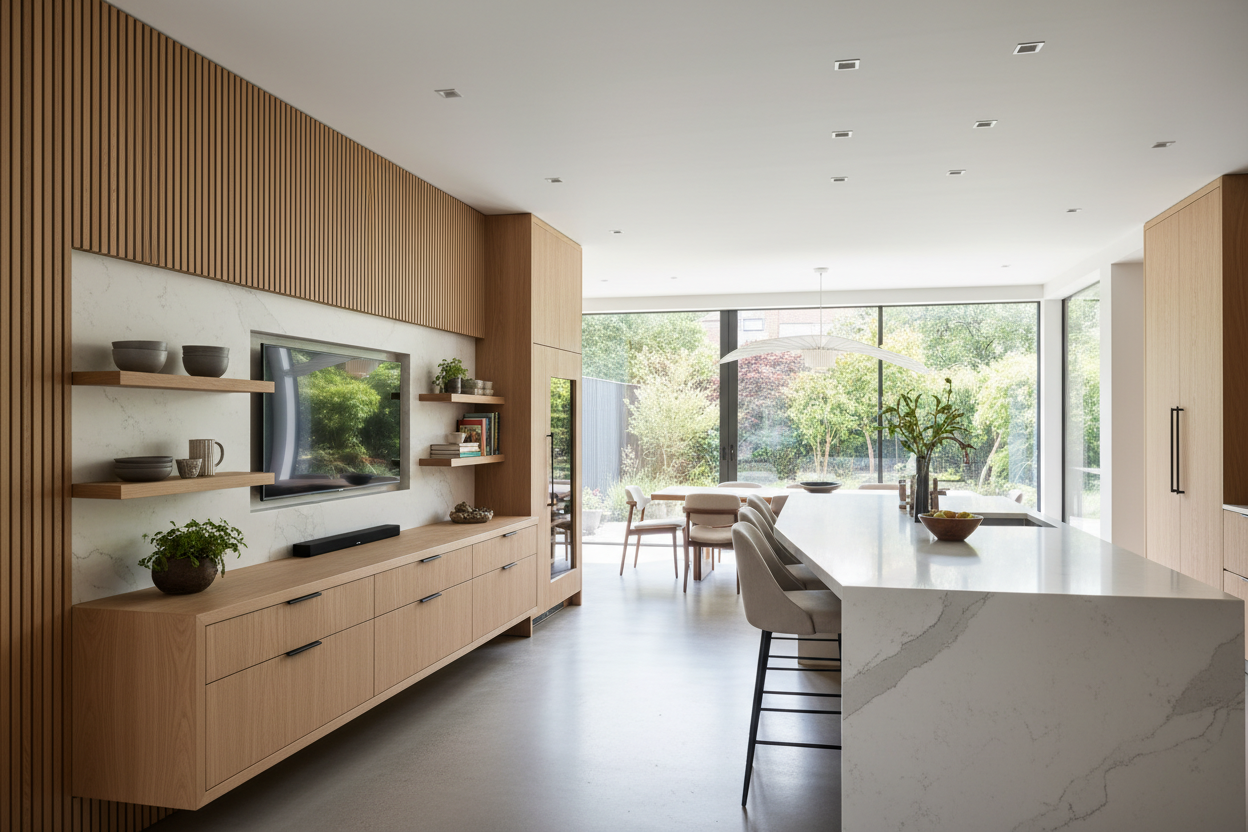
Most of us spend a massive chunk of our lives in the kitchen—prepping meals, paying bills, or simply entertaining. Yet, when we want to catch the morning news or follow a cooking show, we often end up balancing a tablet precariously against a fruit bowl. If you are tired of sacrificing precious counter space, finding the right kitchen tv stand is the smartest layout fix you can make. But bringing media furniture into a culinary space requires careful planning so it doesn't feel like a dorm room afterthought.
Quick Decision Guide
- Aim for a taller profile (34 to 36 inches) so the screen is visible over islands and peninsulas.
- Prioritize closed storage to hide cables, remotes, and stray appliances.
- Keep the footprint shallow; anything deeper than 15 inches will eat into your walking clearance.
- Position the unit at least four feet away from primary heat sources and sinks to protect the electronics.
Space Planning: Fitting Media into the Work Triangle
The Importance of Height and Sightlines
Standard living room consoles are usually 24 to 28 inches tall. If you use one as a tv stand for kitchen viewing, the screen will disappear behind your island the moment you start chopping vegetables. Opt for a counter-height console or a tall, narrow cabinet. This ensures an unobstructed sightline whether you are standing at the stove or sitting at a breakfast nook.
Navigating Tight Clearances
Kitchens demand strict traffic flow. You need at least 36 inches of clearance between your cabinets and any freestanding furniture. If space is tight, look for a corner unit. Tucking the screen into an unused corner preserves your negative space while still providing a clear viewing angle.
Blending Tech with Culinary Design
Creating a Seamless Look
A kitchen entertainment center shouldn't look like it wandered in from the living room. Match the visual weight of your kitchen cabinetry. If you have heavy, traditional shaker cabinets, a flimsy wire cart will look out of place. Instead, choose a solid wood piece painted to match your lower cabinets, or pick a complementary wood tone that ties into your flooring or floating shelves.
Surviving the Kitchen Environment
Heat, Moisture, and Grease
Kitchens are high-humidity, high-heat zones. Cheap particleboard with paper veneer will peel within a year if placed near a dishwasher or boiling pots. Stick to solid wood with a durable polyurethane finish, or powder-coated metal. Both are easy to wipe down when the inevitable airborne cooking grease settles on the surface.
Lessons from My Own Projects
A few years ago, I designed a sprawling open-concept kitchen for a client who insisted on having a dedicated media zone right next to the prep area. I found a gorgeous, low-profile walnut credenza. It looked incredible on installation day. Six months later, the reality of kitchen life hit. Because it was so low, the screen was constantly splashed with rogue droplets from the sink, and the matte walnut finish absorbed airborne grease like a sponge, turning permanently tacky. I learned the hard way that kitchen media furniture needs a high-performance, wipeable finish and enough height to keep the electronics well above the splash zone. We ended up swapping it for a taller, painted piece with a durable semi-gloss finish.
Frequently Asked Questions
What size TV is best for a kitchen?
Usually, a 24-inch to 32-inch screen is ideal. It is large enough to read text or follow a recipe from across the room, but small enough that it doesn't dominate the space or require a massive piece of furniture to support it.
Can I use a regular living room console in the kitchen?
You can, but it is rarely the best choice. Living room consoles are typically too low for standing-height viewing and often lack the durable finishes required to withstand kitchen humidity and grease.
How do I manage the cords in a freestanding kitchen unit?
Look for a stand with a hollow back or dedicated cable routing holes. Use zip ties to bundle the cords tightly against the back legs, and plug them into a low-profile surge protector hidden inside the cabinet.


Dejar un comentario
Este sitio está protegido por hCaptcha y se aplican la Política de privacidad de hCaptcha y los Términos del servicio.