










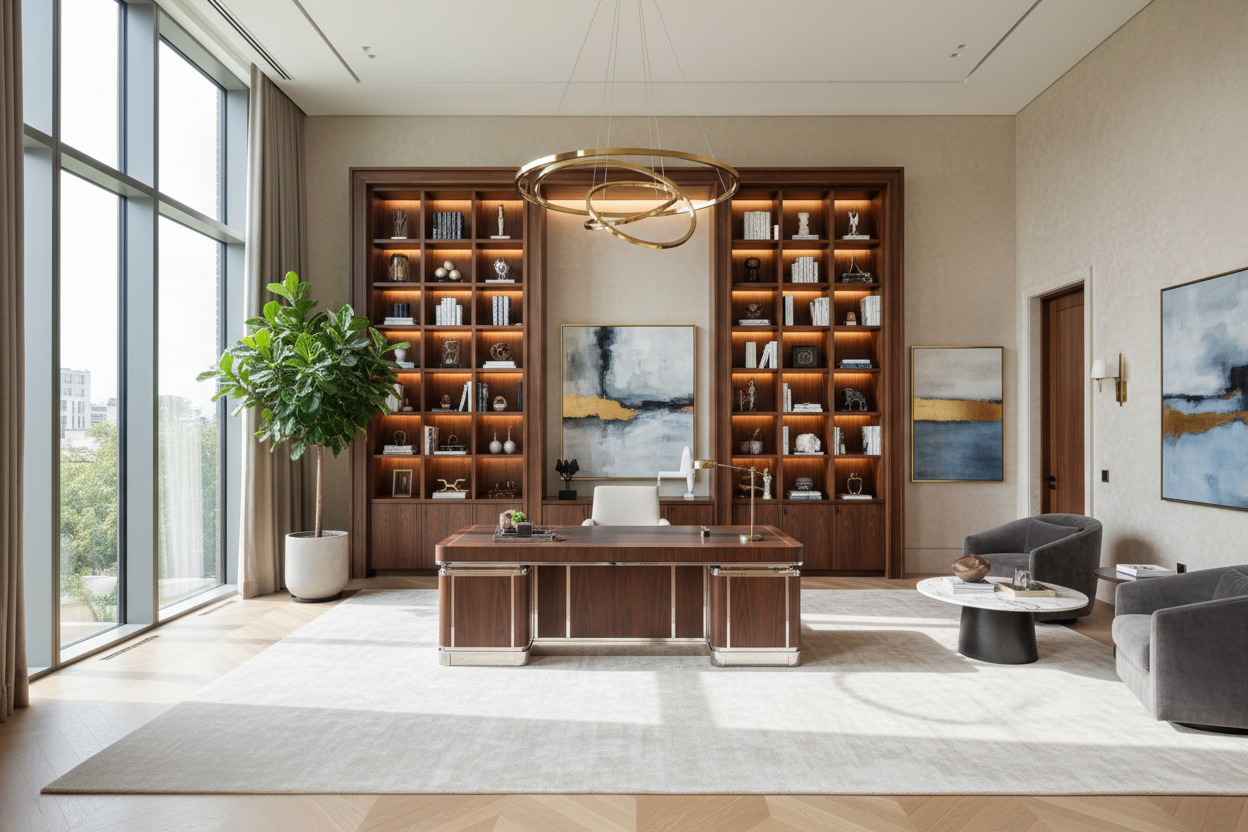
Having an abundance of square footage is often the envy of the design world, but in reality, it presents a unique set of challenges. A cavernous room can easily feel cold, unanchored, and surprisingly unproductive if not handled correctly. The goal of successful large home office design is not just filling space, but curating zones that foster focus while maintaining a sense of architectural grandeur.
Key Features for a High-End Workspace
- Zoning Strategy: Dividing the room into functional areas (work, lounge, library) to prevent a gymnasium-like feel.
- Proportional Scale: Using substantial furniture pieces that don't get swallowed by the room's dimensions.
- Acoustic Control: Incorporating textiles and soft surfaces to eliminate the echo common in a big home office.
- Lighting Layers: Moving beyond a single overhead fixture to create depth with floor lamps, task lighting, and sconces.
Mastering the Layout: Float Your Furniture
The most common error I see in large home office ideas is the tendency to push the desk against the wall. In a compact room, that saves space. In a large room, it kills the aesthetic.
To achieve a luxurious, executive feel, you must float the desk. Position your primary workspace in the center of the room or facing the entry, anchored by a substantial area rug. This commands authority and utilizes the volume of the room effectively. This layout allows you to utilize the walls for floor-to-ceiling millwork or expansive art pieces, creating a focal point behind you that looks professional on video calls.
Scaling Up: Furniture Selection
When curating large office ideas, size matters. Standard residential furniture often looks like dollhouse miniatures in a room exceeding 300 square feet. You need to look for pieces with visual weight.
The Executive Desk
Opt for a desk that is at least 72 inches wide. Consider materials like solid walnut or mahogany with a thick slab top. If you prefer a modern aesthetic, a stone or concrete desk with a heavy base works well. The objective is to have the furniture hold its own against the architecture.
The Lounge Zone
A large home office layout affords you the luxury of a secondary zone. I always advise clients to install a "thinking corner." This could be a pair of deep leather club chairs or a Chesterfield sofa arranged around a coffee table. This isn't just for aesthetics; it provides a necessary change of posture for reading documents or taking informal calls, reducing fatigue.
Texture and Acoustics
One aspect often overlooked in large home office ideas is sound. Hard surfaces and high ceilings create reverb that creates poor audio quality for conference calls. To combat this, you need "absorptive" luxury.
Layer your textures. Use heavy velvet or wool drapery on the windows. A high-pile wool rug should sit under the desk, extending at least 30 inches past the chair when pulled out. If the room still echoes, consider upholstered wall panels or a fabric-backed bookcase to dampen the sound while adding tactile warmth.
My Personal Take on Large Home Office Design
I learned the hard way that lighting a large office is completely different from lighting a standard bedroom. Years ago, I designed a stunning, 400-square-foot office with 12-foot ceilings for a client. We spent a fortune on a massive, custom oak desk and beautiful built-ins.
However, once the client moved in, he called me to say the room felt "lonely" at night. I realized we had relied too heavily on recessed can lighting, which flattened the room and left the corners in shadow. I had to go back in and add two oversized floor lamps near the lounge area and picture lights over the shelving. The difference was immediate. It turned a sterile box into a moody, sophisticated library. Now, I always check the "lumen spread" in the corners of a big room before finalizing the electrical plan—dark corners are the enemy of a cozy workflow.
Conclusion
Designing a spacious office is about balance. By anchoring your furniture, scaling up your pieces, and paying attention to the acoustics, you can transform a hollow hall into a sanctuary of productivity. Trust your eye, respect the scale, and don't be afraid to go big.
Frequently Asked Questions
How do I fill empty corners in a large home office?
Avoid cluttering corners with small knick-knacks. Instead, use large-scale botanical elements, such as a Fiddle Leaf Fig or an Olive tree in a heavy ceramic planter. Alternatively, a tall floor lamp or a dedicated reading chair with an ottoman can turn a dead corner into a functional vignette.
What is the best rug size for a big home office?
In a large room, the rug acts as an island. Ensure the rug is large enough that all legs of the desk and the office chair (even when rolled back) remain on the rug. Typically, an 8x10 or 9x12 rug is the minimum requirement to properly ground the desk area.
Should I use dark or light colors in a large office?
Large spaces can handle dark, moody colors better than small ones. Deep navies, charcoals, or forest greens can make a large room feel cozier and more enveloping. If you prefer light colors, ensure you use warm whites and plenty of wood textures to prevent the space from feeling clinical.


Dejar un comentario
Este sitio está protegido por hCaptcha y se aplican la Política de privacidad de hCaptcha y los Términos del servicio.