










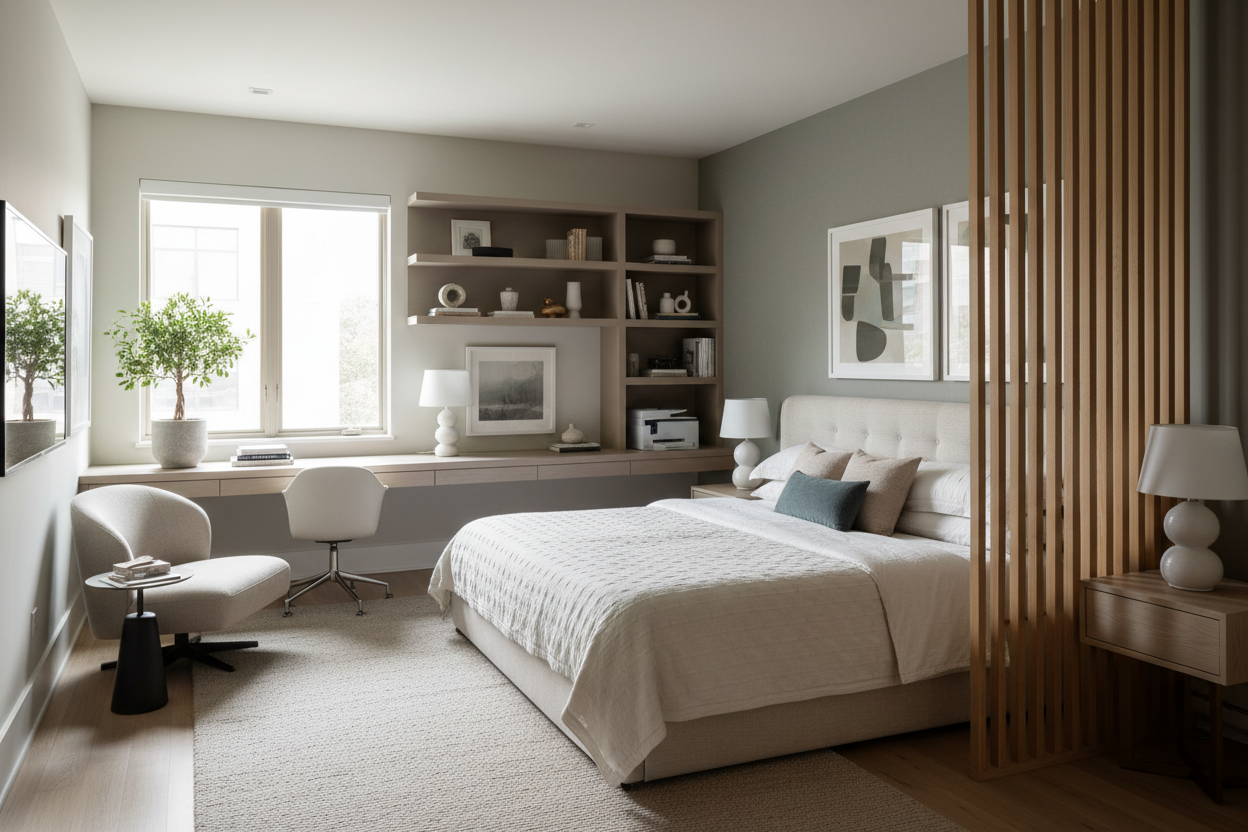
Merging a high-performance workspace with a sanctuary designed for rest is one of the most complex challenges in residential interior design. The psychological conflict is obvious: one zone demands alertness, while the other requires decompression. If executed poorly, work stress permeates your sleep environment. However, with intentional planning and sophisticated bedroom office combo decorating ideas, you can curate a space that respects both your deadlines and your circadian rhythm.
Key Design Elements for Dual Zones
- Visual Zoning: Establishing distinct areas using rugs, lighting, or architectural niches to separate work from rest.
- Scale & Proportion: Choosing a desk with a slim profile (writing desk vs. executive bulk) to maintain the room's airy atmosphere.
- Concealed Storage: Ensuring all tech and paperwork can be hidden away to reduce visual noise at night.
- Lighting Layers: Utilizing task lighting for the desk that does not bleed harsh blue light into the sleeping area.
Strategic Layouts for Master Suites
When approaching a master bedroom office combo design, the placement of the desk is paramount. The golden rule is to position the desk so it does not face the bed. Staring at your pillows while on a Zoom call is unprofessional, and staring at your monitor while trying to sleep induces anxiety.
The Floating Layout
If square footage allows, float the desk perpendicular to a wall or window rather than pushing it into a corner. This commands authority and allows you to use the back of the desk (perhaps covered by a low console or upholstered screen) to create a physical barrier between the 'office' and the 'bedroom.'
The Alcove Integration
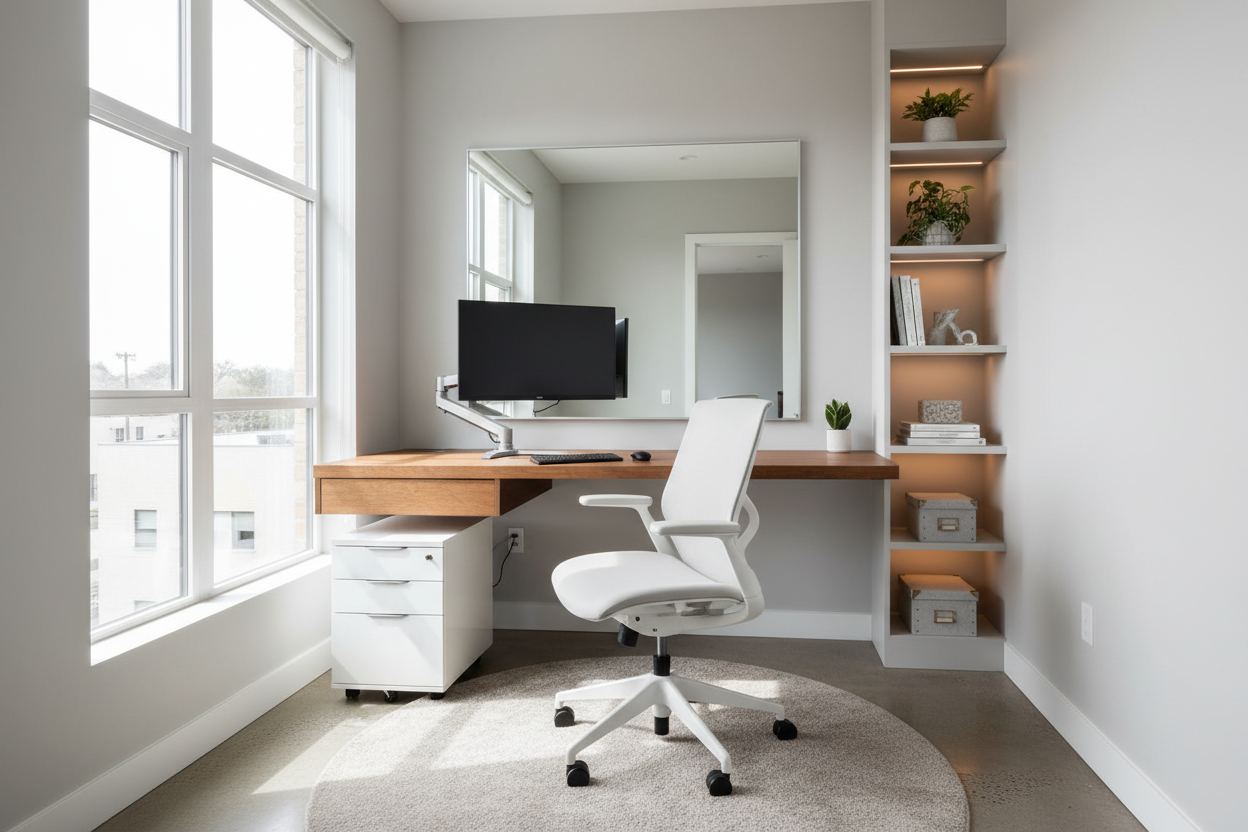
Utilize architectural recesses. Installing a custom floating shelf in an alcove creates a seamless look. Unlike a standalone piece, built-ins feel like part of the room's architecture, reducing the visual clutter often associated with office furniture.
Furniture Selection: Material and Ergonomics
The furniture you select must bridge the gap between commercial durability and residential warmth. Avoid melamine or cold steel typical of corporate cubicles.
Material Warmth
Opt for solid wood or high-quality wood veneers like walnut or white oak. These materials introduce texture and warmth, helping the desk feel like a dressing table or a console rather than a workstation. Be wary of softwoods like pine for a writing surface, as they dent easily under the pressure of a ballpoint pen.
The Chair Dilemma
In decorating bedroom office combo spaces, the chair is often the aesthetic weak link. A massive, black mesh ergonomic chair ruins the serenity of a bedroom. Look for 'resimercial' designs—chairs with ergonomic interiors (lumbar support, swivel) but wrapped in residential fabrics like boucle, velvet, or high-grade leather. The silhouette should be low-profile; a high-back chair dominates the vertical space too aggressively.
Lighting and Color Coordination
Lighting defines the mood. Your bedroom likely relies on warm, ambient light (2700K), while office work requires cooler, focused light (3000K-4000K). Invest in a task lamp with a directional shroud. This ensures the light hits your documents, not the rest of the room. Visually, coordinate your office accessories with your bedding. If your duvet features linen textures and earth tones, your desk organizer and waste bin should follow that palette, perhaps in leather or woven seagrass, to maintain continuity.
Lessons from My Own Projects
I learned a hard lesson early in my career regarding finish selection for bedroom workspaces. I once specified a stunning, high-gloss black lacquer Parsons desk for a client's bedroom. It looked incredible in the photos—sleek, modern, and expensive.
However, three months later, the client called me with a complaint I hadn't anticipated. Because the desk was in the bedroom, where lint from bedding and dust from changing clothes is higher than in a dedicated office, the high-gloss black finish looked perpetually filthy. Every speck of dust and every fingerprint was magnified by the morning sun hitting that glossy surface. It drove them crazy. Since then, I strictly advise matte or satin finishes, preferably with a natural wood grain, for bedroom desks. They are far more forgiving and maintain that sense of calm we are trying to protect.
Conclusion
A successful bedroom office is not just about fitting a desk into a corner; it is about managing the energy of the room. By prioritizing concealed storage, residential finishes, and strategic layouts, you can create a space that fuels your career during the day and nurtures your rest at night.
Frequently Asked Questions
How do I fit a desk in a small bedroom without it looking crowded?
Focus on 'visual weight' rather than just physical dimensions. Choose a desk with slender legs rather than solid block drawers, and consider a glass or acrylic top which allows the eye to travel through the piece, making the room appear larger.
What is the best way to hide monitors when not in use?
If you use a laptop, a drawer is sufficient. For large monitors, consider a distinct armoire desk where doors can close off the entire setup, or install a folding screen. Alternatively, Samsung and other brands now offer 'smart monitors' that look like framed art or sleek TVs when not in PC mode.
Is a rug necessary for the office area in a carpeted bedroom?
Yes. A low-pile rug or a rigid chair mat is essential to protect the carpet from caster damage. Esthetically, a rug also helps to 'zone' the area, creating a psychological boundary that says, 'This specific rectangle is for work.'

Dejar un comentario
Este sitio está protegido por hCaptcha y se aplican la Política de privacidad de hCaptcha y los Términos del servicio.