










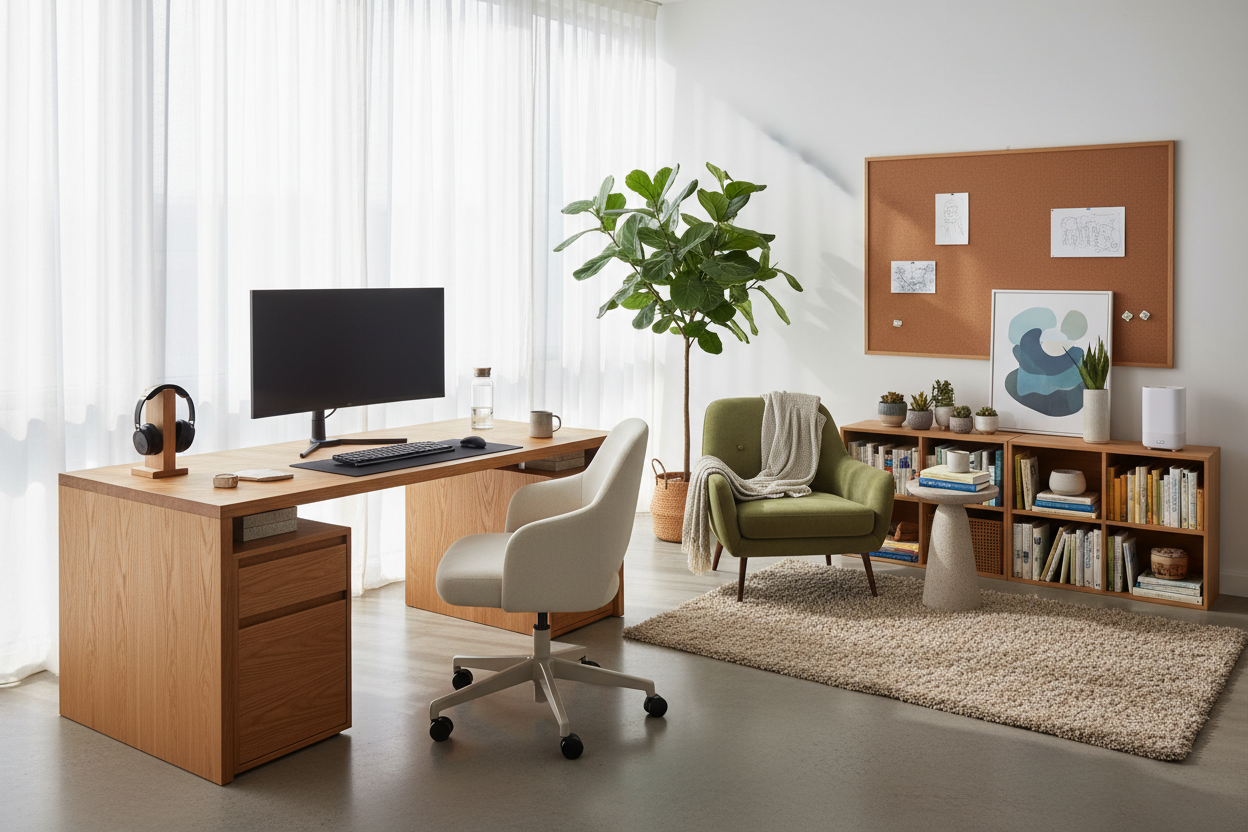
We have all experienced the frustration of the single-surface workspace: a laptop open, a notepad balancing on the edge, and a coffee mug dangerously close to a spill. The spatial limitations of a standard rectangular desk often force a compromise between utility and aesthetics. This is where the desk with side—often referred to in the industry as a desk with a return or an L-shaped configuration—becomes a pivotal design solution.
Key Features to Consider Before Buying
- Return Orientation: Determine if you need a Left-Hand or Right-Hand return based on your room's natural light source and traffic flow.
- Connector Type: Check if the side unit is a seamless extension (L-shape) or a detached credenza for modular flexibility.
- Material Continuity: Ensure the grain direction aligns or complements the main desk to maintain visual harmony.
- Modesty Panels: Decide if you need full coverage for open-room placement or an open back for easier cable access.
Understanding the Architecture: The 'Return'
In professional interior design, the "side" of the desk is technically called a "return." This secondary surface is not merely for extra storage; it defines the zoning of your workspace. By shifting the CPU, printer, or paperwork to the side, you keep your primary focal point clear for deep work or client meetings.
Choosing the Right Material Palette
The material you select dictates the longevity and the 'visual weight' of the piece. For a grounded, executive feel, opt for solid wood or high-grade architectural veneers like walnut or white oak. Note that veneers require coasters and desk pads to prevent heat rings.
If your workspace sees heavy traffic or creative crafting, consider high-pressure laminate (HPL) or thermally fused laminate (TFL). Modern laminates have evolved significantly, offering textured finishes that mimic the tactile feel of wood grain without the susceptibility to scratches.
Space Planning and Placement
A common error homeowners make is instinctively pushing a desk with side directly into a corner. While this saves floor space, it often results in the user facing a blank wall, which is psychologically fatiguing.
The 'Floating' Command Position
If square footage allows, float the desk in the center of the room or perpendicular to a wall. This places you in the "command position," facing the door. In this layout, the side unit acts as a physical boundary, creating a distinct separation between the work zone and the rest of the room. This is particularly effective in open-concept living areas where you need to carve out a dedicated office niche without building walls.
Visual Balance and Silhouette
Pay attention to the leg style. A desk with a heavy, boxy side unit (often containing file drawers) creates a substantial, anchored look. Conversely, a desk with side that features open metal legs or a "parson style" silhouette maintains an airy feel, making a small room appear larger by allowing light to pass underneath the furniture.
My Personal Take on the Desk with Side
I learned a hard lesson early in my career regarding these desks. I once specified a gorgeous, custom mahogany desk with a side return for a client who was an architect. It looked stunning in the showroom. However, I failed to account for the depth of the apron (the structural frame under the top) on the side section.
When the client tried to clamp his heavy-duty dual monitor arms onto the side return, the clamp wouldn't fit over the thick apron. Furthermore, the side unit had a shallow knee clearance, meaning every time he swiveled his chair to use that surface, he banged his knees against the modesty panel. Now, I always carry a tape measure to check the "clamp clearance" and knee depth before recommending any desk with a return. It is those unpolished, functional details that determine if you'll love the desk in six months or resent it.
Conclusion
Integrating a desk with side into your home is about more than just gaining drawer space; it is about upgrading your workflow. By selecting the right orientation and material, you create a professional environment that respects both ergonomics and style. Assess your room, measure your clearance, and invest in a piece that supports how you actually work.
Frequently Asked Questions
Can the side return usually be installed on either the left or right?
Not always. While some modular desks are "reversible," many high-end desks are fixed as "Left-Hand Return" or "Right-Hand Return." You must decide your orientation before purchasing based on where your outlets and windows are located.
How much clearance do I need behind the desk for a chair?
To move comfortably and swivel between the main desk and the side return, you should allow for at least 42 to 48 inches of space between the edge of the desk and the wall or nearest piece of furniture.
Is a desk with side suitable for a small bedroom office?
Yes, but look for a "writing desk with return" rather than an executive style. These versions usually have slimmer profiles, open legs rather than bulky pedestals, and a smaller footprint that feels less intrusive in a multi-purpose room.

Dejar un comentario
Este sitio está protegido por hCaptcha y se aplican la Política de privacidad de hCaptcha y los Términos del servicio.