










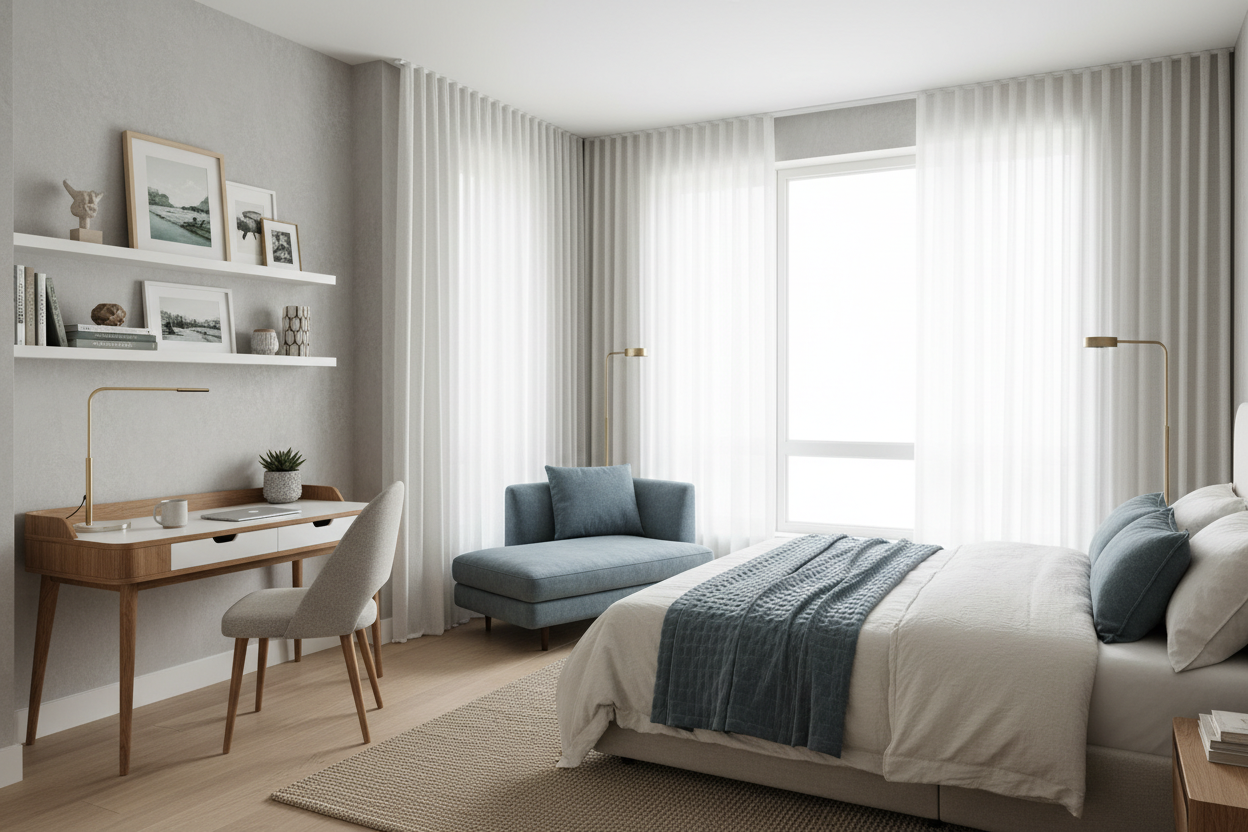
Integrating a workspace into your sanctuary is one of the most complex spatial challenges homeowners face. The conflict is inherent: one function demands high alertness, while the other requires total decompression. If executed poorly, you risk insomnia and decreased productivity simultaneously. However, with intentional planning, bedroom office interior design can yield a sophisticated, dual-purpose environment that compromises neither rest nor work.
Key Considerations for Dual-Purpose Rooms
Before purchasing a single piece of furniture, consider these fundamental elements to ensure your space functions seamlessly.
- Visual Zoning: Use rugs, lighting, or room dividers to psychologically separate the 'sleep zone' from the 'work zone'.
- Acoustics & Materials: Opt for solid wood or upholstered finishes over glass and metal to dampen sound and maintain warmth.
- Light Control: Ensure you have task lighting for work that does not bleed into the ambient, relaxing light needed for the bedroom area.
- Vertical Storage: Utilize wall height for shelving to keep the floor plan open and reduce visual clutter.
Strategic Space Planning & Layout
The success of a home office bedroom layout hinges on sightlines. The golden rule I tell every client is simple: do not face your bed while working, and do not face your desk while sleeping.
Ideally, position your desk facing a window or a wall perpendicular to the bed. If space forces the desk to face the bed, consider a console table behind the sofa or a decorative screen. This physical separation prevents the psychological stress of unfinished tasks from encroaching on your rest.
Selecting Furniture: The Balance of Form and Function
The Desk Dilemma
In a bedroom setting, a heavy, corporate-style executive desk is visually overwhelming. Instead, look for writing desks with slender legs and hidden cable management. A 'floating' wall-mounted desk is often the best solution for a bedroom to home office conversion, as keeping the floor visible creates an illusion of more space.
The Seating Solution
Nothing ruins office bedroom decor faster than a bulky, black mesh gaming chair. While ergonomics are non-negotiable, aesthetics matter here. Look for mid-century modern task chairs upholstered in bouclé, velvet, or leather. These materials soften the technical look of the chair, allowing it to blend with the bedroom's softer textures.
Lighting and Ambiance
Lighting dictates the mood. A harsh overhead light kills the bedroom vibe. Instead, layer your lighting. Use a focused, adjustable architectural lamp for the desk area. For the rest of the room, rely on warm, dimmable ambient lighting. This separation allows you to 'turn off' the office at 6 PM simply by switching light sources.
My Personal Take on Bedroom Office Interior Design
I learned a hard lesson about office and bed combinations during a project in a tight London apartment. I designed a beautiful custom joinery unit that hid the desk perfectly. It looked flawless in photos.
However, three weeks later, the client called me complaining about the 'hum.' We realized that even with the desk hidden, the standby LEDs and the faint electrical hum of the monitor and docking station were perceptible in the dead of night. It disrupted the sensory deprivation required for deep sleep. Since then, I always insist on a master kill-switch for the desk circuit or heavy-duty cable management boxes that completely block out those piercing little standby lights. It’s a tiny, unpolished detail that determines whether you actually sleep in the room you designed.
Conclusion
Merging your professional and personal lives into one room requires discipline and thoughtful design. By prioritizing sightlines, selecting furniture with a residential silhouette, and managing your lighting layers, you can create a space that supports your career without sacrificing your comfort. It is time to reclaim your square footage.
Frequently Asked Questions
How do I hide my computer when I am not working?
The most elegant solution is a secretary desk (bureau) that closes up, or a closet-office conversion (cloffice). If you have a standard desk, simply using a designated drawer for your laptop and keyboard can clear the surface instantly.
What is the best color palette for a bedroom office?
Stick to calming, low-contrast colors. Monochromatic schemes work best to reduce visual noise. Sage greens, warm beiges, or soft terracottas promote focus during the day and relaxation at night.
Can I put a desk next to my bed?
If you must place a desk next to the bed due to size constraints, use a nightstand as a buffer or choose a desk that doubles as a bedside table. Ensure the desk lamp is dimmable so it can serve as a reading light.

Dejar un comentario
Este sitio está protegido por hCaptcha y se aplican la Política de privacidad de hCaptcha y los Términos del servicio.