










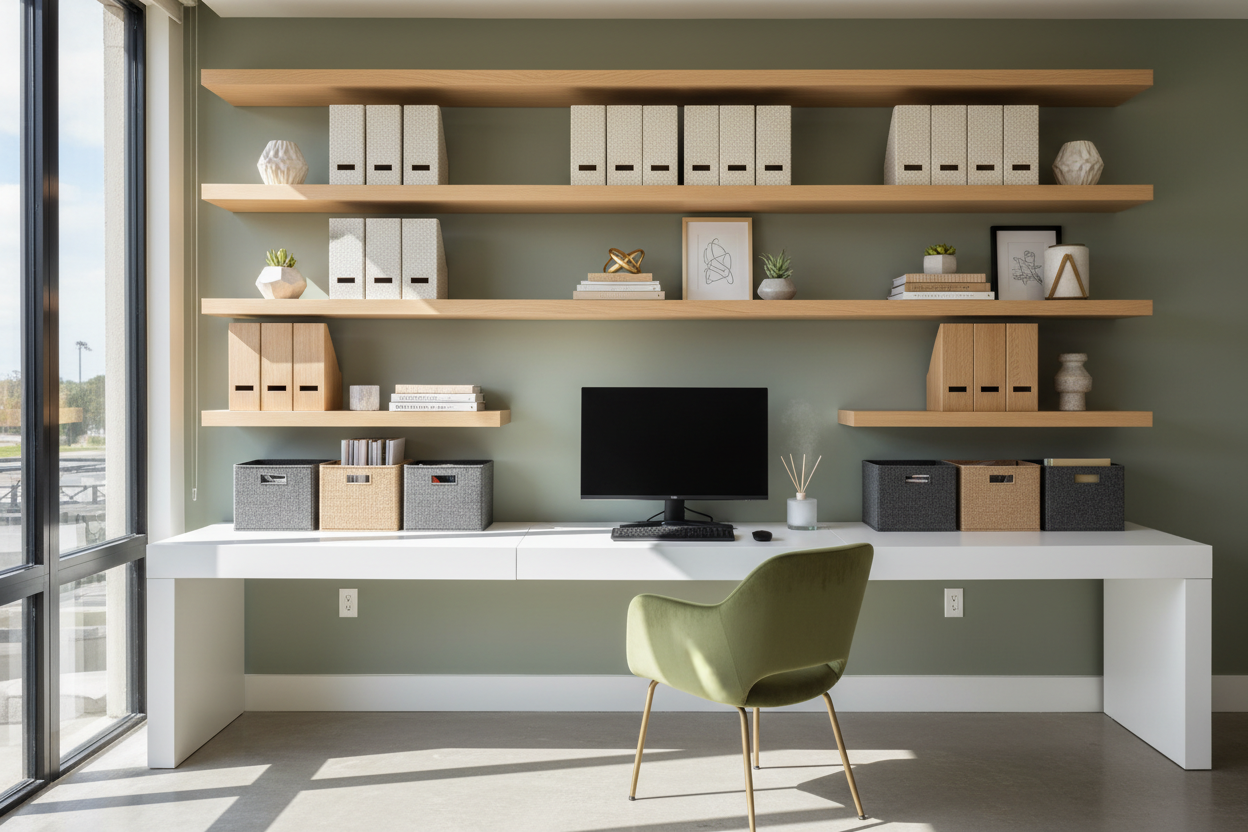
There is a distinct tension in interior design between the need for storage and the desire for visual clarity. In a workspace, a cluttered vertical surface creates visual noise that subconsciously disrupts your workflow and focus. However, stripping a shelf bare destroys its utility. The solution lies in a strategic approach to office shelf organization that treats your shelving unit not merely as a holding pen for paperwork, but as a key architectural element of your room’s composition.
Quick Decision Guide: Key Styling Principles
- Visual Weight: Always place heavier items (binders, printers, dense storage boxes) on the bottom shelves to ground the unit.
- The 60/40 Rule: Aim for 60% books and storage, and 40% decorative objects or negative space to prevent a crowded look.
- Material Continuity: Match storage vessels (baskets, bins) to the room's existing palette—think linen, leather, or matte metal.
- Zoning: Dedicate shelves at eye level to frequently used items, while high shelves should be reserved for archival storage or display.
Establishing a Functional Layout
Before buying a single bin or bookend, we must address the ergonomics of your shelving. In my consultations, I often see clients struggling with office shelves organization simply because the layout fights against their daily habits. The shelving must serve your workflow.
The Zoning Method
Divide your unit horizontally. The shelves closest to your seated height—usually between 28 and 45 inches off the floor—are your "Active Zones." This is where current project files and reference books belong. Anything above eye level is the "Display Zone" or "Deep Storage," while the lowest shelves are the "Anchor Zone" for heavy equipment or archival boxes. This prevents the physical strain of constantly reaching up or bending down for daily essentials.
Curating Visual Balance and Materiality
Once functionality is mapped, we move to aesthetics. A well-designed shelf relies on the manipulation of visual weight and texture.
Mixing Textures for Depth
Avoid the monotony of matching plastic bins. Instead, layer textures to create a sophisticated vignette. If your shelving unit is sleek metal or glass, introduce warmth with woven seagrass baskets or leather magazine files. If you have heavy, dark wood built-ins, lighten the visual load with acrylic dividers or cream-colored linen boxes. The contrast prevents the storage from looking utilitarian and makes it feel like intentional decor.
The Importance of Negative Space
In design, what you leave out is as important as what you put in. "Breathing room" is essential for a high-end look. Leave gaps between book clusters and sculptural objects. If a shelf is packed edge-to-edge, the eye has nowhere to rest, creating a sense of anxiety rather than order. Treat the back of the shelf as a canvas; seeing the back panel in certain spots adds depth and highlights the silhouette of the objects in front of it.
My Personal Take on Office Shelf Organization
I learned a hard lesson about materiality early in my career while designing a home office for a client with beautiful, custom walnut built-ins. I specified a set of trendy, industrial-style wire baskets for the lower shelves. They looked incredible in the rendering.
However, within three months, the client called me back. Every time they pulled a basket out to grab a file, the raw metal bottom was micro-scratching the lacquer finish of the walnut shelves. It was a disaster that required refinishing. Now, I never specify a storage vessel without checking the bottom first. If I use metal or rough wicker, I insist on adding adhesive felt pads to the underside immediately. It’s these unpolished, tactile details—the sound of a bin sliding, the protection of the finish—that truly define luxury organization, not just how it looks on Instagram.
Conclusion
Refining your office shelves is an exercise in editing. By balancing ergonomic accessibility with textural variety and negative space, you transform a utilitarian storage unit into a focal point that inspires productivity. Start by clearing the shelves completely, and only introduce items that serve a purpose or spark joy.
Frequently Asked Questions
How do I organize shelves without them looking messy?
The secret is uniformity in containers. Transfer loose papers and odd-shaped supplies into matching bins or magazine files. When the containers match, the visual clutter is hidden, and the eye perceives a clean, repetitive line.
What is the best way to arrange books?
Alternate between vertical rows and horizontal stacks. This breaks up the grid and adds interest. You can also organize by color for a stylized look, though organizing by subject is often more practical for working offices.
How deep should office shelves be?
For standard binders and magazine files, a depth of 12 inches is standard. However, if you plan to store printer equipment or large archival boxes, aim for a depth of 14 to 16 inches to ensure no overhang, which ruins the visual line.

Dejar un comentario
Este sitio está protegido por hCaptcha y se aplican la Política de privacidad de hCaptcha y los Términos del servicio.