










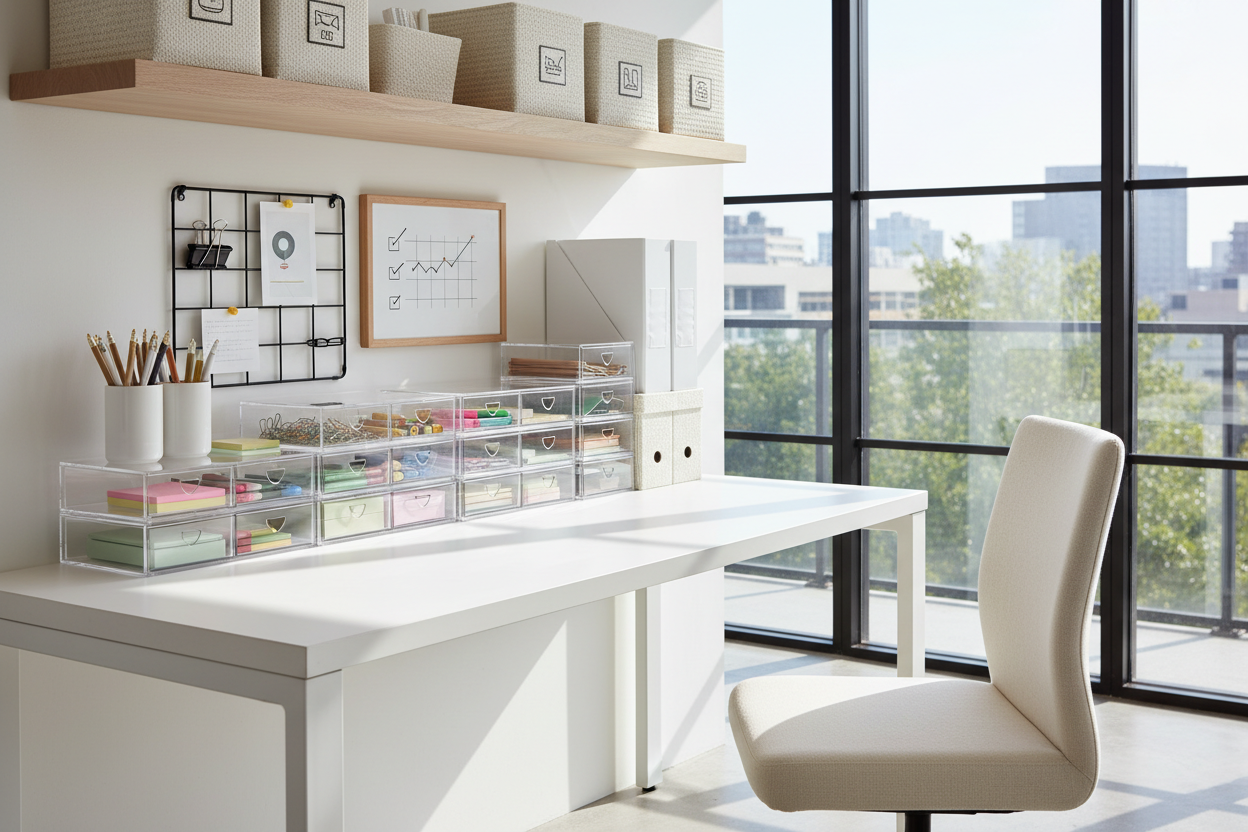
There is a distinct difference between a workspace that looks busy and one that feels chaotic. As an interior designer, I often walk into home offices where the desk surface is beautiful—perhaps a walnut veneer or a sleek glass top—but the functionality is crippled by a lack of systemization. The clutter isn't just physical; it creates visual noise that hampers your cognitive flow. Implementing the right office supplies organizing ideas is not merely about tidiness; it is about curating a workflow that respects both your productivity and your interior aesthetic.
Quick Decision Guide: The Essentials of Organization
If you are looking to immediately improve your workspace efficiency, prioritize these core principles of spatial planning:
- Frequency Mapping: Store daily essentials within arm's reach (the "active zone") and archival items in deep storage.
- Containment Strategy: Never allow small items to float freely; use drawer dividers or modular trays to define boundaries.
- Vertical Utilization: When floor or desk space is limited, exploit wall height with floating shelves or pegboards.
- Visual Uniformity: Choose storage containers in a single material or color palette to reduce visual clutter.
Establishing a Functional Layout
The best way to organize office supplies begins with a strict audit of your inventory. Before buying bins or baskets, you must understand the volume of what you own. In design terms, we call this "load calculation." Group your items by category: writing instruments, paper products, technology accessories, and shipping materials. Once categorized, we apply zoning techniques.
The "Prime Real Estate" Concept
Your desk surface and top drawer are prime real estate. Only items used daily should reside here. If you are wondering how to organize office supplies at work or in a high-traffic home office, resist the urge to keep a stapler on the desk if you only staple documents once a week. Instead, designate a "secondary zone"—perhaps a nearby bookshelf or a lower drawer—for these weekly items.
Solutions for the Deskless Workspace
Not every home has a dedicated study. One of the most common challenges I solve for clients is how to organize office supplies without a desk. When working from a dining table or a multi-purpose nook, mobility is key.
I often recommend a high-quality rolling utility cart. This acts as a mobile office supply room layout on wheels. The top tier holds your laptop and immediate tools, the middle tier houses home office supplies ideas like notebooks and reference materials, and the bottom tier manages bulkier items. When the workday ends, the cart rolls into a closet, instantly restoring your living space.
Materiality and Visual Balance
When considering where to store office supplies at home, the container's material matters as much as its size. For a sophisticated look, avoid cheap, mismatched plastics. If your shelving is open, opt for linen-wrapped boxes or woven textures to hide the visual chaos of cables and toner cartridges.
Curating Stationery
Learning how to organize stationery at home requires a delicate touch. Fine paper and envelopes can degrade if exposed to direct sunlight or humidity. I prefer using flat, archival-quality document boxes stacked horizontally. This protects the paper stock and creates a clean architectural stack on your shelves, turning utility into decor.
Lessons from My Own Projects
My Personal Take on office supplies organizing ideas comes from a specific failure early in my career. I once designed a custom built-in for a client featuring deep, expansive drawers. I thought I was giving them luxury volume. Six months later, I visited, and those drawers were a disaster zone—a graveyard of tangled cables and lost pens.
The lesson? Depth without division is the enemy. I realized that while deep drawers look sleek from the outside, they require aggressive internal architecture. Now, I never specify a drawer deeper than four inches without including sliding, tiered inserts. Another detail I’ve noticed personally is the acoustic factor. Using felt-lined organizers isn't just about luxury; it stops the rattling sound of paperclips and pens every time you close the drawer. It’s those subtle sensory details—silence and order—that truly elevate a workspace.
Conclusion
Transforming your office supply storage from a junk drawer into a curated system changes how you approach your work. It shifts your mindset from reactive (searching for tools) to proactive (creating value). By selecting the right materials and respecting the limits of your space, you can build an environment that supports your ambition.
Frequently Asked Questions
How do I maintain the organization long-term?
Adopt the "one-in, one-out" rule. If you buy a new set of pens, the dried-out ones must leave immediately. Schedule a 15-minute "reset" every Friday afternoon to return items to their designated zones.
What is the best way to store small items like clips and pins?
Avoid tossing them loose into bowls. Use modular drawer organizers with small compartments, or magnetic dishes if you keep them on the desktop. Clear acrylic is excellent for visibility, ensuring you don't overbuy stock you already have.
How should I organize office supplies at work in a shared space?
If you don't have permanent storage, a portable "caddy" is essential. Look for one with a handle and distinct compartments. It allows you to deploy your workstation in seconds and pack it away just as fast, keeping your supplies secure and personal.


Dejar un comentario
Este sitio está protegido por hCaptcha y se aplican la Política de privacidad de hCaptcha y los Términos del servicio.