










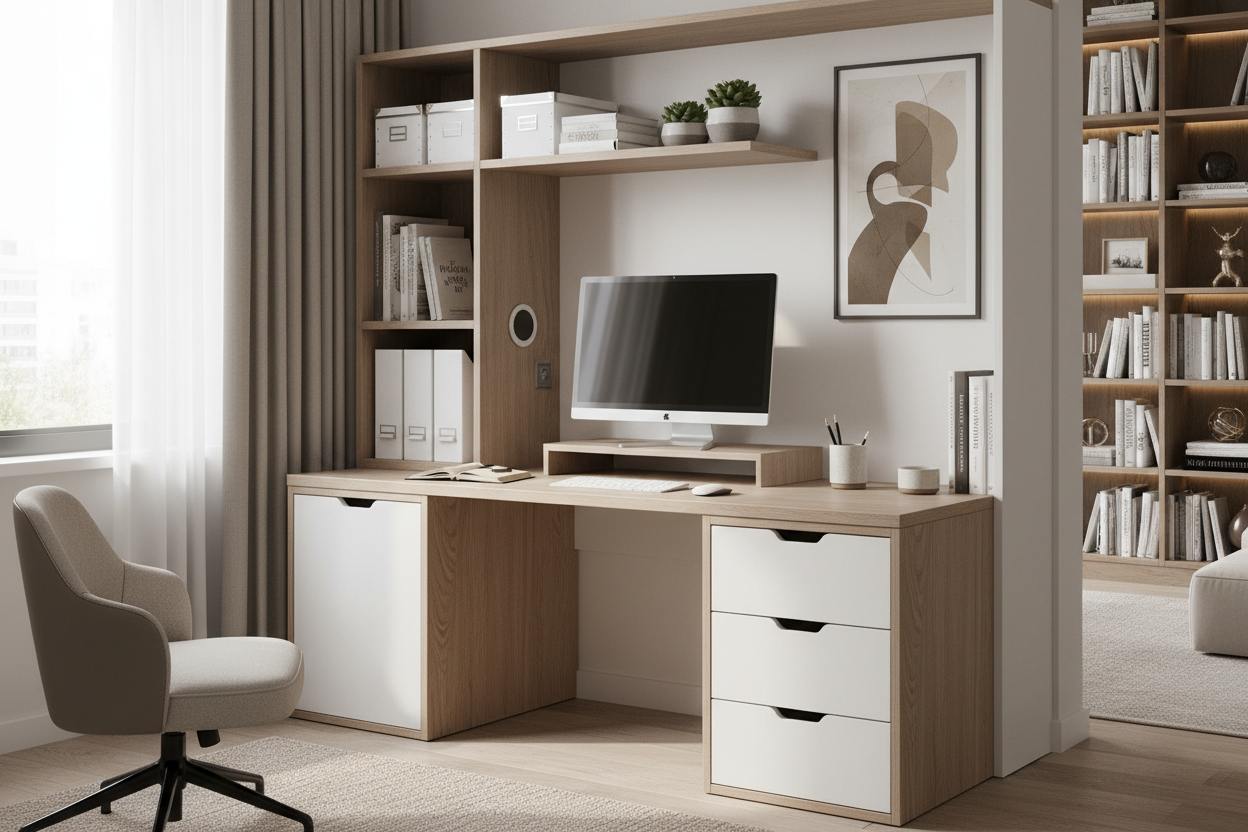
The shift to hybrid work revealed a glaring design flaw in many residences: we often sacrifice function for aesthetics, or vice versa. You might find a sleek, minimalist console that wobbles the moment you type, or a clunky utilitarian piece that ruins your living room's visual flow. The solution lies in selecting a home office desk with shelves and drawers that acts as both a robust workstation and a piece of architectural furniture.
Quick Decision Guide: Key Features to Look For
If you are rushing to make a purchase, prioritize these four elements to ensure your desk stands the test of time and daily use:
- Storage Configuration: Ensure at least one deep file drawer and two shallow utility drawers. Open shelves should be adjustable to accommodate varying binder heights.
- Material Integrity: Look for solid wood or high-grade MDF with a thick veneer. Avoid paper-thin laminates that peel at the edges within months.
- Leg Clearance: A common oversight with storage desks is narrow leg space. Ensure a minimum width of 24 inches for your chair.
- Cable Management: Integrated grommets or hidden channels are essential to keep the shelves visually clean.
Balancing Scale and Proportion
When curating a workspace, the first step is understanding the volume of the room. A massive executive desk in a compact apartment creates visual congestion, while a delicate writing table in a grand library feels lost. If you are working with limited square footage, look for a small office table for home use that utilizes verticality—think hutch-style shelving—rather than horizontal sprawl.
Conversely, if you have a dedicated room, a long study desk with drawers can serve as a commanding focal point. This silhouette allows for 'zoning' your work surface: one side for your monitor and keyboard, the other for reviewing physical documents or sketching, without the need to constantly shuffle items around.
The Storage Debate: Concealed vs. Display
As a designer, I often see clients struggle with clutter. An office desk for home with storage is only effective if the storage matches your working style. If you are visually sensitive to clutter, prioritize drawers. A home work desk with drawers allows you to sweep peripherals out of sight at the end of the day, signaling a psychological break from work.
However, open shelves offer an opportunity for styling. By mixing functional items (reference books, drive docks) with decorative elements (sculptural bookends, a small succulent), you soften the corporate feel of the furniture. The key is balance; allow for 30% negative space on your shelves to prevent the piece from looking heavy.
Materiality and Tactile Experience
Your hands are in contact with this surface for eight hours a day; the finish matters. Solid hardwoods like walnut or white oak offer durability and develop a beautiful patina over time. If you are looking for a work desk with drawers for home usage that needs to withstand coffee rings and heavy equipment, consider high-pressure laminates (HPL) or linoleum-topped desks. Linoleum, in particular, offers a soft, matte writing surface that is acoustically dampening and warm to the touch.
Lessons from My Own Projects
I want to share a specific realization I had while designing a study for a client in a historic brownstone. We selected a stunning mid-century modern desk with a bank of drawers on both sides. It looked incredible in the showroom.
However, once installed, we realized the 'pencil drawer' in the center drastically reduced the vertical clearance for the legs. Every time the client crossed his legs or adjusted his ergonomic chair height, his knees knocked against the bottom of the drawer. It’s a detail you don't notice until you actually sit there for an hour. We ended up having to remove the center drawer entirely to make it usable. Now, when I specify a desk, I always measure the 'apron' height—the distance from the floor to the bottom edge of the desktop structure—to ensure it accommodates modern, adjustable office chairs.
Conclusion
Investing in the right desk is about more than just buying furniture; it is about reclaiming your focus. Whether you choose a compact unit for a nook or a sprawling executive desk, ensure the piece respects your ergonomics and enhances your interior architecture. A well-chosen desk doesn't just hold your computer; it anchors your day.
Frequently Asked Questions
What is the ideal depth for a home office desk with storage?
For a functional workspace that accommodates a monitor and keyboard, aim for a depth of at least 24 to 30 inches. If the desk includes shelving that sits on top of the surface, you may want 30+ inches to ensure you don't lose valuable workspace to the shelving footprint.
How do I style open shelves on a desk without it looking messy?
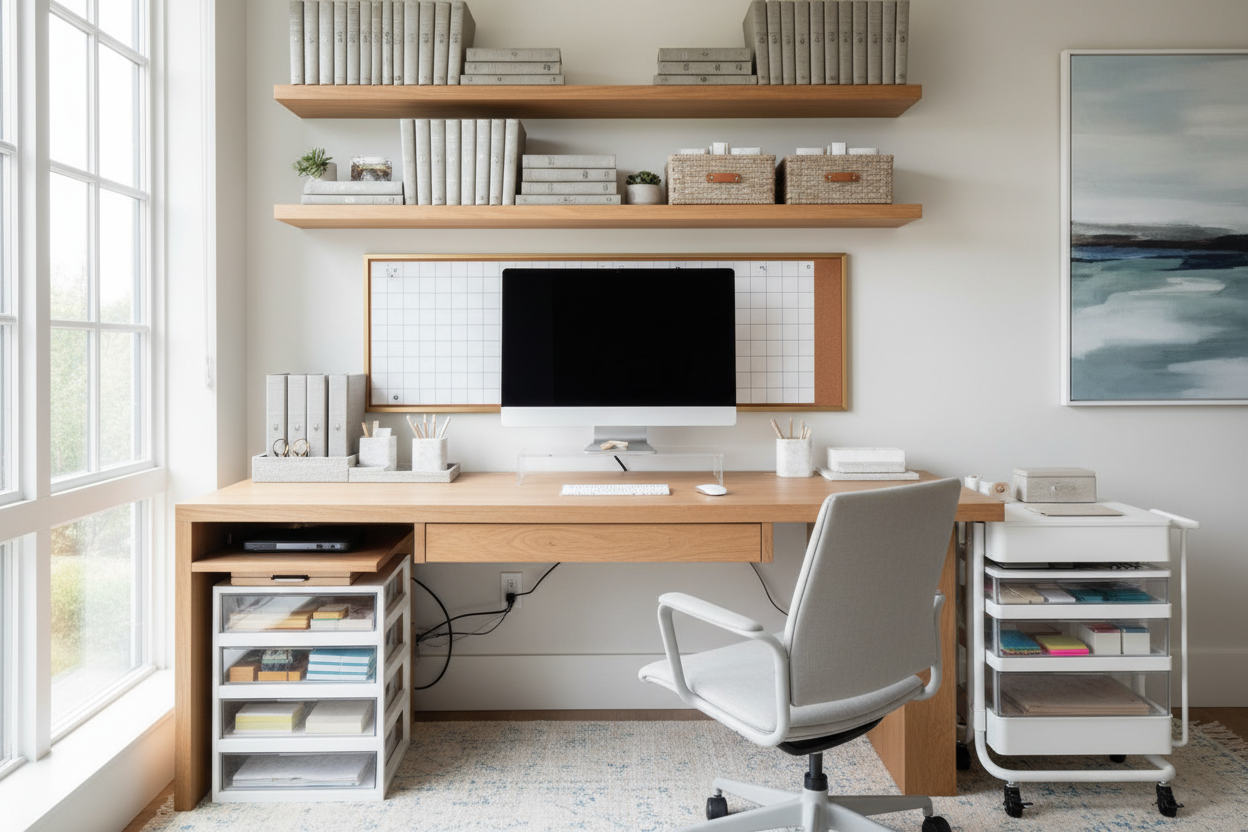
Use the 'rule of three' for grouping items and utilize uniform storage bins or magazine files for loose papers. This hides the visual noise of paperwork while keeping the aesthetic clean and intentional.
Is a solid wood desk worth the investment over veneer?
Solid wood offers longevity and can be refinished if scratched, making it a heirloom choice. However, high-quality wood veneer over stable engineered wood is often more resistant to warping in homes with fluctuating humidity and is a perfectly acceptable, high-end choice.

Dejar un comentario
Este sitio está protegido por hCaptcha y se aplican la Política de privacidad de hCaptcha y los Términos del servicio.