










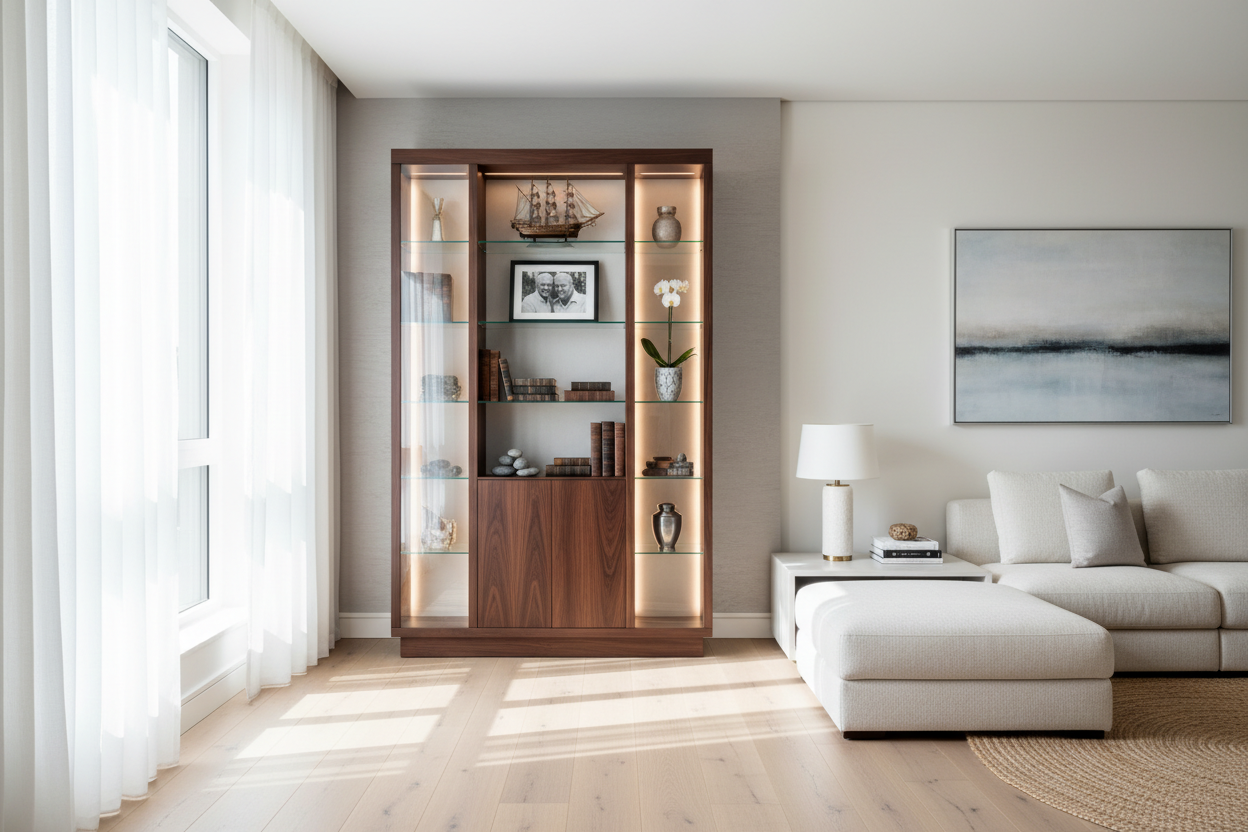
Creating a dedicated space to honor a lost loved one or cherished pet is one of the most deeply personal projects you can undertake in your home. Often, clients come to me feeling overwhelmed. They want to beautifully display urns, folded flags, or treasured photographs, but they struggle to integrate these deeply sentimental items into their everyday living space without it feeling out of place. Finding the right memorial cabinet is the bridge between preserving precious memories and maintaining a cohesive, thoughtfully designed home.
In this guide, we will explore how to select, place, and style a tribute piece that feels intentional, respectful, and perfectly aligned with your home's architecture.
Quick Decision Guide: Styling a Tribute Space
- Prioritize negative space: Give individual urns or framed photos room to breathe to create a dignified focal point rather than a cluttered shelf.
- Match existing wood tones: Select a finish that speaks to your current furniture silhouette to help the piece feel integrated rather than isolated.
- Opt for tempered glass: A memorial display cabinet with high-quality, UV-filtering glass protects delicate paper items and fabrics from fading.
- Consider traffic flow: Place the cabinet in a low-traffic area to avoid accidental bumps and provide a quiet moment for reflection.
Choosing the Right Silhouette and Material
When selecting a piece to hold your most precious items, the material dictates both the longevity and the visual weight of the furniture.
Material and Build Quality
Solid hardwoods like walnut, oak, or cherry offer a timeless dignity that engineered woods simply cannot replicate over decades of use. If your home leans toward a mid-century modern or transitional aesthetic, a sleek walnut cabinet with tapered legs provides a light silhouette. For a more traditional suburban home, a heavier oak piece with crown molding might feel more appropriate. Always check the hinges and door hardware; soft-close mechanisms prevent jarring slams that can disturb delicate displays.
Protecting What Matters
If you are displaying antique photographs, military medals, or delicate fabrics, look for a memorial display cabinet featuring UV-blocking glass. Standard glass allows ultraviolet light to bleach sensitive materials in just a few years. Additionally, dust-proofing is essential. Look for cabinets with felt-lined door seals to minimize the need for constant interior cleaning, which can risk damaging fragile items.
Space Planning: Where Should It Go?
Placement is arguably the most critical decision. You want the piece to be honored, but it shouldn't disrupt the natural flow of your floor plan.
Finding the Right Room
I generally advise clients to avoid placing these cabinets in high-energy zones like a bustling kitchen or right next to the main television. Instead, look for architectural niches, the end of a wide hallway, or a quiet corner of the living room or home office. You need to maintain at least 36 inches of clearance in front of the cabinet doors to allow for easy access and a comfortable viewing distance.
Lessons from My Own Projects
A few years ago, I helped a client design a tribute space for her late husband's military honors. We found a stunning, floor-to-ceiling glass and brass cabinet. It looked incredible in the showroom, but I learned a hard lesson about lighting and maintenance once we installed it in her home.
First, the integrated LED downlights were a harsh, cool white (around 4000K). It made the deeply personal items look like they were in a clinical museum exhibit rather than a warm home. We had to retrofit the cabinet with 2700K warm-white strip lighting to soften the mood. Secondly, an all-glass cabinet requires an exhausting amount of upkeep. Every fingerprint from her grandchildren and every speck of dust was magnified. If I were to do it again, I would recommend a piece with solid wood lower doors to hide less attractive storage, reserving the glass upper section exclusively for curated focal points.
Frequently Asked Questions
What should I display in a memorial cabinet?
Keep it curated. Common items include an urn, framed photographs, folded memorial flags, cherished letters, or small personal artifacts like a favorite watch. The key is allowing negative space around each item so the eye can rest.
Is a memorial display cabinet appropriate for a living room?
Absolutely, provided it matches your existing decor. By coordinating the wood finish and hardware with your other living room furniture, the cabinet becomes a seamless, albeit meaningful, part of your daily living environment.
How do I safely light the interior?
Avoid hot incandescent bulbs or direct natural sunlight, which can damage photographs and fabrics. Use low-wattage, warm-toned LED puck lights or light strips. They emit virtually no heat and provide a gentle, comforting glow.


Dejar un comentario
Este sitio está protegido por hCaptcha y se aplican la Política de privacidad de hCaptcha y los Términos del servicio.