










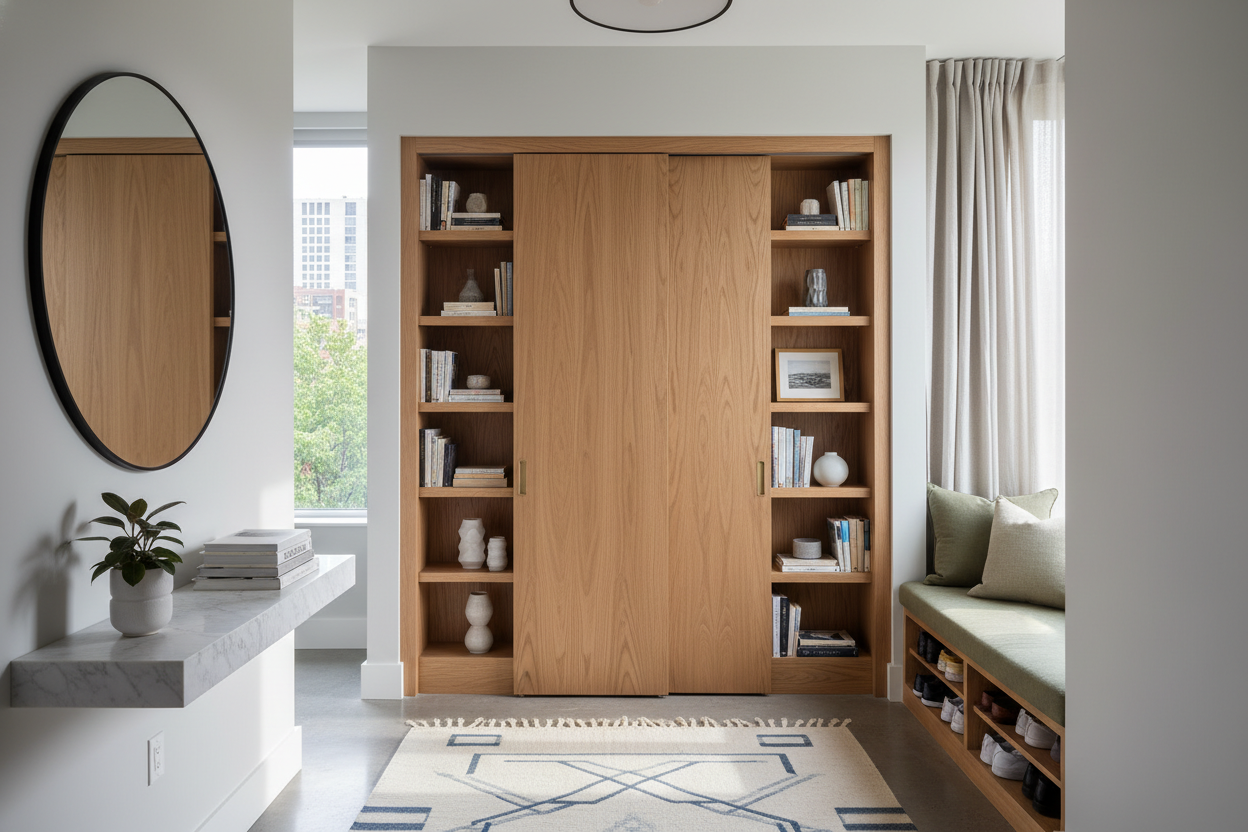
I live in a 'charming' pre-war apartment, which is real estate speak for 'I can touch both walls of my hallway at the same time.' For three years, I stared at a dead-end corridor that was just wide enough for a shelf but too narrow for actual cabinet doors. If I ever left a door open to grab a book, the entire apartment became a dead end.
Then I found the pocket door bookcase. It is exactly what it sounds like: a shelving unit where the doors swing open and then slide back into the body of the cabinet. It solved the one problem that kept me from having organized storage in my narrowest thoroughfare without making me feel like I was living in a storage unit.
Quick Takeaways
- Doors retract into the unit, keeping walkways completely clear.
- Ideal for high-traffic areas like hallways or small home offices.
- Expect to lose about 2-3 inches of internal shelf depth to accommodate the door tracks.
- High-quality hardware is non-negotiable; cheap tracks will jam or sag within a year.
The 'Swinging Door' Problem in Tiny Spaces
Most people don't think about 'door swing' until they're trapped in a bathroom because someone left a closet door open. In my 36-inch wide hallway, a standard 18-inch cabinet door is a literal wall. I tried open shelving for a while, but unless you have the discipline of a museum curator, open shelves in a hallway just look like a pile of junk you're forced to walk past ten times a day.
I needed a way to hide the chaos—the printer cables, the half-finished craft projects, the extra paper towels—without turning my hallway into an obstacle course. Traditional cabinetry was out. Sliding doors were an option, but they only ever let you see half your stuff at once. It is a frustrating trade-off when you're trying to find that one specific document at the bottom of a stack.
Enter the Pocket Door Bookcase
The pocket door mechanism (sometimes called a flipper door) is a mechanical miracle for small-footprint living. You pull the door out, swing it 90 degrees, and then slide it back into a thin slot on the side of the unit. This leaves the entire front of the bookcase open and accessible without any wood or glass protruding into your walking path.
The unit I settled on features plenty of adjustable shelf storage, which is vital because the door tracks take up a bit of horizontal space. You want to be able to move those shelves up or down to fit your specific gear, especially since you are already making compromises on the internal width to fit the 'pockets' where the doors live.
Why I Didn't Just Build My Own
I am the first person to suggest a weekend DIY project, but pocket door hardware is where I draw the line. I once spent an entire Saturday building a custom door for a bookcase in my old place, and let me tell you: if your alignment is off by even an eighth of an inch, those doors will bind, squeak, and eventually fall off the tracks. It is a nightmare of geometry and frustration.
Buying a pre-made unit means the manufacturer has already done the math. The tracks are recessed, the hinges are heavy-duty, and the doors actually glide. Sometimes, paying for the engineering is better than paying with your sanity and a wasted trip to the hardware store for the third time in one day.
Pocket Doors vs. Barn Doors (The Showdown)
Barn doors are having a long, loud moment in interior design, but they are a terrible choice for tight hallways. A barn door needs empty wall space to slide into. If you have a 30-inch bookcase, you need another 30 inches of blank wall next to it for the door to live when it is open. In a small apartment, blank wall space is a luxury we simply do not have.
I have written before about hiding a mess inside a barn door bookcase, and while that works for a wide living room, it fails in a corridor. Pocket doors are self-contained. The door disappears into the furniture itself, meaning you do not need an inch of extra wall space to operate it. It is the cleaner, more architectural solution for high-density living.
Things to Check Before You Buy One
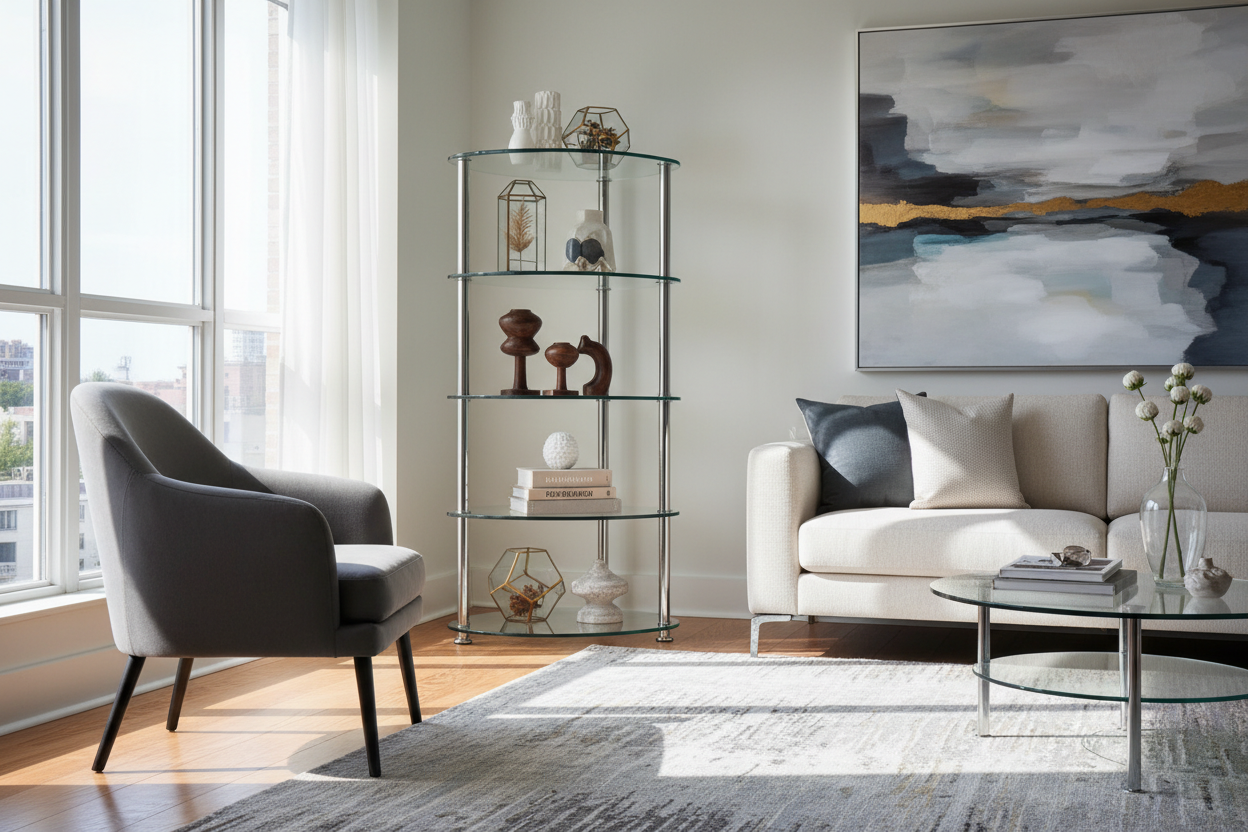
Before you hit 'buy,' grab your measuring tape. Because the doors need to slide into the unit, the interior width of the shelves is usually 2 to 4 inches narrower than the exterior of the cabinet. Also, check the depth. A standard storage bookcase with glass door shelves usually gives you the full depth of the cabinet for your books. With a pocket door unit, the doors 'park' inside, so your usable shelf depth is significantly shallower.
My big mistake? I did not account for the door thickness. I bought a unit that was 12 inches deep, thinking it would fit my oversized art books. Once the doors were tucked in, I only had about 9.5 inches of clearance. Now those books live on the coffee table. Learn from my fail: measure your largest item and add at least three inches for the hardware and door thickness.
FAQ
Are pocket doors hard to maintain?
Not if you get metal tracks. Avoid plastic runners at all costs—they crack under the weight of the doors. A little bit of silicone spray once a year keeps them sliding like butter.
Can I use this as a TV stand?
Yes, and it is actually a great way to hide a TV when you are not using it. Just make sure the back panel has cord cutouts, or be prepared to take a hole saw to it yourself for ventilation.
Do the doors ever get stuck inside?
Only if you overstuff the shelves. If a book spine is poking out even an inch, it will block the door from sliding back. Keep your shelves organized and flush with the shelf edge, and you will be fine.

Dejar un comentario
Este sitio está protegido por hCaptcha y se aplican la Política de privacidad de hCaptcha y los Términos del servicio.