










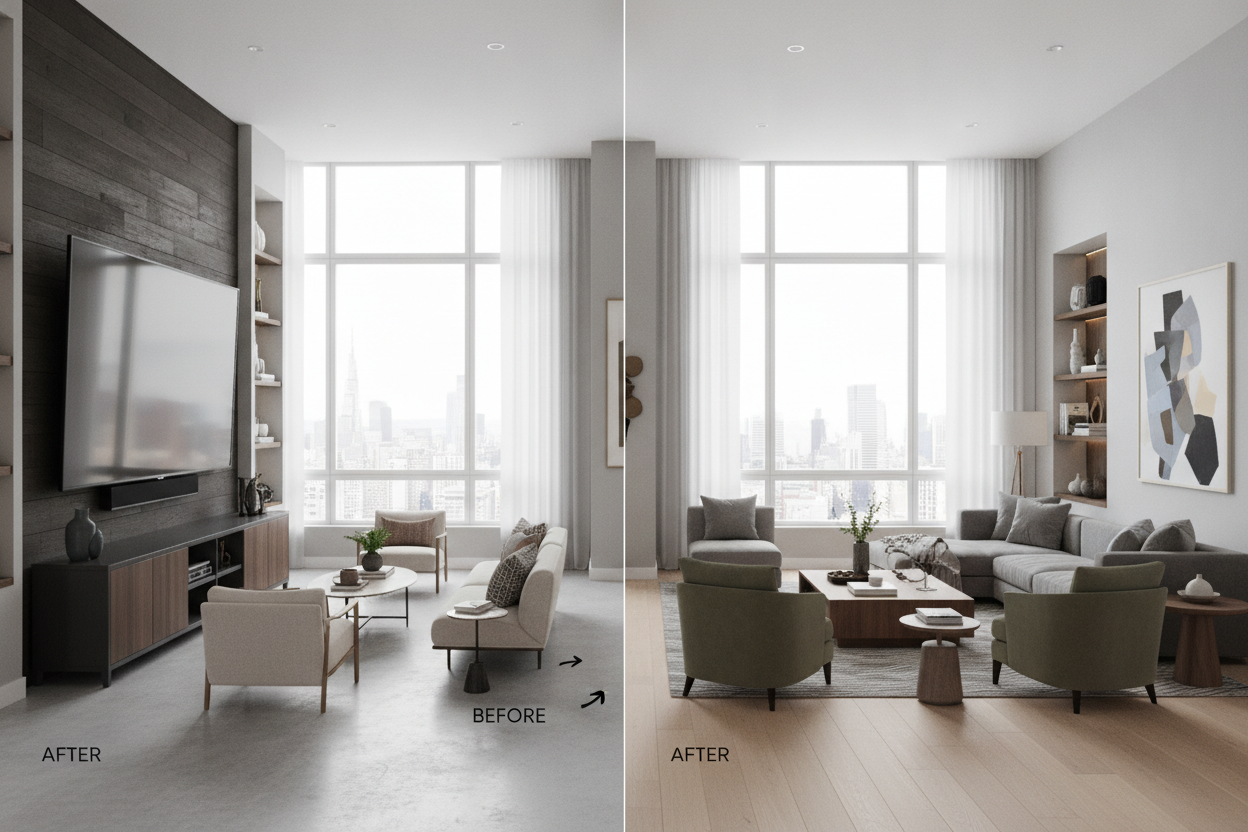
I was three glasses of wine deep on a Tuesday when I saw the listing. A 75-inch 4K beast for a price that felt like a clerical error. I clicked 'buy' before my brain could calculate that my living room is only 12 feet wide. When that overstock tv arrived, it didn't just sit in the room; it colonized it. Suddenly, my cozy apartment felt like the 'before' photo in a tragic home makeover show.
Quick Takeaways
- Scale is everything—a massive screen requires a wider base to avoid looking like a top-heavy accident.
- Texture is your best friend; use natural wood to soften the 'Best Buy showroom' aesthetic.
- Cord management isn't a luxury; it's the difference between a curated room and a dorm room.
- Never skimp on the weight rating of your furniture when dealing with clearance tech.
The Black Hole Effect of a 75-Inch Screen
I thought I’d be thrilled. I thought I’d be watching cinematic masterpieces in high definition. Instead, I spent three days staring at a giant black rectangle that sucked the life out of my decor. It was a classic case of 'too much tech, not enough soul.' The overstock tvs you find on clearance are amazing for your wallet, but they are design bullies. They demand attention and usually make every other piece of furniture look small and pathetic by comparison.
My vintage armchair looked like a dollhouse prop next to this screen. The lamp I loved? Totally dwarfed. I realized that if I didn't find a way to anchor this thing, I was going to be living inside a literal home theater rather than a home. The fix wasn't getting rid of the TV—I'm not that disciplined—it was fixing the proportions of everything around it.
Why Flimsy Consoles Make Overstock TVs Look Worse
The biggest mistake I made was trying to reuse my old, narrow console. It was a wobbly piece of flat-pack furniture I’d had since college. Putting a massive screen on a tiny stand creates a visual 'mushroom' effect that makes the whole room feel chaotic and unstable. Plus, there is the safety factor. I spent a night wondering if a floating TV stand overstock deal was actually worth the gamble, only to realize my drywall probably couldn't handle the sheer leverage of a 70-pound screen.
If your stand is narrower than your TV, the screen looks like it's hovering awkwardly. It makes the room feel cramped because the eye stops right at the edge of the glass. You need something substantial. Cheap, thin particle board will bow under the weight of a modern giant within six months. I've seen it happen—the 'sag' is real, and it's depressing.
The 'Rule of Thirds' for Media Furniture Proportions
Here is the math I wish I’d known: your console should be at least 20% to 30% wider than the TV itself. This creates 'breathing room' on the sides for a lamp, a stack of books, or a plant. It grounds the screen. I started hunting for sturdy TV stands that had enough physical weight to balance the visual weight of the black glass. If the TV is 65 inches wide, your stand should be at least 75 or 80 inches. Anything less and you're living in a state of visual anxiety.
Adding Warm Texture to Offset the Tech Vibe
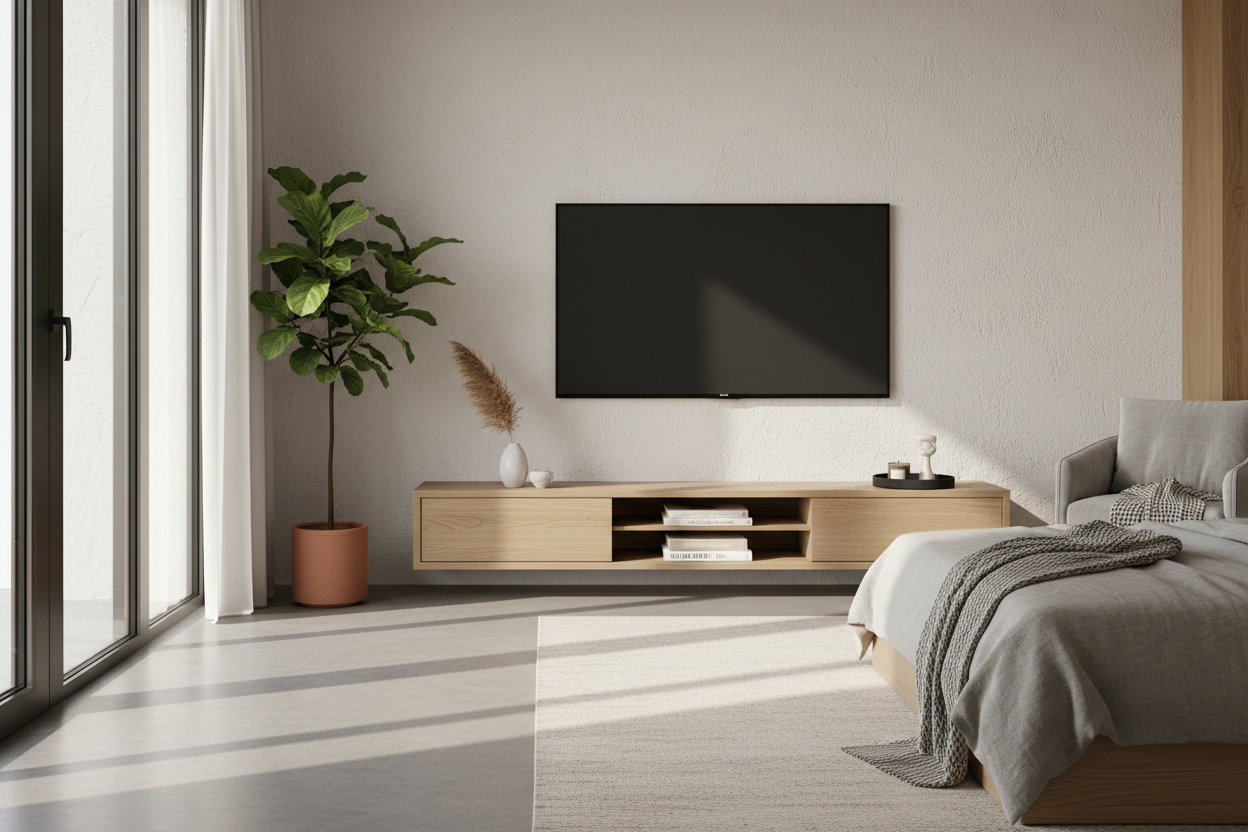
A giant TV is a cold, hard surface. To keep your living room from feeling like a sterile laboratory, you have to counter that with organic materials. I ended up going with a slatted mid-century modern TV stand. The vertical lines of the wood slats break up the massive flat plane of the TV, and the warm oak tone makes the tech feel integrated rather than just 'landed' there. It’s about contrast—the grain of the wood vs. the pixels of the screen.
Hiding the Awful Cords and Peripherals
Nothing ruins a high-end tech setup faster than a 'spaghetti monster' of HDMI cables and power strips. My overstock find came with three different gaming consoles and a soundbar. I quickly learned that open shelving is a trap for people with more than one plug. I switched to a modern TV stand with enclosed cabinets to hide the clutter. If I can't see the glowing LED of the router or the tangled mess behind the PlayStation, it doesn't exist. Out of sight, out of mind, and suddenly, my living room felt like an adult lived there again.
Frequently Asked Questions
How much wider should a stand be than the TV?
Ideally, you want 6 to 10 inches of extra space on each side. This prevents the 'overhang' look and gives you a spot to place decor that softens the edges of the screen.
Can I put a heavy TV on a particle board stand?
You can, but I wouldn't. Over time, the weight causes the center to sag, which can eventually lead to the stand collapsing or the doors not closing properly. Look for solid wood or high-grade MDF with a center support leg.
How do I stop the TV from being the only thing people see?
Bias lighting (LED strips behind the TV) helps blend the screen into the wall. Also, surrounding the TV with a gallery wall or textured wallpaper can help the 'black hole' feel like part of the design rather than an intruder.


Dejar un comentario
Este sitio está protegido por hCaptcha y se aplican la Política de privacidad de hCaptcha y los Términos del servicio.