










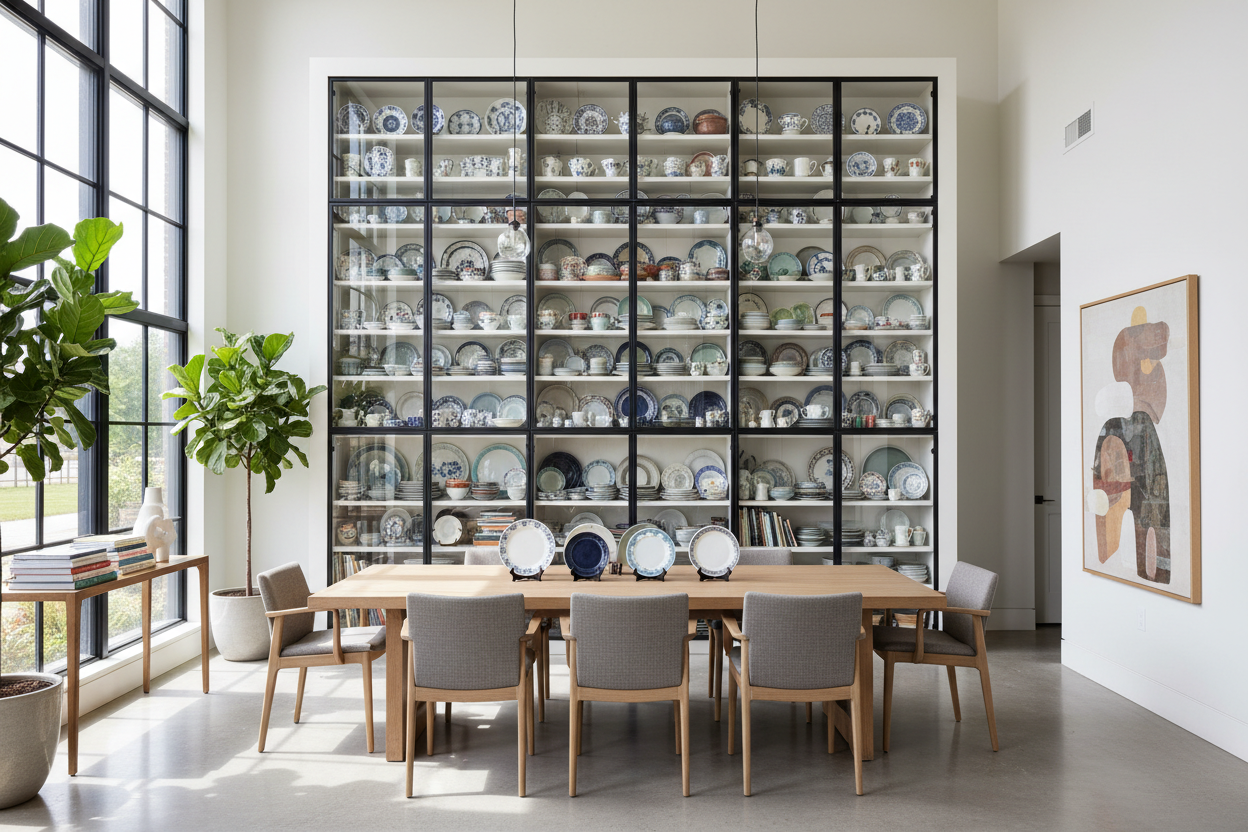
I spent three years trying to convince myself that my 1960s walnut sideboard was enough for my kitchen overflow. It wasn't. Every time I bought a new set of stoneware bowls at a flea market, I had to reorganize the entire cabinet like a high-stakes game of Jenga. I finally snapped when a stack of vintage Franciscan Starburst plates nearly took out my toe during a particularly aggressive search for a gravy boat. That is when I realized I needed tall dining cabinets to actually house my obsession without the physical danger.
- Vertical storage saves your floor plan from feeling like an obstacle course.
- Solid doors are the secret to hiding the 'organized chaos' of mismatched dishware.
- Look for a minimum height of 70 inches to maximize the utility of your wall space.
- Adjustable shelves are non-negotiable for tall pitchers and tiered cake stands.
The Mid-Century Sideboard Trap (And Why It Failed Me)
Sideboards are the darlings of interior design blogs, but they have a fatal flaw: they stop at your waist. If you have a collection of oversized serving platters or a penchant for stacking heavy dinnerware, a 30-inch high unit is a joke. You end up with massive amounts of 'dead air' above the furniture while your plates are crammed into a dark, narrow cavern below.
My old unit was beautiful, but it could not handle more than two sets of dishes without looking like a hoarder's closet. I was constantly reaching into the back, knocking over wine glasses to get to a salad bowl. It was an aesthetic win but a functional nightmare. When you are looking for a dining room storage cabinet tall enough to be useful, you have to prioritize volume over 'vibe.'
Why Tall Dining Cabinets Are the Ultimate Fix for Collectors
It is simple geometry. A standard sideboard takes up about six feet of wall length but only offers maybe nine cubic feet of storage. A Kitchen Dining Storage solution that goes vertical—a true tall dining storage cabinet—can double or triple that capacity while keeping the exact same footprint. It is the only way to live if you are dealing with a dining room that is under 150 square feet.
By moving the storage up to 72 or 80 inches, I cleared enough space for my everyday plates, my 'good' china, and the weirdly shaped salad spinners I only use twice a year. I stopped treating my floor like a storage unit and started using my walls. If you are struggling with a small footprint, going up is the only logical move.
Hiding the Chaos: The Magic of Solid Wood Doors
I love a glass-front display as much as the next person, but let is be real: my stacking technique is not museum-quality. A tall dining room cabinet with doors is my best friend because it allows me to be a little messy. I can stack 15 bowls high or keep my ugly-but-functional plastic containers right at eye level without ruining the room's energy.
If you want a hybrid look, you can always check out a Pantry China Cabinet — How to Blend Kitchen Storage with Dining Display. It gives you the 'pretty' glass on top for your crystal and the 'hide the mismatched plastic' solid doors on the bottom. For me, a tall dining room cabinet with doors made of solid oak was the winner—it is heavy, it does not wobble, and it hides a multitude of sins.
Is a Hutch Just a Vintage Version of a Tall Cabinet?
People often ask me if they should just buy an old hutch from a thrift store. A hutch is usually a two-piece unit, and while they have charm, they can feel incredibly bulky in a modern room. Modern tall dining room storage cabinets are often single, streamlined towers. They don't have that heavy 'grandma’s house' overhang that catches dust.
But you have to ask yourself: Is a Dining Room Cabinet With Hutch Too Traditional for a Modern Home? It really depends on the finish. A matte black tall cabinet feels industrial and fresh, whereas a honey-oak hutch with scalloped edges feels like 1994. I prefer the clean lines of a single-piece unit that looks like it was built into the wall.
How to Style Your Room When Your Storage Goes All the Way Up
Putting a massive piece of furniture in a small room can feel daunting. To keep the dining room storage tall profile from swallowing the space, I use a few tricks. First, do not shove it right into a corner; give it an inch or two of breathing room so the walls can 'breathe.' It makes the piece look like a design choice rather than a storage necessity.
Second, place a large mirror on the opposite wall to bounce light back at the cabinet. Finally, make sure your rug is large enough to anchor the room—if the rug is too small, a tall cabinet will look like a monolith floating in a void. I also recommend choosing a unit with a recessed base or 'kick plate' so you don't stub your toes while reaching for the top shelf.
Frequently Asked Questions
Should I anchor my tall cabinet to the wall?
Yes, 100%. Anything over 60 inches tall is a tipping hazard, especially if you are loading it with heavy ceramics. Most quality units come with a wall-anchor kit—use it. If it doesn't, buy a heavy-duty one at the hardware store for five bucks.
What material is best for heavy dishes?
Look for solid wood or high-quality birch plywood. Avoid cheap MDF or thin particle board for the actual shelves. If you stack 20 dinner plates on a 30-inch MDF shelf, it will bow in the middle within six months. I learned that the hard way with a flat-pack unit that ended up looking like a 'smile.'
How deep should a dining cabinet be?
The sweet spot is 15 to 18 inches. Anything deeper and you will lose things in the dark abyss of the back; anything shallower and your oversized chargers or serving platters might prevent the doors from closing fully.

Dejar un comentario
Este sitio está protegido por hCaptcha y se aplican la Política de privacidad de hCaptcha y los Términos del servicio.