










I spent three months staring at my living room, convinced my layout was cursed. I had the 'perfect' mid-century modern console—thin tapered legs, sleek profile—supporting a massive 55-inch screen. It looked like a flat-screen TV trying to balance on a pair of toothpicks. The room felt nervous, top-heavy, and frankly, cheap.
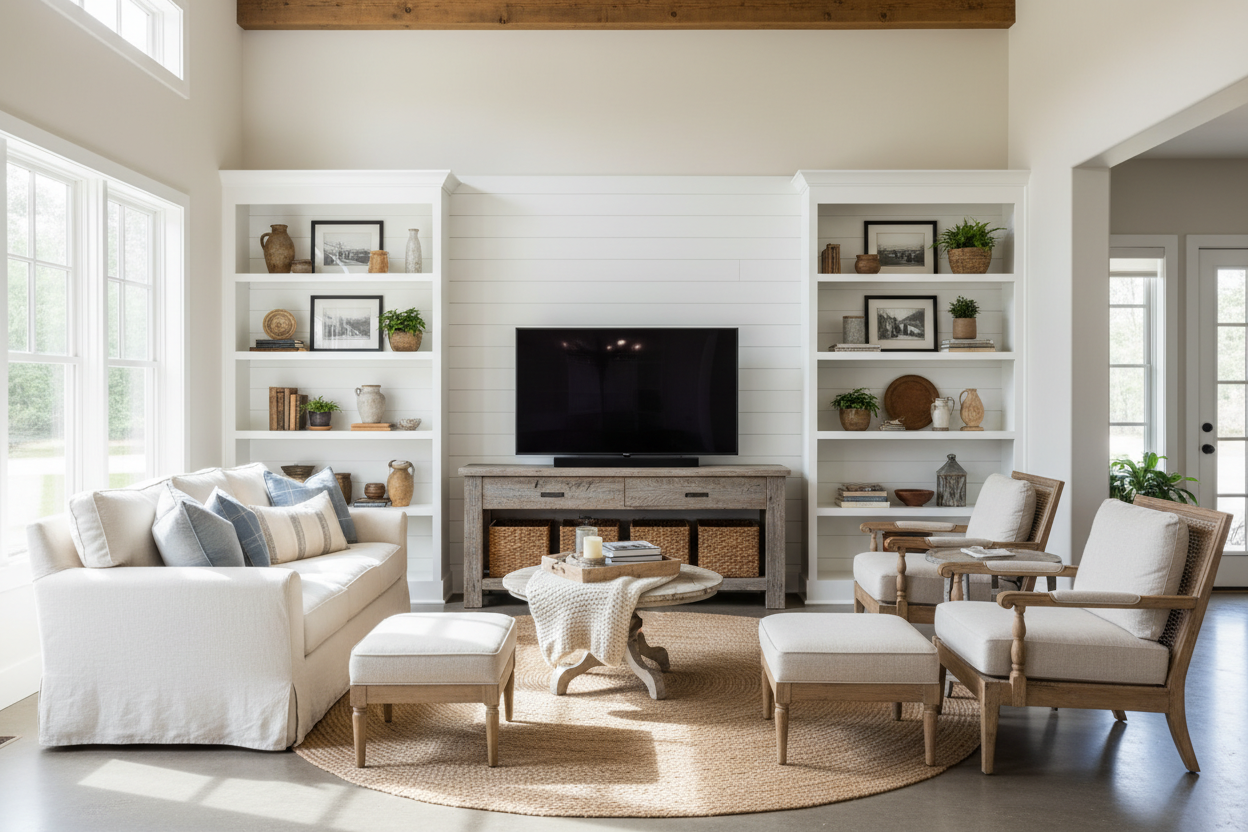
The fix wasn't moving the sofa or painting a feature wall. It was admitting that my spindly furniture couldn't handle the visual gravity of a modern TV. I finally swapped the toothpick legs for a substantial 60 inch oak tv stand, and the entire room suddenly felt like it finally had its feet on the ground. If your TV looks like it’s floating awkwardly in space, your base is likely too small.
- Visual Weight: Large screens need a base that looks like it can actually hold them without snapping.
- Material Matters: Solid oak provides texture and warmth that plastic or metal units lack.
- Depth: A 60-inch unit usually offers the 16-18 inches of depth needed for a decent soundbar.
- Longevity: Real timber stands up to the heat of electronics better than cheap MDF.
The 'Minimalist' Console Mistake I Kept Making
I used to be obsessed with 'light' furniture. I thought if I could see more of the floor, the room would feel bigger. So, I bought a media unit with wire-thin legs and a glass top. Big mistake. When you put a 50-pound black rectangle on top of something delicate, it creates a visual tension that makes it impossible to relax.
Every time I walked past, I felt like the TV was going to topple. It didn't just look unstable; it made the whole wall feel cluttered because the 'minimalist' design had zero room to hide the bird's nest of HDMI cables and power bricks behind it. A flimsy stand makes even an expensive TV look like a temporary college setup.
Why an Oak TV Stand for 60 Inch TV Screens Actually Makes Sense
When you're shopping for an oak tv stand for 60 inch tv setups, you're looking for grounding. Oak has a dense, visible grain that pulls the eye downward. It creates a 'heavier' anchor point that balances out the bright, glowing light of the screen above it. It's about physics as much as aesthetics.
I recommend people browse solid timber tv stands that have a closed base or very short, thick legs. That extra few inches of wood at the bottom makes the TV feel like a built-in part of the architecture rather than an appliance just sitting on a table. Plus, oak is incredibly durable. I've spilled enough coffee on mine to know that a quick wipe is all it takes to save the finish—unlike veneer that bubbles the second it sees a drop of moisture.
But Will It Make My Room Look Like a '90s Basement?
I get it. When most people hear 'oak,' they think of those orange-stained, chunky cabinets from 1994 with the brass handles. We aren't doing that here. Modern oak furniture is all about white oak, European oak, or wire-brushed finishes that feel matte and organic. It’s more 'Scandi-cool' than 'suburban basement.'
Look for silhouettes that use vertical slats or curved oak designs to soften the edges. A curved corner or a fluted door panel breaks up the 'blockiness' of the wood, making it feel high-end and custom. It’s the difference between a heavy crate and a piece of crafted furniture.
Wait, What if I Have a Smaller Screen?
If you're rocking a 43-inch or 50-inch TV, you might think a 60-inch stand is overkill. It's not. Having a bit of 'breathing room' on either side of the TV—space for a small lamp or a stack of books—actually makes the screen look less dominant. If you're tight on square footage, there are plenty of options for slightly smaller screens that still offer that same solid oak grounding without eating your entire floor plan.
The Practical Perks That Convinced Me to Upgrade
Let's talk about the stuff no one puts on Instagram: the cables. A proper 60-inch unit has enough internal volume to swallow a mesh router, a PlayStation, and three different remote charging docks. My old unit was so shallow that my soundbar hung off the front edge by two inches. It drove me crazy.
My new oak unit has deep shelves and proper ventilation cutouts. If you really hate the look of technology, you could even look into hidden motorized lift units that tuck the screen away entirely. But for most of us, just having a solid piece of wood that doesn't sag under the weight of a soundbar is the real win.
My Honest Mistake
I'll be real: I initially tried to save $200 by buying a 'wood-look' stand from a big-box retailer. It looked fine in the photos. In person? It had a weird plastic sheen, and the 'grain' repeated every six inches. Within a month, the weight of my TV caused the top shelf to bow slightly in the middle. I ended up spending more money in the long run because I had to replace it. Buy the solid oak the first time. Your floor (and your sanity) will thank you.
FAQ
Is oak too heavy for an apartment?
It's heavy, but that's the point. Most 60-inch oak stands weigh between 80 and 120 pounds. You'll need a friend to help you move it, but once it's in place, it isn't going anywhere. Just use felt pads on the bottom to protect your floors.
How do I keep the oak from looking orange?
Avoid oil-based poly finishes. Look for 'clear coat,' 'matte,' or 'white oak' labels. These preserve the natural, pale-straw color of the wood instead of darkening it over time.
Can I put a 65-inch TV on a 60-inch stand?
Technically yes, if the TV's legs fit on the surface. But visually? It will look top-heavy. Ideally, your stand should be at least 4-6 inches wider than your TV screen to keep the proportions balanced.

Dejar un comentario
Este sitio está protegido por hCaptcha y se aplican la Política de privacidad de hCaptcha y los Términos del servicio.